
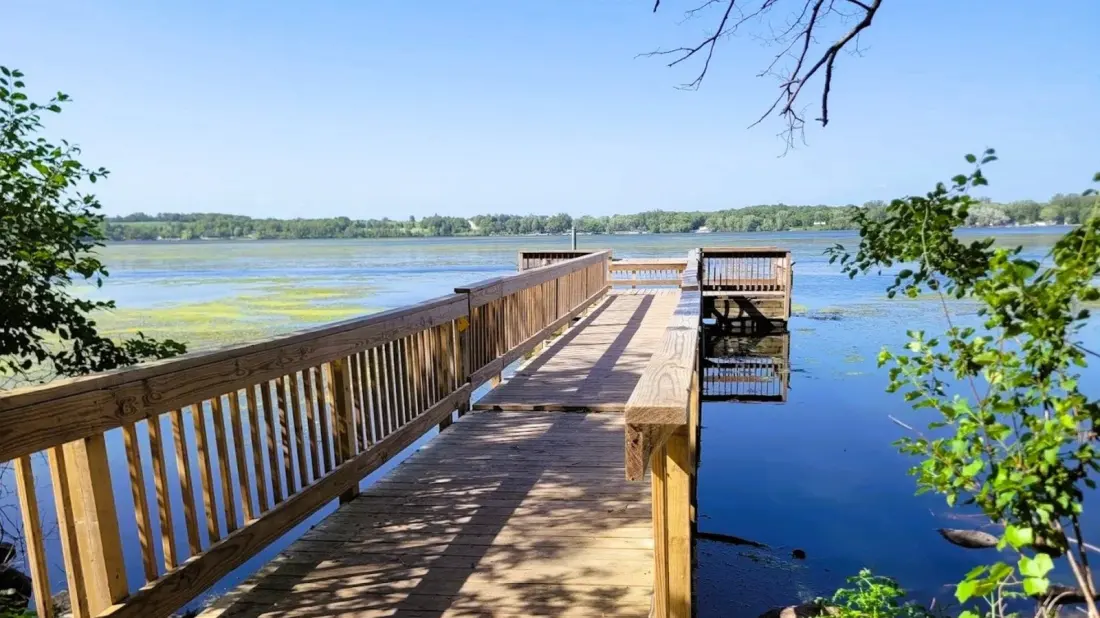
About 62 miles south of downtown Minneapolis along I-35, Sakatah Lake State Park in Waterville offers roughly 840 acres of old-growth forest and lakeside recreation — without the crowds of better-known Minnesota parks. It sits where the Cannon River widens into Sakatah Lake, a name from the Wahpekute band of the Dakota Nation meaning "singing hills."
The park's origins are all about the trees. A rare remnant of the original Big Woods — sugar maple, basswood, elm, and oak that stood when European settlers first arrived — survives on the southern shore of the lake, and the Minnesota legislature created the park in the 1960s largely to protect it. Today it's open daily from 8 a.m. to 10 p.m., with a $7 per-vehicle gate fee.
Hiking here is gentle. Around 8 miles of trails wind through the park, but the standout is the Sakatah Singing Hills State Trail, a paved rail-to-trail that runs 39 miles between Faribault and Mankato. Three miles of it cut through the park, and since there are no steep grades it works for kids, casual walkers, and wheelchair users. Longer options include the Hiking Club Trail, Big Woods Loop, and Wahpekute Trail — about 4 miles combined through mixed hardwood and along the water. Autumn is the showpiece season, when the maple-oak canopy turns red and gold; in winter the trails convert for skiing and snowmobiling.
On the water, the lake splits into two sections. Upper Sakatah, the larger, is where most people fish, boat, and paddle; the lower section is quieter, good for watching wading birds. During camping season (April 1 to October 19) the park rents canoes, kayaks, paddleboards, and even fishing gear, so visitors can show up empty-handed. Anglers with a Minnesota fishing license can target largemouth bass, walleye, and panfish — though the lake is shallow, so it's casual fishing rather than trophy hunting. Spring, early summer, and fall are best, before algae builds up. Keep an eye out for pelicans, herons, and turkey vultures while you wait.
The park also links to Waterville, about 2 miles away by trail, for coffee or fresh produce — plus a s'mores sundae at Snack Shack, a '50s-themed local spot. Campers can stay overnight in a campground that reviewers describe as lovely, and Mankato, with shops and more outdoor attractions, makes an easy side trip.
For Twin Cities locals and road-trippers alike, Sakatah is the low-effort nature fix: just over an hour's drive, cheap entry, rentals on site, and terrain anyone can handle. If you want Minnesota lake country without the fame or the traffic, this is the one to put on the list.