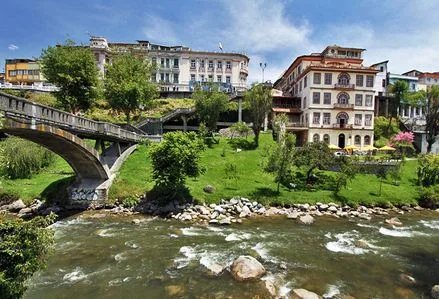
A riverside walk might be the single best way to get to know Cuenca, and the Rio Tomebamba is where to do it. This is the most storied of the four rivers threading through Ecuador's third-largest city — the Tomebamba, Yanuncay, Tarqui and Machangara all rise less than 20 miles away in the Cajas Mountains, and together they gave Cuenca its name, which roughly means "watershed" in old Spanish.
The Tomebamba marks the natural line between the colonial old town, El Centro, and the modern southern district locals call New Town. Historic buildings loom above the bluff known as El Barranco, and the north-bank sidewalks — refurbished in 2012 with decorative pavers, curbs and better lighting — make for an easy, rubbish-free stroll past lawns, flower beds, benches and a couple of pedestrian-only bridges.
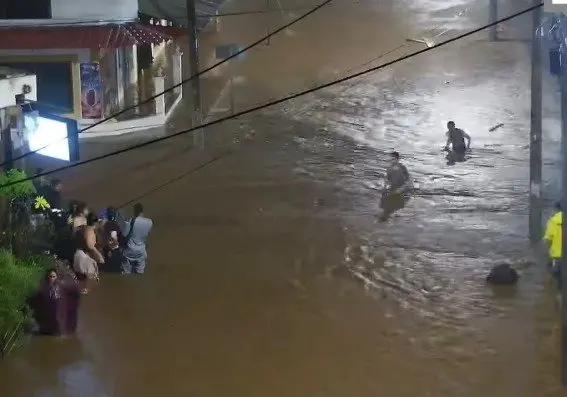
There's history here, too. Just east of El Centro sit the ruins of Pumapungo, a Cañari and Inca temple complex and one of the city's top tourist draws. During the brief window when Cuenca served as the Inca empire's northern capital, the emperor Huayna Capac was born on those very grounds. And because the river starts high in the Andes, its mood swings fast: tranquil in the morning, raging within hours after mountain rain. Counterintuitively for a city just 80 miles from the Pacific, its water eventually reaches the Amazon and the Atlantic.
Time your walk right and you'll catch a vanishing tradition: when the water runs low, indigenous women still wash clothes and linens against the rocks in the cold current — a splash of bright colour against the green banks that will likely disappear within a generation.
Most of Cuenca's festivals launch from Puente Roto, the arched stone "Broken Bridge" from the 1840s, partially destroyed by a 1950s flood. Parades continue past Parque de la Madre at the foot of La Escalinata, the 100-step staircase up to Hermano Miguel Street, then by the Universidad de Cuenca campus before wrapping up at Plaza Otorongo on the west side of Puente del Vado. The path carries on along the bending banks past the Jefferson Perez Coliseo and the western high-rise district locals nickname Gringolandia.
One caution: the riverwalk is fine by day from one end of the city to the other, but avoid it after dark, especially near Gringolandia, where riverside robberies have been reported.
For travellers, the Tomebamba is essentially a free, self-guided sightseeing route that connects museums, ruins, cafes and festival grounds — ideal for a slow morning with a camera, or an afternoon of just sitting on the grass watching the city go by. It's especially rewarding for photographers, history fans and anyone who likes their city breaks walkable.