San Antonio International Airport is mid-way through the biggest upgrade in its history, and Wall Street just voted with its wallet. In July, the airport sold $866 million in revenue bonds to help fund its new Terminal C — and investors piled in with roughly $3.9 billion in orders, about $4.50 for every dollar on offer. Even more striking: 61 of the 78 institutions that bought in were first-time investors in SAT's debt.
That level of enthusiasm for a mid-sized Texas airport raised eyebrows, especially since Terminal C's price tag has climbed from $1 billion in 2023 to an estimated $1.7 billion today, and passenger numbers dipped slightly in 2025 and the first half of 2026. But the bonds are backed by airport revenue, airline agreements and reserves rather than raw passenger growth, and a key uncertainty was removed in May 2026 when Southwest Airlines — the airport's largest carrier at about 37% of traffic — settled a two-year legal dispute with the city, securing at least three gates in Terminal C and three in a revamped Terminal B.
So what do travellers actually get? Terminal C is the centrepiece of the $2.5 billion 'Elevate/SAT' programme: a third airline terminal with up to 18 gates serving both domestic and international flights, complete with a Federal Inspection Station and a bigger central security checkpoint. It's due to top off in late 2026 and open in the second quarter of 2028.
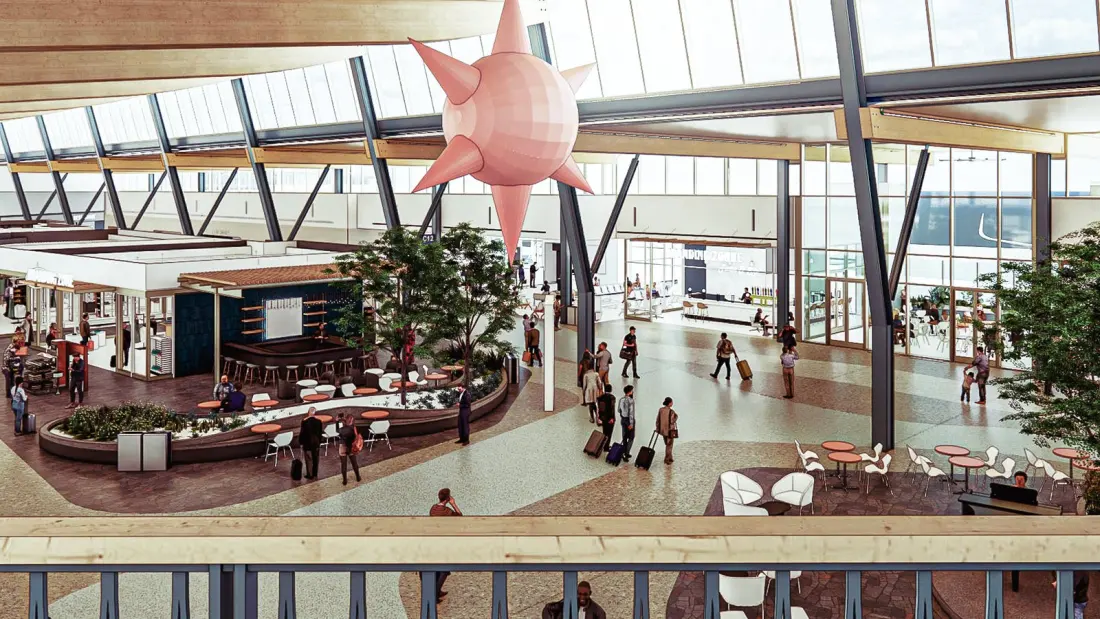
Inside, there will be over 850,000 square feet of space, including 29,000 square feet of lounges — new American Airlines Admirals Club and Delta Sky Club locations plus a third, still-unannounced lounge — and around 41,000 square feet of dining featuring local San Antonio vendors. Gate areas will be larger than in the existing terminals, with natural light, open seating, an indoor courtyard and reworked roadways to cut curbside congestion.
Terminal C isn't the whole story. A new ground-load facility with international inspection capability, extra seating and more food options was added to Terminal A in March 2026 — aimed squarely at budget carriers — while Terminals A and B will be renovated to stay in service past 2048. Airfield safety and roadway projects round out the plan.
Why does this matter if you're planning a trip? San Antonio isn't chasing hub status — nearby Austin has absorbed much of the region's recent boom — but SAT sits in one of America's fastest-growing metro areas and wants more nonstop routes from smaller, less congested airports. If you fly to or through San Antonio, from 2028 you should get shorter walks to gates, better food, new lounges and a far smoother international arrival process. And with major hubs increasingly clogged, expect airlines to keep adding point-to-point service here. The airport projects around 14.5 million annual passengers by 2040, up from a record of just over 11 million in 2024 — modest growth, but enough to make one of America's most oversubscribed airport bond deals look like a safe bet.
Credit: Simple Flying