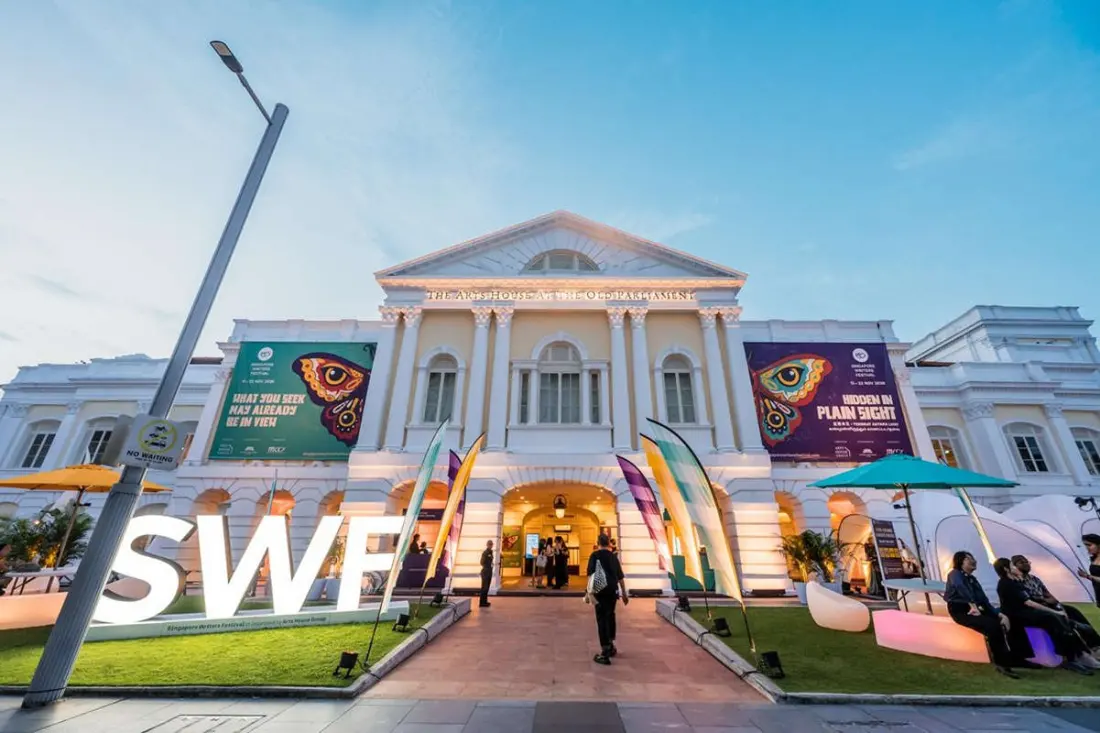
The 29th edition of the Singapore Writers Festival (SWF) has wrapped, and this year's run came with an unusual warning: fake invitation emails circulating to authors, with organisers stressing they never ask writers for payments or personal details to take part. Anyone hoping to attend or pitch to future editions should treat unsolicited SWF-related emails with a healthy dose of suspicion.
The festival leaned into a detective-styled theme, 'Hidden in Plain Sight', with more than 200 programmes across multiple venues stretching from the Victoria Theatre to the Arts House at the Old Parliament. Over 300 participants took part in the multi-week event, organised by the Arts House Group. Festival director Yong Shu Hoong, a poet closing his three-year tenure, framed the idea simply: literature pushes us to look more carefully at people, places and ideas around us — and between the lines of almost anything we read.
Much of this year's programme had a distinctly dystopian edge. Stephen Witt discussed Nvidia co-founder Jensen Huang, AI and a tech industry that seems to operate with few rules, while Amitav Ghosh delivered a satirical take on planetary crisis through a post-colonial lens, questioning whether technology really can stay neutral when the interests of the global north are at stake. In a lively session at The Living Room playground, Ghosh also pushed back on blind faith in progress, arguing that infinite growth is a fantasy and that hope, like despair, is something we choose rather than something that simply arrives.
Another strand looked at fiction and emotional honesty. Writer Faith Abiola-Farah — who grew up in working-class London communities and started writing young, despite an early rejected script — talked about numbers numbness as a response to trauma, drawing on characters from her debut thriller Ace of Spades through to The Hiers (2026). She recalled arriving at a mostly white university in Scotland at 18 and noticing who felt watched as they walked around, and pushed back against the idea that genius is innate rather than nurtured by opportunity. Alongside Grace Chua and Nidhi Upadhyay, she examined how women's characters are often denied messiness or rage on the page, and why society historically punishes women for showing emotion. The three also reflected on how crime and mystery fiction lets writers explore rationality colliding with feeling.
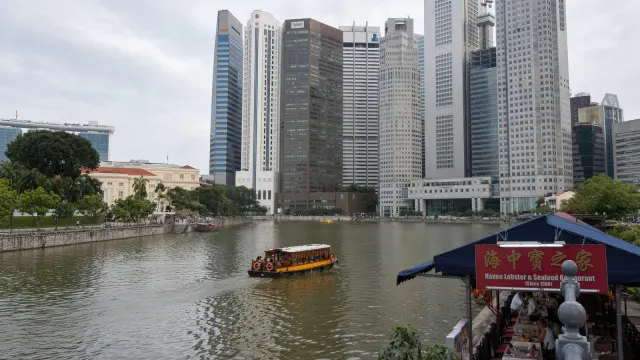
For travellers, SWF is a good reason to time a Singapore trip to the festival's November window: it's one of Asia's few multilingual literary festivals, most sessions are affordable or free, and the venues cluster within walking distance of the Civic District's colonial buildings and the riverside. Keep an eye on official SWF channels for next year's dates and director announcement — and remember that legitimate festivals don't charge speakers to appear.