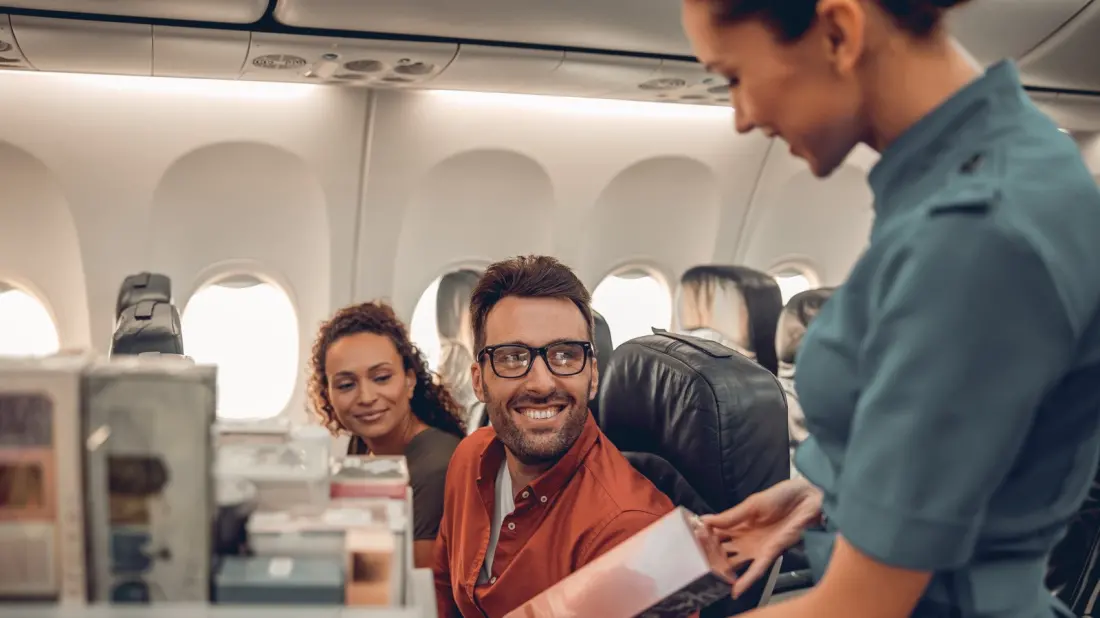
Striking up a friendly word with cabin crew feels like good manners. But according to people who actually work the aisle, timing is everything — and some of the politest-seeming chats land at the worst possible moments.
The rule of thumb is simple: if a flight attendant is performing a service of any kind, leave them to it. That covers the obvious safety moments — the pre-flight demonstration, door opening and closing, passenger head counts, any emergency response — but also less dramatic ones. When the seatbelt sign is on, when crew have been told to take their stations, or when the meal trolley is working its way down the cabin, a conversation holds up a system built to run fast. On a food service, one crew member may be responsible for hundreds of passengers, and small talk with one of them delays dinner for everyone else.
The stakes are higher than a slow drink service. Cabin crew procedures are choreographed for a reason, and a distracted attendant can make mistakes even in ordinary conditions. In a genuine emergency, that lost focus could contribute to someone getting hurt. Read for context: chatting mid-service is grouped with another well-meant habit — passengers 'helping' with the trolley or service tasks — which crew say disrupts their trained routine just as much. If someone wanders into your office and broke your workflow, you'd notice too.
There's also a grey zone people get wrong: the break. Seeing a crew member resting in the galley isn't an invitation to launch into your travel tales. Those pauses are short and rare, and crew often want quiet more than company.
So when is chatting fair game? Former flight attendant Anna McPhee suggests a work-around: take a walk toward the lavatories mid-flight and see if any crew look free — the middle third of a flight is the sweet spot, when service is done and passengers are resting. If people around you are asleep, that's a decent signal the cabin is calm. And if you're nervous flyer who finds chatting genuinely helps with anxiety, that's a legitimate reason — just pick your moment and keep it brief.
A couple of alternatives worth remembering. The person in the next seat has far more time for a long conversation than the crew do, and your questions about boarding connections or the destination can wait until the seatbelt sign is off and the trolleys are stowed.
Why does this matter to travellers? Because most annoying passenger behaviour isn't malicious — it's politeness applied at the wrong time. Knowing when to hold off means faster service for you, a less stressed cabin, and crew who can do the safety job they're actually there for. Save the dad jokes for the aisle seat neighbour.