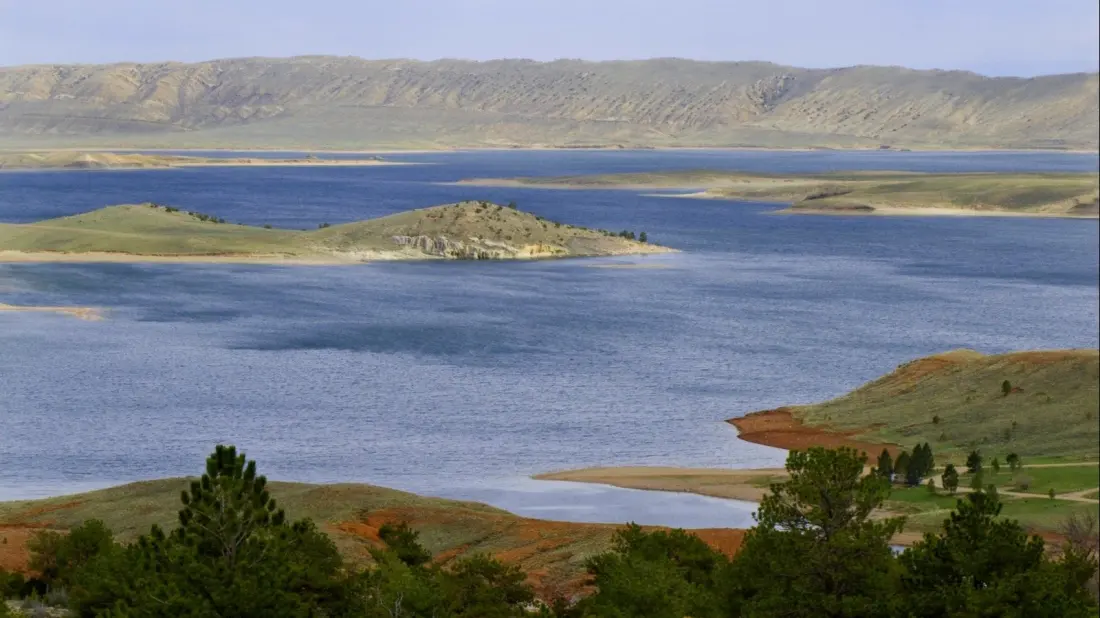
About 175 miles northwest of Cheyenne, tucked against the Seminoe Mountains at over 6,400 feet, Seminoe State Park offers one of Wyoming's quieter outdoor escapes. Its centrepiece is the Seminoe Reservoir, created in 1939 by the Seminoe Dam as part of the state's water-management system, holding more than a million acre-feet of water drawn from the Medicine Bow, Sierra Madre, and Shirley Mountains.
The area's history runs deeper than the water. Gold strikes in the 1870s turned these mountains into a prospecting hotspot in the late 1800s, and the surrounding rock is ancient — Precambrian formations around 2.7 billion years old were mined for iron from 1870 until the 1960s. The park, established in 1965, takes its name from a French trapper, Cimineau, who worked the area in the 1800s — not, as many assume, from the Seminole tribe.
The reservoir drives nearly everything visitors come for. Swimming is allowed in warm months anywhere not marked off-limits, with sandy beaches at the Sand Mountain Day Use Area and all three campgrounds — Sunshine Beach is the standout. There are no lifeguards, so swim at your own risk and check current water-quality advisories. Boaters can launch from ramps at North Red Hills and South Red Hills, though water levels shift seasonally, so confirm access before you go. Kayaks, canoes, and paddleboards share the water with motorboats.
Fishing is a year-round proposition. Walleye, brown trout, rainbow trout, and cutthroat trout all live in the reservoir, and each species peaks on its own schedule: browns in early spring, rainbows and cutthroats as water warms, walleye from late June. In winter you can ice fish if conditions allow. Anglers aged 14 and up need a Wyoming fishing license.
Three campgrounds cover different styles of stay. North Red Hills, with 30 sites, is the best-equipped — playground, shelters, potable water, dump station, and a ramp that works across water levels. South Red Hills has 21 sites split into upper (lake views) and lower (quick boat-ramp access) sections. Sunshine Beach is the rustic option: 38 sites and no potable water. Camping runs year-round, all sites take tents or RVs, and reservations are required between May 15 and September 15. Day-use and camping fees apply everywhere, with discounts for Wyoming residents.
Off the water, there are no formal trails — expect self-guided hiking and biking across terrain shaped by billions of years of uplift and erosion, plus a park geocache to hunt down. Wildlife is a real draw: bighorn sheep, pronghorn, mule deer, and elk roam the area, and birders can look for bald eagles, American white pelicans, and mountain chickadees. If you want more reservoir country afterwards, Keyhole State Park in the northeast and Curt Gowdy State Park near Cheyenne make good follow-ups.
This is one for travellers who value space and quiet over facilities and crowds — bring your own entertainment, and the reservoir does the rest.