A great castle isn't just a pretty skyline. The most memorable ones come with a plot twist: a king who never saw his dream finished, a fortress disguised as a poem, a ruin brought back from the dead after two centuries. A recent roundup of the world's most extraordinary castles makes a solid shortlist for anyone building a trip around dramatic architecture.
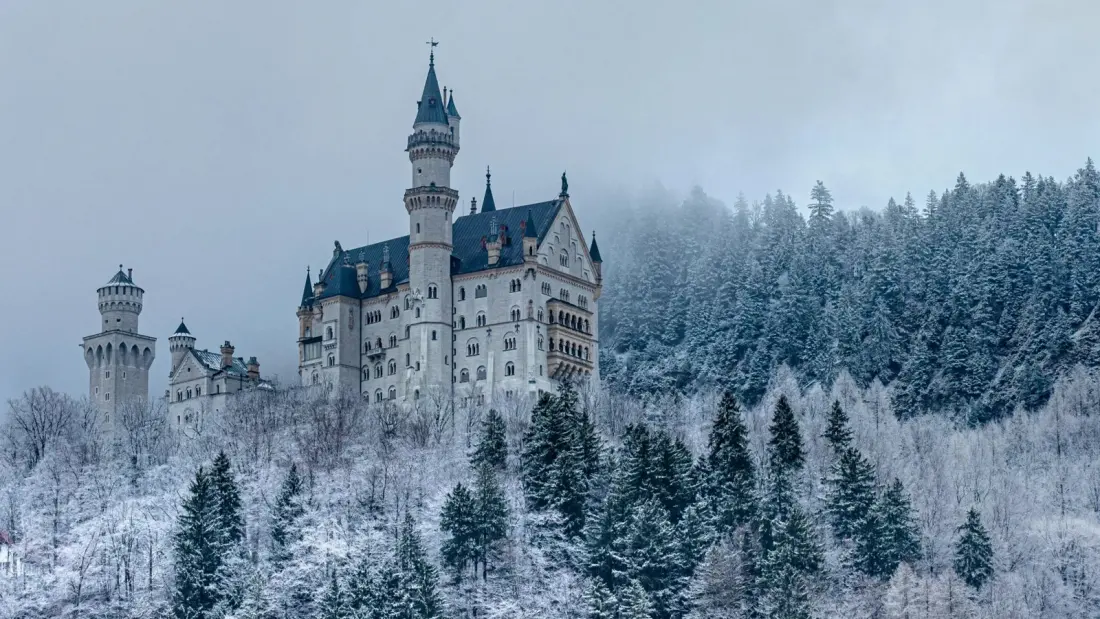
Neuschwanstein in Bavaria is the obvious poster child. King Ludwig II started it in 1869 as a private fantasy retreat inspired by medieval legend and Wagner's operas, complete with hidden running water and central heating behind the theatrical murals. He died in 1886 before it was finished, and it opened to the public just weeks later. Eltz Castle, also in Germany, is the opposite kind of story: tucked in forest above the Eltzbach, owned by the same family since records began in 1157, and never destroyed by war, so it still feels like a lived-in home rather than a museum.
Japan's Himeji Castle rewards patience. Its white, heron-like exterior is graceful, but the layout is a trap: winding paths, dead ends and steep stairs designed to exhaust invaders. It survived wars and earthquakes that wiped out many other Japanese castles. Over in Scotland, Eilean Donan sits on a tidal island where three sea lochs meet, but it was bombed by government forces in 1719 after Spanish troops backing the Jacobites occupied it, and lay in ruins for nearly 200 years before John MacRae-Gilstrap began rebuilding in 1912.
Portugal's Pena Palace above Sintra is the loud one: a 19th-century king, Ferdinand II, turned a monastery wrecked by the 1755 Lisbon earthquake into a riot of Gothic, Moorish and Manueline detail in bold colours, set in 85 hectares of planted parkland. Spain's Alcázar of Segovia looks like the castle a child would draw and comes with serious royal credentials — Isabella I was proclaimed Queen of Castile there in 1474 — plus Segovia's Roman aqueduct and cathedral within walking distance. And France's Château de Chambord, begun by François I in 1519, is architecture as pure spectacle, most famous for its double-helix staircase where two people can climb without ever meeting. Its design is often linked to Leonardo da Vinci, though there's no hard proof he drew it.
The appeal across all seven is that each tells a different story: romantic obsession, military cunning, family continuity, restoration against the odds, and ego on a Renaissance scale. For travellers, that also means they suit different trips — a Bavarian road trip, a day trip from Lisbon or Madrid, a Scottish Highlands drive — rather than one style of itinerary.