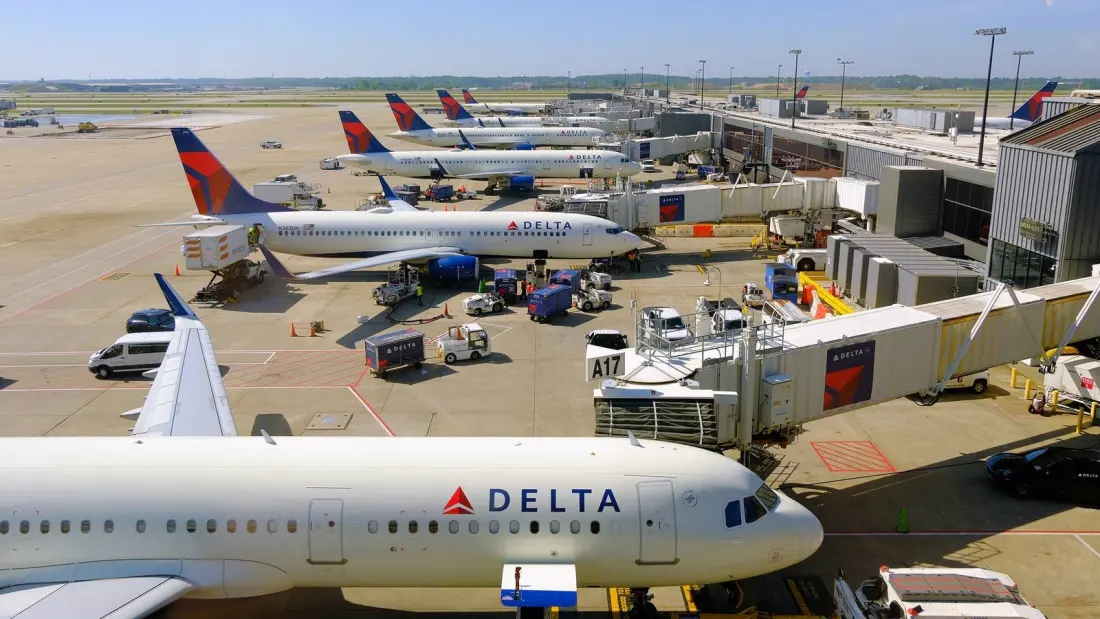
A Delta Air Lines first officer on new-hire training is reported to have lost his job after answering his cellphone while the aircraft was taxiing out for departure — reportedly at Atlanta, on his very first trip on the line. The story surfaced on the Black Box Aviation Podcast, which describes the captain deciding the flight was not going anywhere with a distracted colleague in the other seat: he taxied back to the gate, had the trainee removed, and the first officer was subsequently dismissed.
Worth flagging up front: this account is unverified. Delta has not commented, and the podcast gave no flight number or date. Stories about pilots fielding personal calls on the flight deck have circulated on aviation forums for years, so treat this as anecdote rather than documented incident.
Still, the rule the trainee allegedly broke is very real. Since 1981, the FAA's 'sterile cockpit' rule — now 14 CFR 121.542 — bans any non-essential activity that could distract flight crew during taxi, takeoff, landing and other operations below 10,000 feet. Congress made personal device use at the duty station unlawful for airline pilots in the 2012 FAA Modernization and Reform Act, and a 2014 final rule extended the personal wireless device ban to every phase of flight, effective 14 April 2014. Those changes followed NTSB recommendations after the 2009 Colgan crash. There are narrow exceptions — FAA-approved tools like electronic flight bags, and jumpseat riders — but an ordinary phone call is not one of them.
The context makes the lapse look worse. New hires go through Initial Operating Experience (IOE), flying real trips under a check pilot's supervision while being assessed on how well they follow company procedures. Even pilots arriving with years of experience elsewhere have to prove themselves all over again. A captain's report during IOE carries real evaluative weight, so an answered call during taxi is about as bad a first impression as a trainee can make.
The captain's decision to return to the gate is the textbook conservative call. It inconveniences everyone on board, but if a captain has lost confidence in the person beside them before takeoff, continuing toward the runway is hard to defend.
Why should a traveller care? Because this is the safety culture you want working on your behalf: a rule against cockpit distractions enforced without exception, and a captain willing to eat the delay and take a passenger hit rather than fly with divided attention in the flight deck. If you find yourself sitting on an Atlanta apron while the aircraft turns around before departure, there's a decent chance someone just failed a judgment test — and that the system caught it before it mattered.
Story first reported via Black Box Aviation Podcast, covered by Simple Flying.