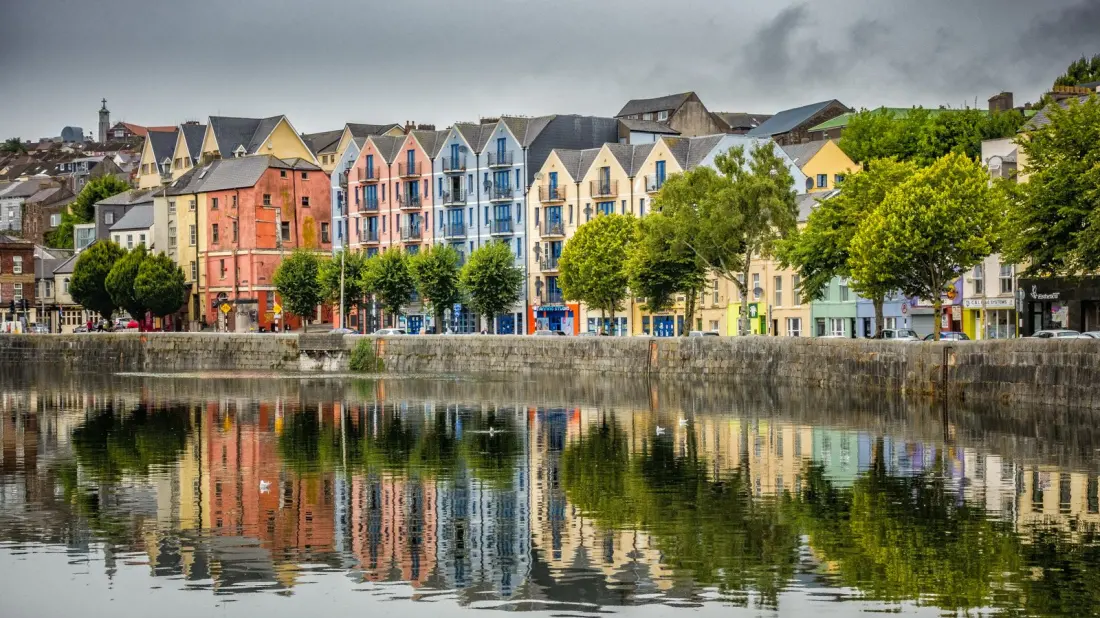
Dublin gets the crowds, but Ireland's second city has a claim on the better food. Cork, on the country's southwestern coast, has spent centuries doing things its own way — locals backed a failed rising against Henry VII in the late 1400s and picked up the nickname "Rebel City" along the way. That independent streak now shows up mostly on plates and in pint glasses.
Start at the English Market, a covered food hall trading since 1788. Fishmongers like family-run K. O'Connell's and Ballycotton Seafood sell the day's catch — monkfish, cod, haddock — and will talk you through cooking it if you have a kitchen at your rental. Upstairs, Farmgate Café turns market ingredients into Irish standards: lamb stew and fish chowder with brown soda bread.
A few minutes' walk away, Goldie has earned a Michelin Bib Gourmand for seafood that changes daily based on what the local boats bring in. Travellers on Tripadvisor suggest booking ahead. If you fancy something different, the city's international scene runs deep — Nosta does Turkish and Mediterranean mezze, while Koto covers Japanese and Thai favourites like soba and pad Thai.
Cork's culture calendar gives you reasons to pick your dates. October brings both the Cork Folk Festival and Guinness Cork Jazz; August's Cork on a Fork Fest celebrates the food scene with tastings and special menus. Off-season, the Cork Opera House and Triskel Arts Centre keep the stage busy. For history, climb the tower of 18th-century St. Anne's Church in Shandon — you get city views and can ring a tune on the bells yourself. Nearby, Franciscan Well Brewpub sits on the site of a 13th-century monastery and ranks among Ireland's earliest craft breweries, with tours if you want the backstory.
Then there are the pubs. Sin É, pouring since 1889, is one of the city's oldest and still hosts traditional sessions — fiddles, accordions, banjos, and locals who'll happily chat between tunes. Order a Murphy's or Beamish stout, both brewed in Cork rather than Dublin, and mind pub etiquette: buy your round, don't talk over the musicians. If you have a spare half-day, a direct 25-minute train takes you to Cobh, the pretty harbour town that was the Titanic's final port of call.
Getting in is easy: Cork Airport sits about five miles south of the centre, with Bus Éireann routes 225 and 226 running to the bus station, plus taxis and car hire on hand. Cork suits food-motivated travellers, festival-goers and anyone who'd rather earn a pub's respect than queue for a photo. Come hungry, stay a weekend, and you'll understand why Corkonians don't feel second to anyone.