Danielle Cass asked her surgeon one question when she learned she had aggressive breast cancer: how soon could she surf again? Fourteen months later — after a double mastectomy, three surgeries, and 21 infusions of chemotherapy and immunotherapy — she had paddled out more than 100 times. Her essay for Outside Online makes the case that the ocean wasn't just a comfort during treatment; it may have been part of the medicine.
Her route into surfing was roundabout. Cass grew up in the Midwest, nowhere near waves, and only took her first lesson at 52, when the pandemic shut down her San Francisco swim pool and a year of cold-water laps in the Bay gave her the confidence — and the wetsuit habit — to try. What started as one lesson turned into dawn-patrol sessions several mornings a week north of San Francisco, plus surf trips to Mexico, Nicaragua, Costa Rica, and down the California coast. Along the way she assembled a crew of women surfers aged 25 to 75.
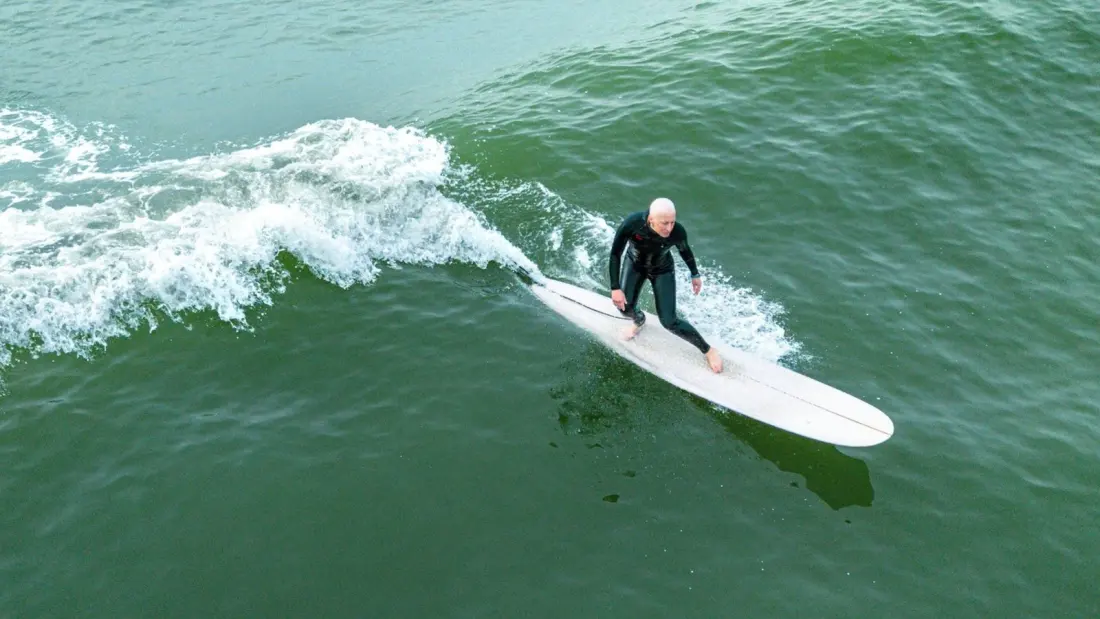
When cancer hit, she turned to the 39,000-strong "Women Who Surf" Facebook group for advice. Most respondents said they'd skipped surfing through treatment, but big-wave surfer Melanie Ezell, who surfed through ovarian cancer in Oahu, told her to go for it. Seven weeks after her mastectomy, and just three days after her first chemo infusion, Cass was back in the water. Sessions were shorter and exhausting — she'd rest on her board letting sets roll past while her breathing recovered — but she describes the ocean as an antidote to the drugs coursing through her system.
She started posting GoPro clips of herself surfing bald, and women around the world responded: a massage therapist surfing through rectal cancer near the Oregon-California border, a mum of toddlers in Cornwall, a former pro longboarder in New South Wales, a competitor in Los Angeles. Her point, backed by science, is that movement during cancer treatment matters. A study of 45,530 women published in the Journal of the National Cancer Institute in September 2026 found that staying physically active around a diagnosis buffers the physical toll of treatment. The American Society of Clinical Oncology issued its first exercise guidelines for cancer patients in 2022, and her own oncologist at Kaiser Permanente Oakland encourages patients to keep moving through chemo — better mood, better sleep, less fatigue.
Why should a traveller care? Because Cass's story doubles as a nudge not to wait. Her biggest lesson is that the surf trip, the lesson, the scary new thing you've deferred for decades shouldn't stay deferred — and Northern California is a genuinely welcoming place to start, with mellow beginner breaks, a strong women's surf community, and rental gear for cold water. You don't need to be 22 or a local; you need a hooded 5mm wetsuit and a morning to spare.