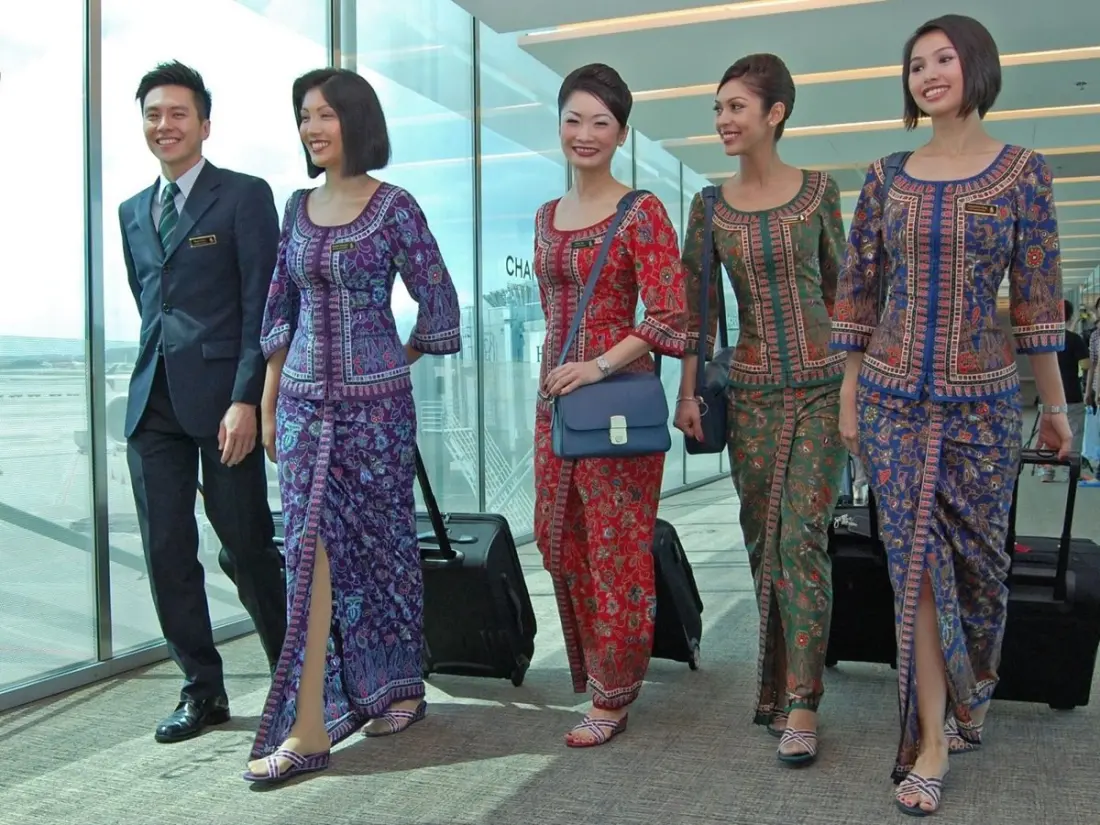
The sarong kebaya isn't going anywhere. But from January 2027, the women wearing it on Singapore Airlines flights will step into something new: closed-toe wedge shoes designed to replace the open-toe sandals and slingbacks cabin crew have worn for decades.
The airline worked with Singapore footwear brand Pazzion on the design, and the process took a striking 31 months — nearly three years to develop a single pair of work shoes. That may sound excessive until you consider what the job demands: hours of standing, walking cabin aisles, and pushing trolleys at 35,000 feet. Prototypes were wear-tested by flight attendants on actual flights before anyone signed off.
The new shoes keep the signature batik motif, with colours still denoting crew rank, so the visual identity of the uniform remains intact. What changes is the engineering: a widened toe box, a padded back, cushioned insoles, and a supportive wedge heel. The closed toe also adds a practical layer of protection against spills and dropped items — a real hazard on a busy service run.
There's a practical bonus beyond comfort, too. Crew currently switch between sandals and slingbacks depending on the phase of the flight. The new wedges work throughout, so one pair does the whole duty. Singapore Airlines hasn't said when the full transition will be complete, only that it begins progressively in early 2027.
For travellers, this is a small but telling story. The kebaya, designed by Pierre Balmain in the late 1960s, is arguably the most recognisable uniform in aviation — the batik print alone tells you which airline you're flying before you see a logo. Preserving that while quietly rethinking the footwear underneath it is a sensible balance between brand heritage and the reality of the job. Passengers won't notice a downgrade; crew will notice a genuine upgrade.
It also fits a broader moment in aviation, where airlines are re-examining dress codes that looked elegant but punished the people wearing them. Comfort and image don't have to be enemies, and three years of development work suggests Singapore Airlines took the point seriously rather than rushing out a cosmetic fix. The verdict that matters most, of course, belongs to the crew who'll wear them on long-haul rotations — but a cushioned insole and a wider toe box are a promising start.
Story via Live and Let's Fly.