Turkey packs an unusual amount of architectural history into one country, and a new round-up from Getaway South Africa makes the case that the famous mosques are only the starting point. Across twelve landmarks, the list runs from a Neolithic stone complex roughly 11,000 years old to the courtyards of Ottoman Istanbul — with Roman libraries, cave churches and a gorgeously carved medieval hospital along the way.
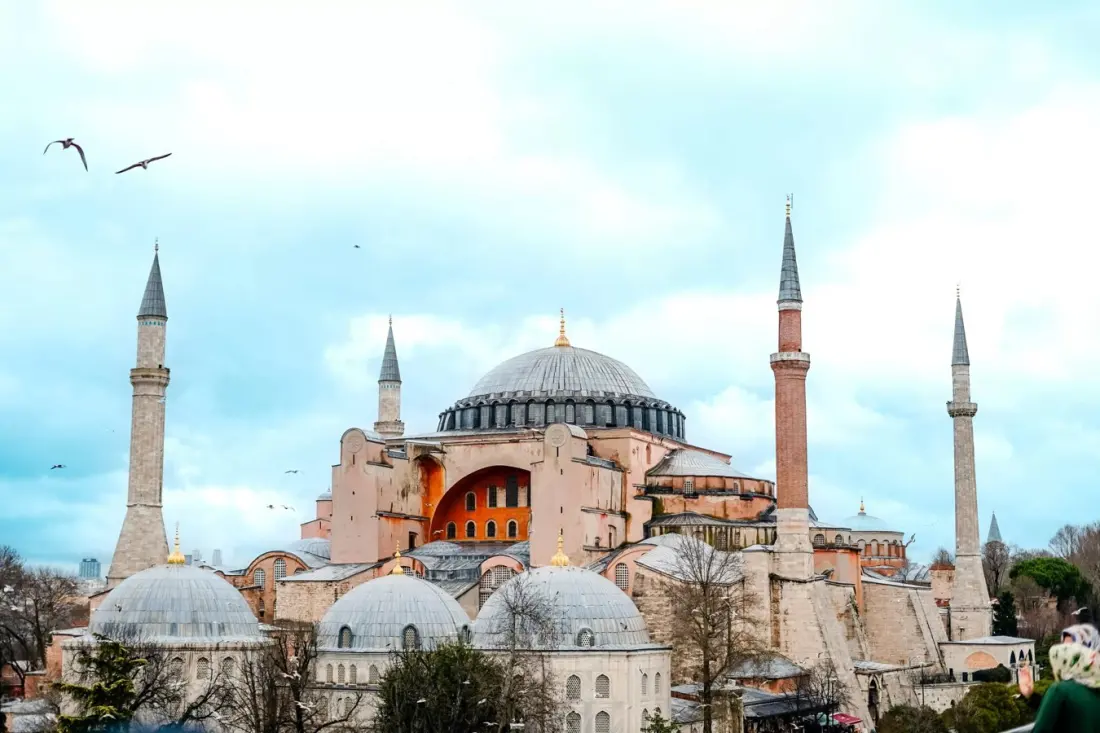
Istanbul naturally dominates. Hagia Sophia, completed in AD 537 under Emperor Justinian I, remains one of the most influential buildings ever constructed: its vast central dome was an engineering leap forward, and its interior layers Christian mosaics beneath Islamic calligraphy, reflecting its shifts from cathedral to imperial mosque after 1453, then museum, then mosque again in 2020. Across the square sits the Blue Mosque, finished in 1616, named for its blue Iznik tiles and known for six minarets and a cascade of domes. The Süleymaniye Mosque, designed by the great Ottoman architect Mimar Sinan in the 1550s, is quieter but just as rewarding — its külliye once included schools, a library and a bathhouse, showing how faith and civic life were built together. Topkapi Palace, the Ottoman court's home for centuries, works differently from European palaces: a sequence of courtyards, gardens and Bosphorus-facing terraces rather than one grand façade.
Outside the capital, Edirne claims Sinan's own favourite: the Selimiye Mosque, with its immense dome and four extraordinarily slim minarets. In central Anatolia, Cappadocia flips the idea of architecture on its head — centuries of inhabitants carved chapels, monasteries and entire underground cities like Derinkuyu and Kaymaklı into soft volcanic rock, with the Göreme area preserving Byzantine frescoes in its rock-hewn sanctuaries.
The list also reaches deep into the ancient world. At Ephesus on the Aegean coast, the two-storey façade of the second-century Library of Celsus — also a senator's tomb — anchors one of Turkey's most impressive archaeological sites, complete with a monumental theatre. In the southeast, Göbekli Tepe near Şanlıurfa rewrites the timeline: its T-shaped limestone pillars, some 5.5 metres tall and carved with animals, date to around 9600–8200 BC and were raised by communities long before cities or empires existed. UNESCO added it to the World Heritage List in 2018.
Perhaps the most under-the-radar entry is the Great Mosque and Hospital of Divriği, built in 1228–1229 in central-eastern Anatolia. Its monumental entrances carry stone carving so deep and intricate it reads almost as sculpture, and the pairing of a mosque with a darüşşifa — a hospital — reflects a medieval tradition of buildings serving whole communities.
For travellers, the appeal is the range: you can plan a trip around Istanbul's domes and palaces alone, or stretch it to include Roman ruins, cave dwellings and a Neolithic sanctuary, often within a two-week itinerary. Most of these sites are UNESCO-listed, several require modest dress and timing around prayer hours, and a few — Divriği, Şanlıurfa — sit off the main tourist circuit and reward a bit of extra planning.