A cold swim in an alpine lake, a cough that wouldn't quit, and a four-mile descent to a car park — day six of this John Muir Trail account is less about mileage and more about the moment a long hike starts asking hard questions.
The writer, 69 and in remission from cancer, had already climbed Mount Whitney and crossed Forester Pass while battling a respiratory infection that had dragged on for six weeks before the trip. On the eve of the final push out via Kearsarge Pass — roughly 10 miles and over 2,000 feet of climbing to Onion Valley — he recorded a midnight verdict: he was done. His conditions were blunt. He wouldn't return to the trail until he'd gone 24 hours without a single cough. And with his passport at his son's place in Santa Rosa and no RealID, flying home from Las Vegas wasn't an option anyway; a bus would have to do.
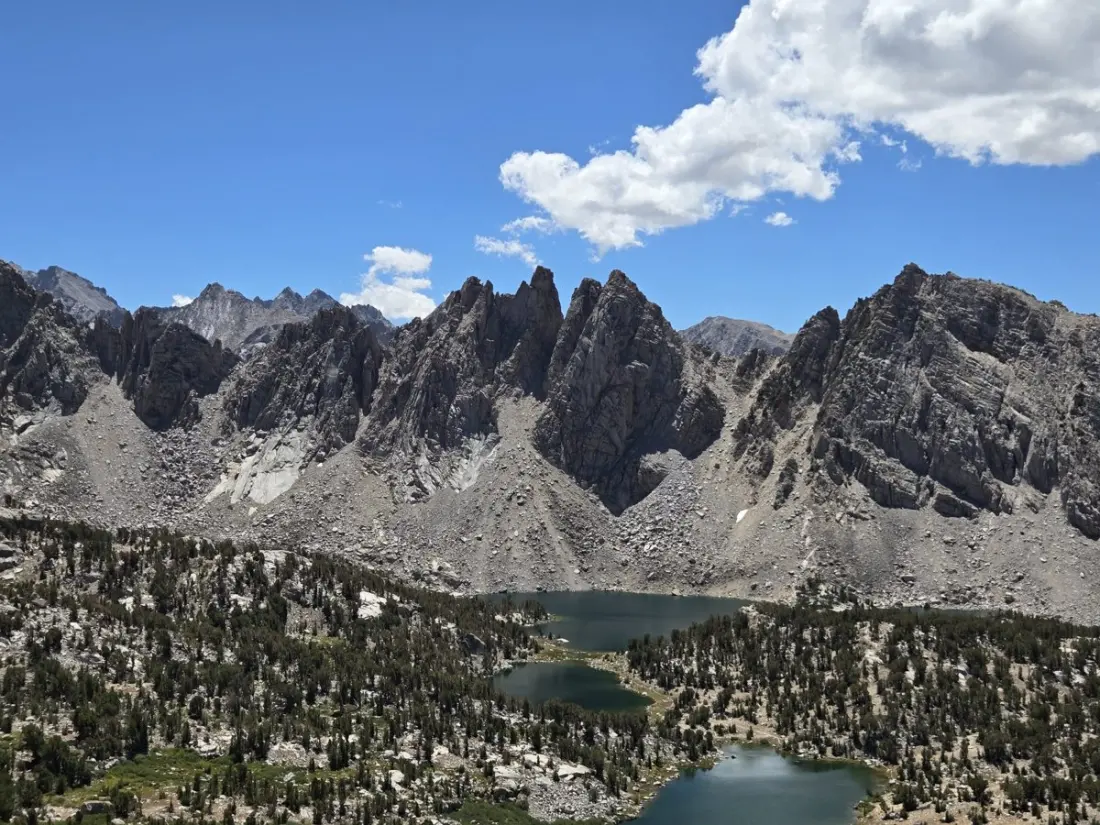
The day itself, though, was far from grim. After drying out rain-soaked gear on a slow morning, the pair tackled 1,000 feet of gain in the first mile and a half, then gentler terrain past Bullfrog Lake, where they spotted two unbothered bucks and — on a dare from his hiking partner Sam — took a brief swim in the frigid water. His technique for the big climbs: 60 counted paces (30 when steep), then deep breaths to slow the heartbeat. At the pass, they joined other hikers celebrating views of jagged peaks before dropping four miles past Gilbert Lake and fields of boulders to the trailhead.
What followed is a useful mini-guide for anyone finishing a Sierra hike at this exit point. A wrong digit in a phone number meant no cabin at Williamson Motel in Independence — owner Lauralyn's husband Doug still helped out, pointing them toward medical care (Bishop's North Inyo Hospital over Lone Pine, for better pharmacy access) and lunch: Copper Top BBQ in Big Pine, where a menu item doubles everything — tri-tip, pulled pork, ribs, chicken sausage — and the two of them finished it all. In Bishop, an unhelpful Best Western desk quoting $250 sent them next door to a Motel 6 around $100 cheaper. A post-milkshake midnight recording from the hotel found him still coughing at 3:45 a.m., weighing one last shot at rejoining the trail versus an ER visit.
Why does this matter to travellers? Because it captures something guidebooks skip: the logistics and emotions of bailing out gracefully. Exit routes, small-town motels, roadside barbecue and rural hospitals are all part of long-distance hiking, and this account handles them honestly — right down to the tear in his shorts nobody mentioned. It's a warm, wry read for anyone eyeing the JMT, especially older hikers wondering how hard to push. Credit: The Trek.