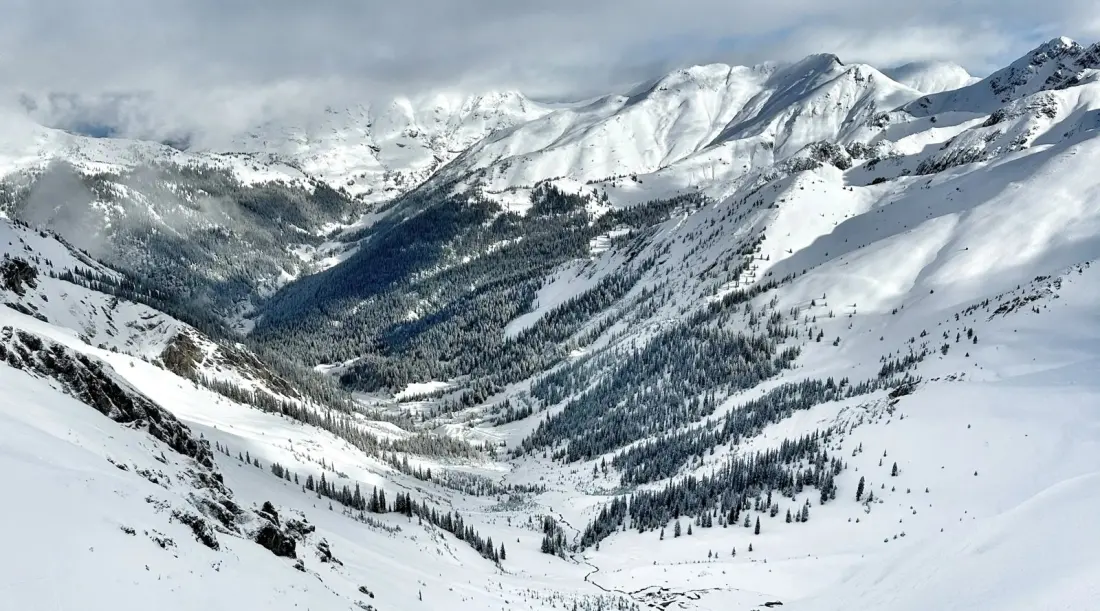
A skier near Silverton, Colorado, was carried roughly 500 feet down a mountainside on November 3 and partially buried before his partner dug him out. Professional skier and filmmaker Colter Hinchliffe filmed the whole thing. The man walked away unhurt — but he was lucky, and he's not the only one who's had a close call this season.
The Silverton slide is one of several early incidents across the Mountain West in late October and early November 2026. On October 25, a skier triggered a wind-slab avalanche on Mount Bross in Colorado and ended up buried facedown until companions freed them. A day into November, skiers near Alta, Utah, set off multiple wet-snow slides that ran over a cliff and reached a service road.
The Colorado Avalanche Information Center had logged nearly 100 avalanches statewide by November 6, 15 of them skier-triggered. Deputy director Brian Lazar told Outside that the number isn't unusual — avalanche season starts well before most people think it does. What makes this fall trickier is the weather pattern: two warm, very wet storms pushed rain above 12,000 feet in southwestern Colorado, kicking off wet slides, while dry spells between storms let weak layers form on the snow surface, ready to fail once fresh snow loaded on top.
The real early-season hazard, Lazar says, is what shallow snow does to the consequences. A small slide won't bury you, but with rocks, logs and stumps just under the surface, even a short ride can turn ugly. There's also a trap built into the terrain itself: skiers hunting for the best coverage naturally drift toward steep, loaded slopes — exactly where avalanche conditions are worst. Hinchliffe noted that heavy early snow in the San Juans has pulled big crowds into the backcountry, which means more people making more decisions, and some of them going wrong.
If you're planning to earn your turns before the resorts fully open, the playbook is straightforward. Check the local avalanche forecast the morning you head out, carry a transceiver, shovel and probe, and tour with partners who actually know how to use them. Hinchliffe's own approach is worth copying: he and his partner agreed in advance to stick to mellower terrain, reasoning that he has an entire season ahead and no reason to gamble it in November. Rescue practice matters too — digging a friend out is a skill that fades without repetition.
For travellers, this is a useful reality check on early-season mountain trips. The Rockies can look skiable in autumn photos while the snowpack is still fragile and half-formed. If you're not trained in avalanche travel, stick to resort terrain or low-angle, below-treeline tours — and if you are trained, treat November like midwinter, not like a warm-up.
Outside Online