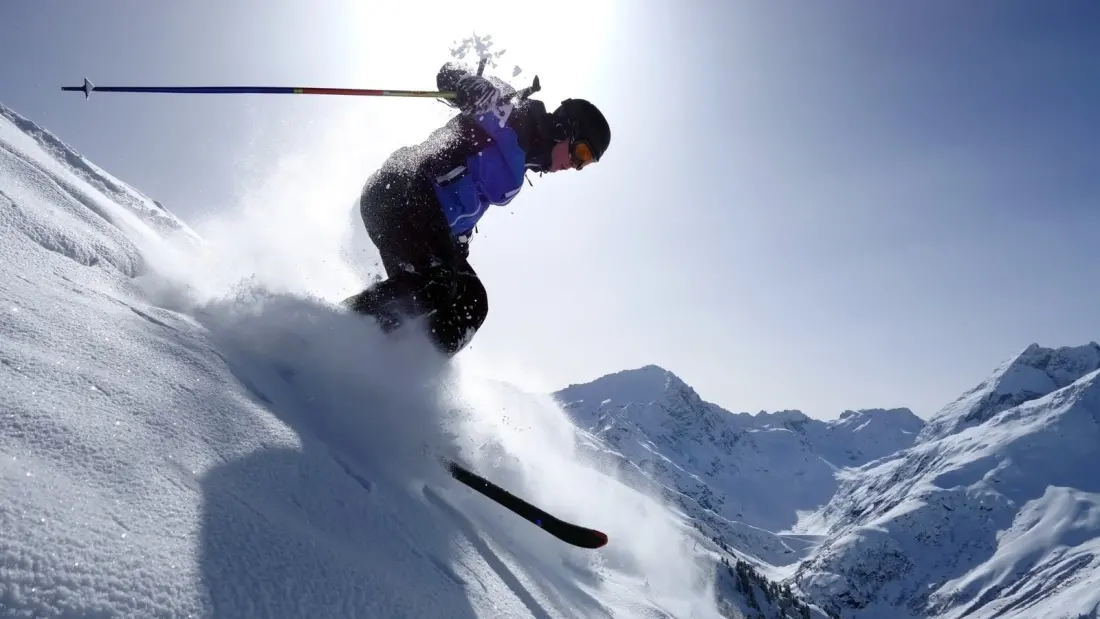
Every skier knows the feeling: day one is pure adrenaline, then you wake up on day two feeling like you've been run over by a snowcat. A physical therapist with serious ski credentials has a plan to fix that, and it starts four to six weeks before your trip.
Milica McDowell, DPT, who owns Clearwater Physical Therapy in Bozeman, Montana and grew up skiing at Alyeska Resort in Alaska, explains that day-two misery comes from three things. First is eccentric loading — muscles working as they lengthen, like the lowering half of a squat. A study of 24 fit skiers found reduced eccentric strength in quads and hamstrings even a day after four hours on the slopes, and research puts peak soreness at 24 to 72 hours after unfamiliar eccentric work.
Second, gym fitness doesn't transfer perfectly. Strength and cardio help, but nothing quite replicates hours held in a flexed ankle and knee position. Third is altitude: thinner air means less oxygen reaches your muscles, so fatigue arrives sooner, and headaches can show up within a day of arrival. Some soreness is normal — but if it lasts more than five days, something's off.
The fix: McDowell's pre-season routine combines three strength moves and one cardio drill. There's a pulsing squat hold (20 to 30 seconds per set, building to over a minute, four to six sets) that mimics repeated turns. A single-leg kettlebell hinge with one heel raised, around 25 pounds for most fit people, 12 to 20 reps. And a Bulgarian split squat — back foot on a bench, weight in one hand — recommended by her husband Paul Herberger, a retired Freeride World Tour skier. For cardio, she favours short 30-to-60-second hard bursts with three to four minutes of rest, pushing heart rate to roughly 75 percent of your max (estimated as 220 minus your age). Anyone with heart, kidney or metabolic conditions should check with a doctor first.
On the mountain, a five-minute warm-up covers the rest: stairs, squats or burpees until your heart rate rises 20 to 30 beats above resting, then three moves — an Achilles stretch that copies your ski boot stance, a side-lying quad stretch for sore days, and a twisting lunge that wakes up your spine and core at once. One honest caveat from the research: stretching doesn't actually reduce soreness. Light movement and massage do, so a walk between ski days beats lying on the sofa.
The takeaway for anyone booking a ski holiday: start this routine four to six weeks out and keep the loads light at first, since new eccentric work causes its own soreness. The wisdom comes from 73-year-old Joe Puchek, who has skied for 71 years: make the decisions today that let you ski tomorrow. The wax can wait — the squats can't.