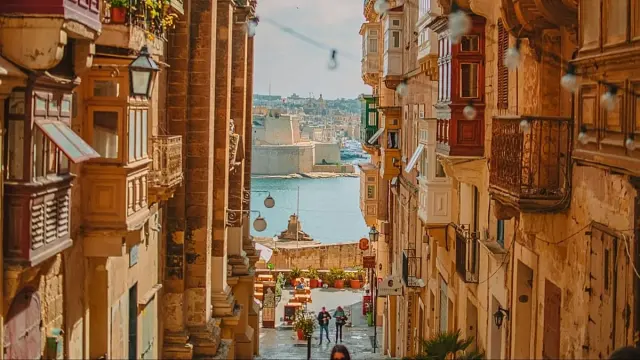
Malta is barely 90 minutes by catamaran from Sicily's south-east coast, and Valletta makes a striking first impression: fortified walls, rooftop bars, honey-coloured stone. It's also packed, especially in summer, when the cobbled streets of one of the world's most densely populated countries become hard to navigate. The good news from a recent trip is that the quieter, more rewarding Malta is easy to reach — you just need to look north and inland.
Start with where you sleep. Most visitors land at the airport and cluster in the south — Valletta, Sliema, St Julian's and St Paul's Bay — then day-trip north to Comino's Blue Lagoon and Gozo before leaving again. Basing yourself in the far north flips that logic. The Riviera Spa Resort at Marfa, an adults-only property overlooking Comino, worked well for a group of nine: four restaurants, two bars, a long massage menu, pilates and aqua aerobics, all bookable through operators like Jet2 and EasyJet Holidays. Not luxury, but handy for Gozo and mercifully child-free.
The trip highlight was Mdina, the walled hilltop city whose name means 'fortified place' in Arabic. It was Malta's capital and home to its nobility until the Knights of St John arrived in the mid-16th century; after they moved the seat of power to Birgu, Mdina faded into the 'silent city' it remains today. Only about 400 people live inside the walls, and there are no cars — the streets are too narrow. Arrive mid to late afternoon and the low sun turns the sandstone golden. It's a small place, but the atmosphere is unlike anywhere else on the islands.
Gozo feels like a different country. Development that has transformed the main island largely passed it by, leaving countryside, small villages and a coastline that divers rate among Europe's best — no need to fly to southeast Asia for reefs and clear water, with dive schools catering from beginner to advanced. Non-divers can still see the Blue Hole, Inland Sea and the former Azure Window site by boat or from the shore, plus the Ggantija Temples in Xagħra, among the oldest free-standing Neolithic structures anywhere. Food-wise, look for gbejna, a local sheep's milk cheese. The Gozo Fast Ferry runs from Valletta to Mgarr in 45 minutes, and public buses cover the island.
Finally, the southeast fishing towns — Marsascala, Marsaxlokk and Birżebbuġa — offer harbourside wanders, beaches and a slower pace than the capital. Time your visit to a Sunday for Marsaxlokk's fish market, widely considered the best in the country. All three are reachable by bus from Valletta, though leave generous time if you have a flight: Maltese traffic is unforgiving.
Who is this for? Anyone who's been put off Malta by reports of crowds, group trips after a one-roof resort, divers, and slow travellers who'd rather wander a silent walled city than fight for pavement space in Valletta. The capital is still worth a look — just don't make it your whole trip.
Ruth Wright reported this story for Euronews Travel.