
America's national parks are busier, pricier and more thinly staffed than they've been in years — which might be the best excuse yet to look beyond the famous names.
The National Park Service turns 110 in 2026, but it faces real pressure: budget and staffing cuts have raised concerns about long queues, closed facilities and stretched rangers just as visitor numbers hit record levels. On top of that, a new $100 entrance fee for international visitors now applies at 11 of the busiest parks, including Yosemite, Zion, Yellowstone, Grand Canyon and Acadia, while the "America the Beautiful" annual pass for non-residents has jumped to $250.
The upside? The US park system holds over 400 sites, and plenty of the headliners have near-identical understudies with a fraction of the crowds. Six worth knowing:
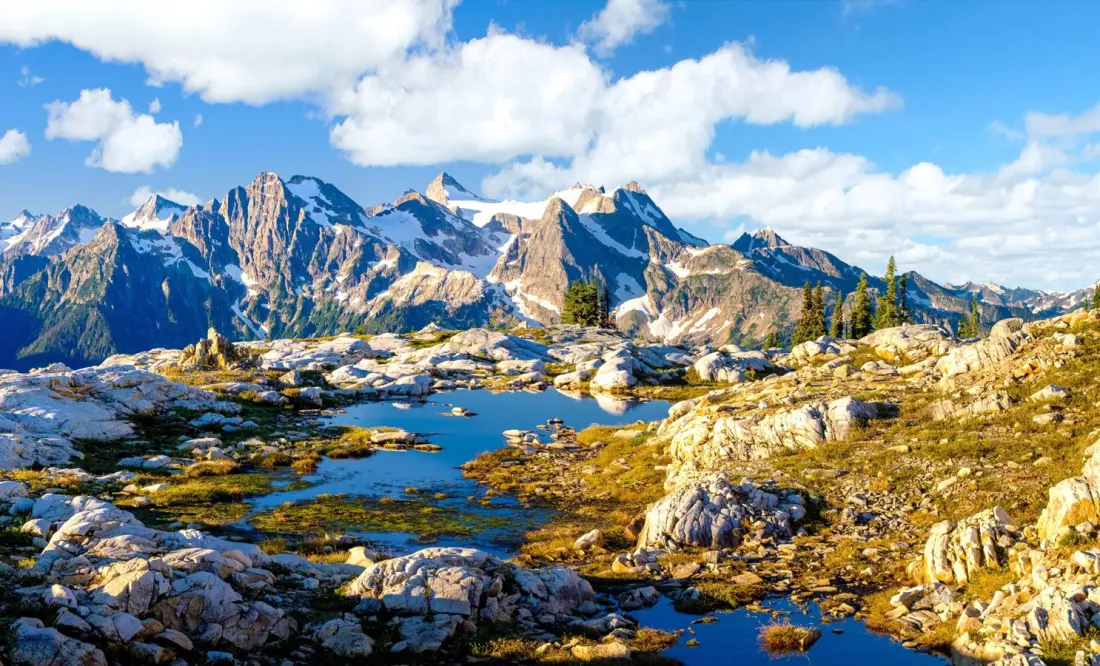
North Cascades, Washington — Glacier's alpine drama without the traffic. It holds the largest glacial system in the lower 48 (around 300 glaciers) and sees roughly 40,000 visitors a year, versus Glacier's 2.9 million. The Cascade Pass Trail is the marquee day hike, and Seattle is just over two hours away.
Lassen Volcanic, California — Yellowstone's geysers, mud pots and fumaroles, but with under half a million annual visitors. The 8km round-trip Lassen Peak climb delivers volcano-summit views; winter turns the whole thing into a snow-covered wonderland.
Congaree, South Carolina — Everglades vibes on boardwalks and waterways. It protects the largest stretch of old-growth bottomland hardwood forest in the Southeast, and you can paddle 24km of the Cedar Creek Canoe Trail past bald cypress and tupelo.
Black Canyon of the Gunnison, Colorado — a 77km-long, 800m-deep gorge carved by the Gunnison River over two million years. It marks a decade as an International Dark Sky Park, with summer astronomy programmes and a September Astronomy Festival, plus an easily driven 11km South Rim route of overlooks.
Saguaro, Arizona — Joshua Tree's desert oddities, in the form of cacti that hit 23 metres, split across two districts around Tucson. There's a paved 13km Cactus Forest Loop for cyclists, and the park holds Urban Night Sky Place status for stargazers.
New River Gorge, West Virginia — the newest national park, and a quieter stand-in for Great Smoky Mountains. The New River is said to be the world's second oldest, with first-rate white-water rafting, and the annual Bridge Day festival sends BASE jumpers off the gorge bridge.
Two more things worth factoring in. The parks sit on Indigenous ancestral lands, and the American Indian Tourism Association now maps the original custodians of each site — programmes like Native America Speaks at Glacier and Chumash canoe crossings at Channel Islands offer ways to engage with that history directly. And if you want to give back, the National Park Foundation and local "friends" groups accept donations that fund conservation and education work.
For international travellers, the maths has changed: choosing a lesser-known park can save $100 per visit, dodge the queues and spread tourism dollars to under-visited communities. Just go prepared — with reduced staffing, self-sufficiency, paper maps and solid trail sense matter more than ever.