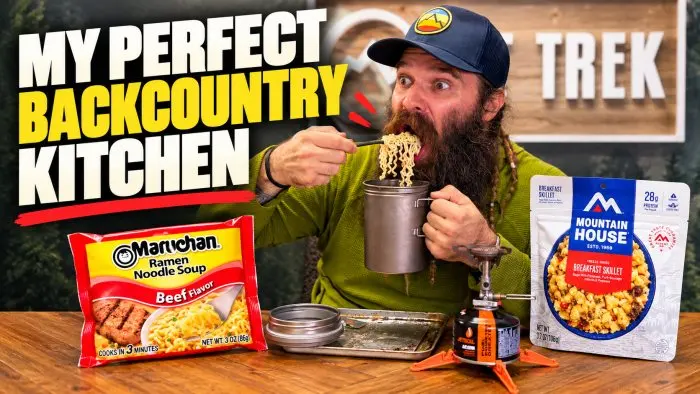
After roughly 14 years of long-distance hiking, one writer has distilled a backcountry kitchen down to a handful of items that all nest together — and the setup is worth a look whether you're planning your first multi-day hike or just tired of fiddling with clunky cookware.
The centrepiece is the Vargo Bot HD, a one-litre titanium pot that weighs 153 grams (5.4 ounces). Its trick is a patented screw-on lid, which turns the pot into a bottle: you can cold-soak meals in it, haul water on dry stretches, stash leftovers, or pack a hoagie and salad-bar loot out of town. It even has measurement graduations at 300, 600 and 900 millilitres. One warning the author stresses: never screw the lid on while cooking — you'll build a pressure bomb.
For heat, the pick is the Soto WindMaster, a 67-gram canister stove with a built-in igniter and a recessed burner that shields the flame from wind. The author's unit has been going since 2017 and the igniter has apparently never failed. A lighter still rides along as backup, both for the stove and for potential emergencies — and because the titanium Bot can handle open flame, the whole system works even without canister fuel.
Rounding out the kit: a Smartwater bottle for water, any old spoon, a bandana for grabbing hot handles (burnt fingers ruin trail days, apparently), a Jetboil stand for safe indoor cooking, a DCF food bag from Hyperlite, and a four-ounce FlipFuel transfer valve. That last one sounds like a luxury until you learn the trick: on busy routes like the Appalachian Trail, Pacific Crest Trail, Continental Divide Trail, Colorado Trail, John Muir Trail or Arizona Trail, hikers constantly dump partially full fuel cans in town. The valve lets you scavenge that fuel for free, which easily pays back the weight over hundreds of miles.
The cooking method is as low-fuel as the gear: boil water with the lid on to trap heat, kill the stove, then let ramen or instant rice steep while you get on with camp chores. Bulk it up with tuna, cheese, or a glug of olive or coconut oil — a packet of ramen is only around 370 calories, and hikers need far more than that.
Why should a traveller care? Because this is gear advice tested over thousands of miles, not a showroom review. The whole philosophy — one pot that does three jobs, a stove light enough to forget about, and no single point of failure — translates directly to any camping trip where weight and pack space matter. If you've ever stared at a wall of cookware options, this is a genuinely simple place to start.