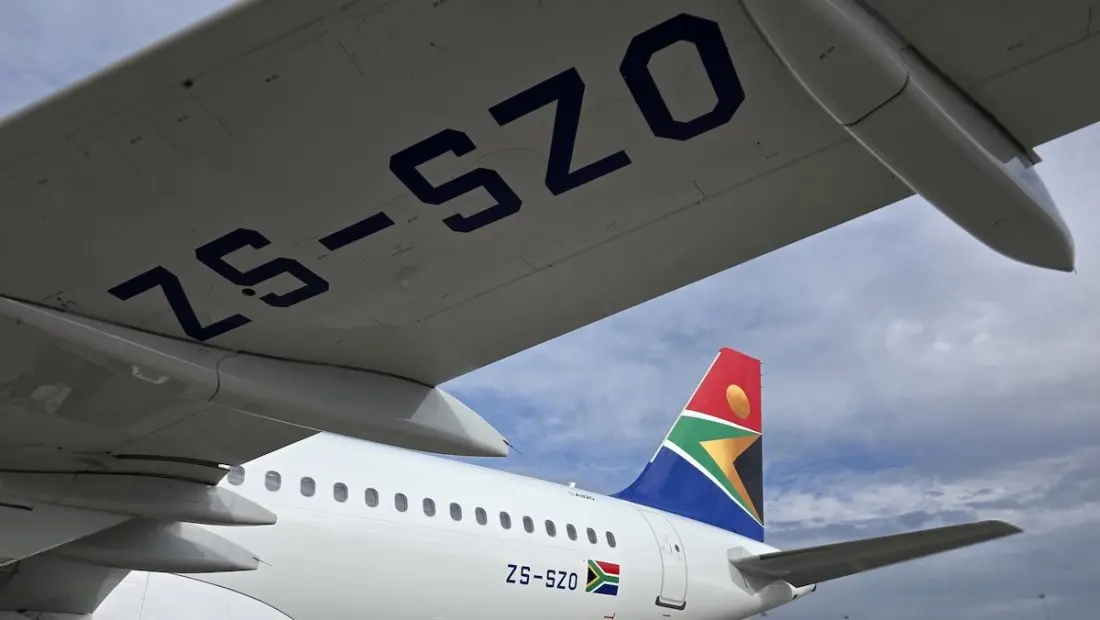
South African Airways has stopped paying a big chunk of its workforce on time. The airline confirmed that between 30% and 40% of staff — including pilots, managers, executives and board members — are having their salaries deferred, with the company blaming rising fuel costs and saying it has to prioritise 'critical operational costs' first.
Corporate affairs head Mpilo Dlamini admitted the carrier never received a sufficient capital injection after it emerged from business rescue in 2021, which left it short on liquidity. His message, though, was defiant: SAA says it is talking to financial institutions that find its strategy 'bankable', and it will not ask the government for another bailout. Given that South African taxpayers have already poured billions into the airline over the years, that's a bold line to hold.
The numbers behind the reassurance don't inspire much confidence. For the financial year ending 31 March 2025, the SAA group reported a net profit of 155 million rand (about $9.3 million), and the airline itself 30 million rand ($1.8 million). Sounds okay until you look closer: before interest, tax, depreciation and amortisation, the group actually lost 317 million rand (roughly $19 million). And the thin profit was largely manufactured — the books include 1.169 billion rand (about $70 million) in asset disposal gains, partly from selling Heathrow slot pairs and a lease-modification gain. In other words, the airline sold assets to paper over operating losses, and had little in the tank when fuel prices climbed.
The obvious read: an airline that can't pay its pilots on time isn't in a remotely healthy position, whatever the press releases say. Salaries are usually the last bill a functioning carrier misses.
Why should travellers care? If you have flights booked with SAA, or were planning to use it to connect across South Africa or onward to regional destinations, this is a genuine warning sign. Carriers in liquidity crises can cancel routes at short notice, cut schedules, or — in the worst case — stop flying altogether, which leaves passengers scrambling for rebookings and refunds. If a trip hinges on SAA, consider booking flexible fares, paying by credit card for protection, and having a backup carrier in mind (there are domestic alternatives within South Africa). The situation could stabilise, but the airline has a long history of financial trouble and this is the roughest patch since it was dramatically downsized during business rescue.