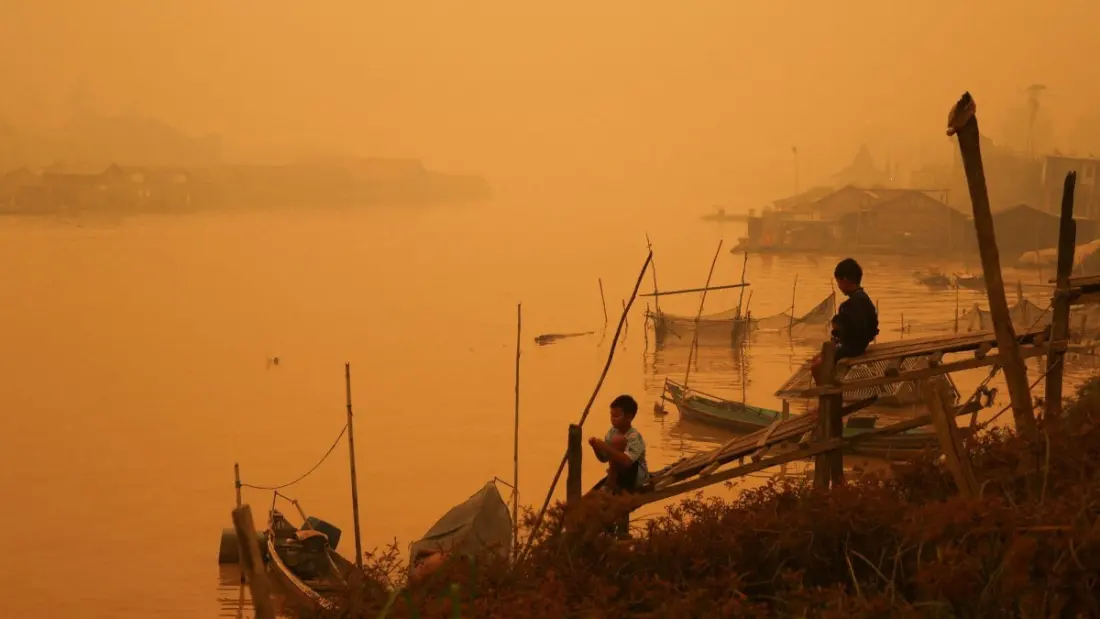
If you've never experienced Southeast Asia's haze season, the numbers still land hard. In September 2015, parts of Peninsular Malaysia recorded Air Pollutant Index readings above 300 — officially hazardous — and schools closed as the sky turned mustard yellow by midday. The fires causing it were burning thousands of kilometres away in Sumatra and Kalimantan. Smoke, as the saying goes, doesn't stop at border checkpoints.
Fast forward to 2026, and the region endured its most severe haze season in years, choking Malaysia and much of Southeast Asia from August through October — just weeks before climate negotiators met at COP31 in Antalya, Türkiye, which ended without a firm agreement. The gap between summit rhetoric and breathable air is, by most accounts, widening.
The core problem is structural. The ASEAN Agreement on Transboundary Haze Pollution has existed for over two decades, but most funding only kicks in after smoke is detected. Malaysia has been pushing for a Sustainable Haze Fund that would draw money from international organisations, development banks and private players — before fires start, not after. That matters because peatland fires release carbon stored for thousands of years; the emissions from these fires have been estimated at more than Germany's annual greenhouse gas output.
COP31 did produce some building blocks, even if no finished house. The Antalya Action Plan on Integrated Fire Management, launched on November 16 and co-led by Türkiye, Brazil and South Korea with FAO support, is the first international framework to put wildfire prevention — rather than emergency response — at the centre of a COP presidency initiative. The Peatland Breakthrough, launched a day earlier under the Marrakech Partnership, calls for rewetting and restoring peatlands as a 2030 climate solution. Both are voluntary. Indonesia, meanwhile, used the ASEAN Pavilion to promote its Western Pacific SAGU project on peatland governance, even as its relations with Kuala Lumpur and Singapore remained strained by the haze season.
What's still missing, the article argues, is money reaching the people who actually light the fires. Smallholder farmers in Riau, South Kalimantan and Sarawak often burn because zero-burn alternatives like composting cost money up front. Financing tied to RSPO or MSPO palm oil certification could change that — but no such mechanism came out of Antalya. Ideas on the table include green sukuk and satellite fire-monitoring partnerships modelled on Türkiye's own response to its devastating 2021 coastal wildfires.
For travellers, the takeaway is practical: haze is a real seasonal risk across Malaysia, Singapore and much of Indonesia, typically worst between August and October. It can ground flights, close schools and attractions, and make outdoor plans genuinely unpleasant — or unhealthy — especially for children and older travellers. Check Air Pollutant Index readings and regional advisories before booking travel in that window, and keep itinerary flexibility built in. The policy wrangling may take another decade to resolve; your October trip to Kuching won't wait for it.