
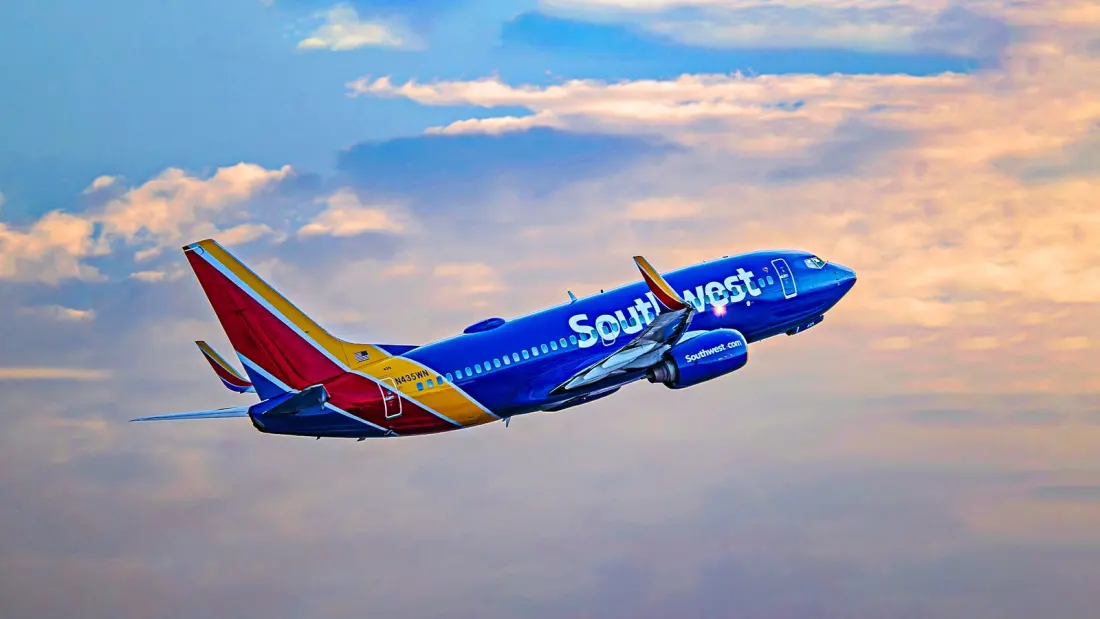
The Boeing 737-700 is quietly bowing out. Southwest Airlines, the type's launch customer back in 1997, plans to have every one of them gone by 2031 — along with its 737-800s — in favour of an all-MAX fleet.
The numbers show just how central the -700 was. Southwest took delivery of 514 between 1997 and 2018 (one was written off after a 2013 accident, leaving 513 at the peak), spread across direct orders, leases, second-hand purchases and 54 gained in the AirTran Airways merger. No other variant comes close: the airline ordered 195 of the 737-300 and 207 of the 737-800.
Southwest's devotion to smaller 737s has always been deliberate. Running a single aircraft family saves a fortune on parts and crew training, and keeping variants tightly grouped means planes are essentially interchangeable. It also fits the airline's habit of flying multiple daily rotations on routes, so right-sized capacity matters more than raw size. That's why it skipped the 737-400 entirely, and why it still has no interest in the larger MAX 9 or MAX 10 — the latter would also face performance limits at Chicago Midway, one of its biggest bases. Southwest is now the only airline in the world with the 737 MAX 7 on firm order: 269 of them, shaped in part by Southwest's own input, due to enter service in the first quarter of 2027 as the -700's successor.
For now, 277 of the -700s remain in service, the oldest jets in the fleet. Rather than winding them down quietly, Southwest has already fitted the whole subfleet with extra-legroom seating, cutting capacity from 143 to 137 seats. Another 172 will get new Collins Aerospace Meridian seats with USB-A and USB-C ports, replacing ageing B/E Aerospace seats that can't support in-seat power. How far the wider cabin refresh goes — Boeing Sky Interior, Space Bins, mood lighting — is less certain, since those upgrades are costly and the jets are leaving within five years.
What does this mean if you're booking a Southwest flight? Expect the classic small-jet Southwest experience to stick around for a few more years, just in ageing airframes that now at least have newer seats and power outlets. Longer term, you'll be flying on a MAX 8 most of the time — over 300 are already in service — so planes will feel roomier and fuller, and some routes may see fewer daily frequencies as average capacity per flight creeps up. Aviation fans keen to log a 737-700 in passenger service have roughly until the end of the decade to do it.
Story via Simple Flying.