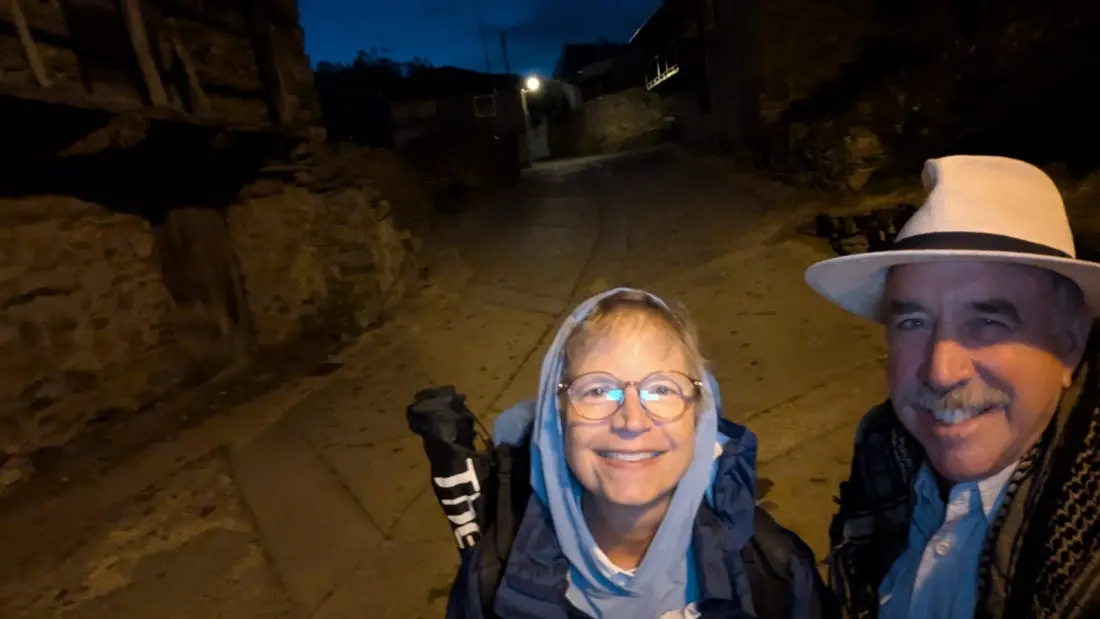
Two pilgrims hit day 14 of their Camino Francés with a legendary coffee stop, a nerve-testing descent, and a night in a 180-bed hostel that earns its nickname honestly.
The morning started in Riego de Ambrós at David's Oasis, a donation-based coffee stand where Carlos sets up at 6:00 a.m. serving coffee, juice, fruit and bars to passing pilgrims. He's become something of a Camino institution: comfortable chairs, infectious energy, and a send-off blessing to every guest — "Good Way. Good Life. See you on the Way!" — delivered with eye contact that makes a stock phrase feel personal.
Then came the hard part: a roughly three-mile downhill scramble into Molinaseca through a steep, scree-choked ravine carved by water. The writers describe each step as a tactical decision rather than a stride, a fair warning for anyone nursing an injury (one of them has a tender toe). When rain arrives, the same gorge turns slippery fast — umbrellas out, pace down. Molinaseca itself is the reward: a friendly, touristy town set up for pilgrims, with a river beach that's more trickle than swim spot this year.
The road into Ponferrada, by contrast, is endured rather than enjoyed: roadside walking, overpasses, and an industrial edge. They also flag a genuine Camino gripe — Spain's near-total lack of public toilets — which explains the telltale tissue blooms behind trees along the route. Pilgrim Park, despite the name, offers neither toilets nor accessible shrubbery.
Night was spent at Albergue de Peregrinos San Nicolás de Flüe, a large donativo parish hostel with 180 beds across 4-, 8- and dorm-style rooms, a big communal kitchen, and an even bigger courtyard. It's well regarded but gritty: bottom bunks (donativo status has perks), two toilets for the whole place, co-ed open showers, and a kitchen stocked with battered pots but no knives, utensils or corkscrew. The evening made up for it — pesto pasta and pan-fried turkey steaks shared with new friends, including Philipi, a cheerful Brazilian robbed of his pack in León who travels with his belongings tied by rope, and Benjamin from Israel, whose flamenco guitar sparked a folk jam session running through "Alice's Restaurant" and "House of the Rising Sun."
For anyone walking the Camino, this stretch is a good preview of what the trail actually feels like: moments of real warmth at donation stands and shared dinners, offset by logistics you have to plan around — steep rocky descents after rain, bare-bones kitchens (pack a pocketknife and a corkscrew), and hygiene facilities that test your flexibility. Donativo hostels like this one keep costs minimal, but you trade privacy for community. Bring earplugs, do your laundry daily, and maybe carry your own toilet paper. Source: The Trek.