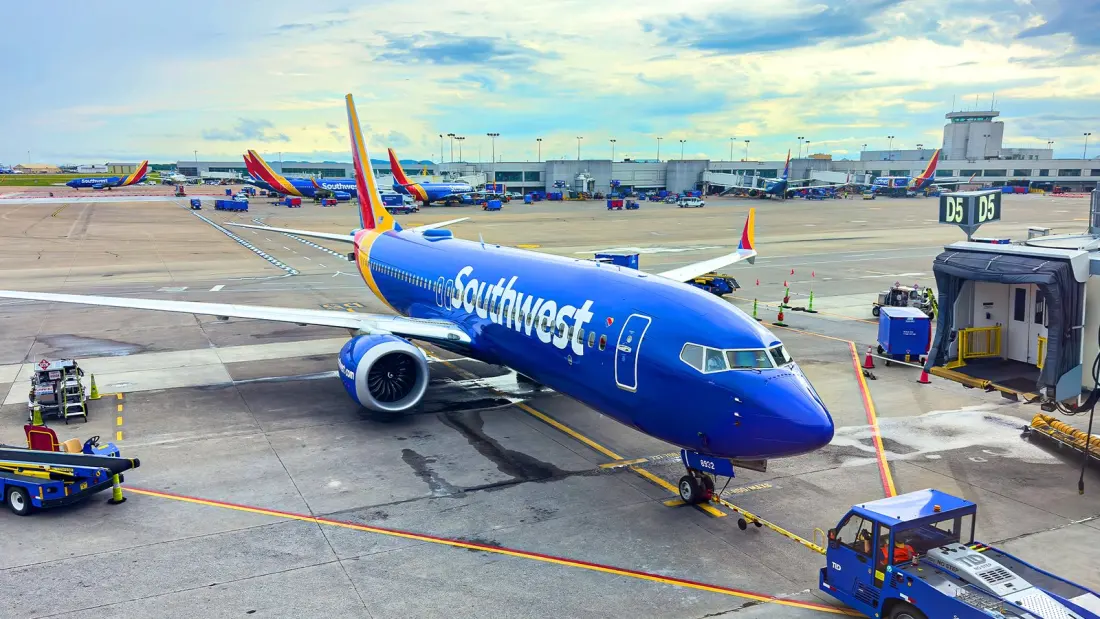
Southwest Airlines has quietly asked its flight attendants to arrive five minutes earlier for work — and the reason says a lot about how the airline's new baggage fees and seating rules are reshaping the way it operates.
Since 1 August, cabin crew on domestic Boeing 737-800 and 737 MAX 8 flights have been required to report 35 minutes before departure instead of 30. That covers a big slice of the airline: Southwest operates 814 aircraft, and the 737-800s and MAX 8s together account for 524 of them — roughly 65% of the fleet. Flights on the smaller 737-700 keep the old 30-minute rule, while Hawaii and international flights stay at 45 minutes.
So why the change? Blame the overhead bins. When Southwest scrapped its famous 'Bags Fly Free' policy in May 2025 and started charging $35 for the first checked bag and $45 for the second, more passengers started hauling their luggage onboard to dodge the fees. As the bins fill up, boarding drags — people hunt for space, reshuffle bags, and gate agents end up checking rollers at the door anyway. The airline's on-time performance tells the story: it slipped from 79.75% in January to just 64.94% in June this year, recovering to 70.73% by August.
Assigned seating hasn't helped. Southwest ended its decades-old open seating system at the start of the year, replacing it with eight numbered boarding groups and paid seat selection. Under open seating, passengers raced to grab a good spot; now that everyone has a designated seat, there's less urgency to get moving down the aisle, which adds to the congestion around the bins.
The bigger picture is a business model in flux. The baggage fees — introduced under pressure from activist investor Elliott Investment Management, which built a $1.9 billion stake — are expected to bring in around $1.5 billion a year. Paid seat selection, extra legroom and tiered fares are following the playbook of legacy US carriers. Southwest says no customer-facing schedules or boarding times have changed; the extra five minutes is purely about giving crews more breathing room to get flights out on time. The airline has also committed to retrofitting 70% of its aircraft with bigger overhead bins, which should ease the squeeze.
Why does this matter if you're flying Southwest? Expect boarding to take longer than it used to, especially on busy routes, and consider whether checking a bag or paying for seat selection will save you stress at the gate. If you're on a Basic fare, you can't pick a seat in advance, and your carry-on may still end up gate-checked if the bins are full. The Southwest of free bags and grab-anywhere seats is gone — but with a bit of planning, the transition doesn't have to be painful.