Somewhere past Sarria on the Camino Francés, a pair of long-haul pilgrims watch a group of five walkers slap a custom cartoon sticker of themselves onto an already graffiti-covered signpost, snap a selfie, and stroll on. One of them peels the sticker off and bins it. It's a small moment, but it captures a bigger tension on Spain's most famous walking route: what happens when tens of thousands of short-distance pilgrims meet the trail's older, slower culture.
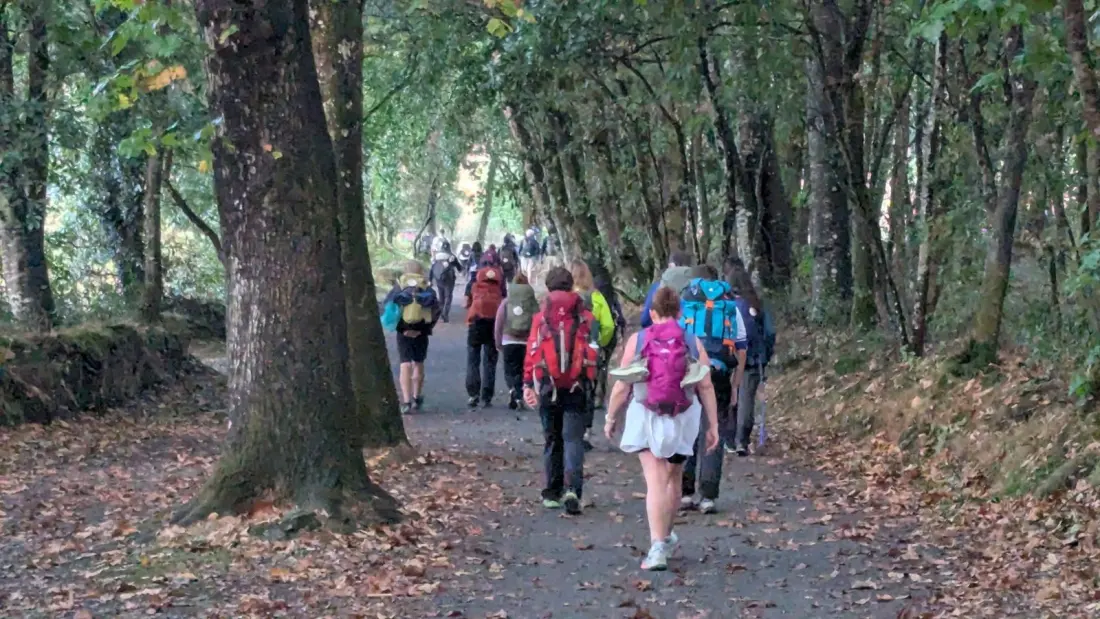
The writer, deep into a multi-week trek and walking day 22 with a companion named Suzanne, coins a phrase that sticks: "crowded loneliness." The final 100km into Santiago — the minimum distance required to earn the compostela certificate — draws a flood of newcomers, many arriving in self-contained groups with brand-new rain gear and avatar stickers bearing their names and year. These late joiners, nicknamed "turigrinos" by veteran walkers, tend to stay in their bubbles. Long-haul pilgrims, by contrast, exchange silent nods of recognition when they pass each other, like members of the same lost tribe.
There's nuance here, though. The writer notes that this particular wave seems to be learning: groups walking six abreast and forcing others into the ditch, blasting music, or halting abruptly mid-path are rarer than in years past. The sticker culture remains the most visible sore point — a "me" intrusion, in their words, on a route whose spirit is supposed to be about connection rather than self-promotion.
The day itself is wet and grey. Rain clears the trail, leaving only umbrellas and the genuinely committed. In Melide, the Camino Primitivo merges with the Francés and foot traffic visibly doubles. The day ends at Pensión Ribadiso, where the hosts hand out newspaper to stuff into sodden shoes, a washing machine hums, and a large group of young Italians celebrate loudly in the restaurant next door. Stone bridges, including one last massive crossing, mark the miles.
Why does this matter if you're planning a Camino? Because where and when you start shapes your whole experience. Join at Sarria and you'll walk a busy, social, sometimes frustrating corridor — fine if you want company and infrastructure, less so if you're after quiet. Walk from further back — Irun, Leon, or the quieter Primitivo from Oviedo — and you'll have earned trail relationships by the time the crowds arrive, plus the small pleasures this writer savoured: porches to shelter on, dogs trotting over to say hello, conversation with strangers who've shared the same rain.
A few practical notes worth borrowing from this account: pack rain gear you've actually tested, since the shops in Galicia sell plenty to the unprepared; carry a dry pair of shoes' worth of planning for wet evenings (newspaper works); and think twice before leaving your mark on the trail — the signs are already saturated. If you'd rather skip the sticker-heavy stretch, timing matters too: May and late September are far calmer than July and August, and avoiding the Easter-to-October peak in general gives the route back some of its silence.
The Camino isn't ruined — the writer's own day ends warm, dry and sociable — but it is changing, and knowing what you're walking into makes all the difference.