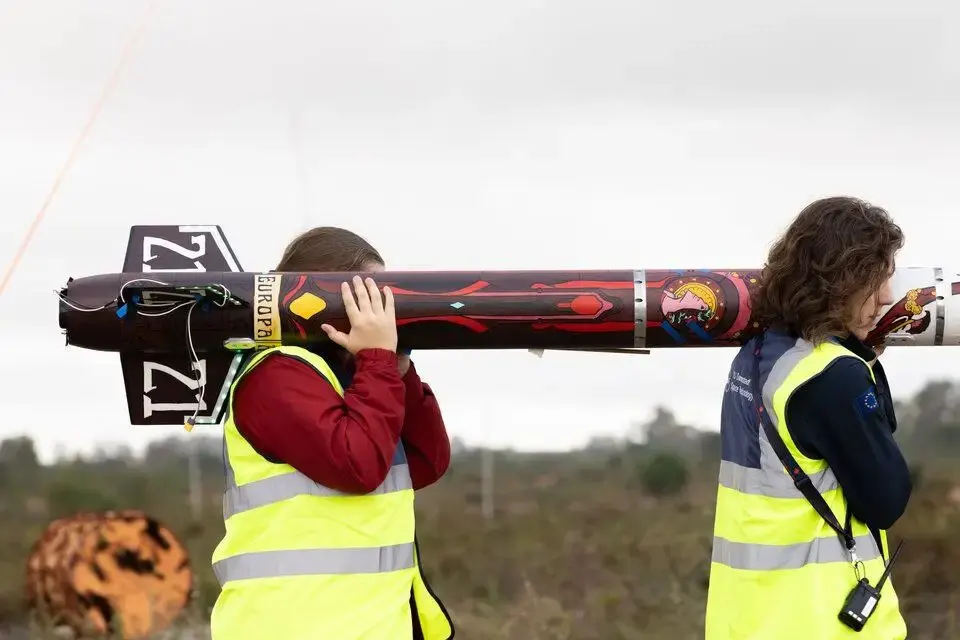
A quiet riverside town in central Portugal has become, for a few days each year, one of the busiest launch sites in Europe — for student rockets, at least. Constância is hosting the 7th European Rocketry Challenge (EuRoC), where around 690 students from 13 countries are competing to send their rockets to altitudes of 3,000 or 9,000 metres, depending on each team's targets.
This year's edition carries extra weight. The European Space Agency has stepped up from providing technical advice to becoming a full strategic partner, signing a bilateral agreement with the Portuguese Space Agency that brings real funding to the event. It's part of ESA's new push to link universities with the space industry and give students hands-on experience before they hit the job market. The opening even drew American astrophysicist Neil deGrasse Tyson.
The scale has grown fast. When EuRoC launched in 2020, six teams took part and Portugal didn't even have an entry. This year there were a record 64 applications from 26 countries, with 21 university teams now competing at the Santa Margarida Military Camp, plus two non-competing squads. The field splits across three propulsion types: eight teams on solid, five on hybrid and eight on liquid engines. Sixteen teams built their own engines; five first-timers are using commercial ones.
Portugal is punching above its weight. It fielded more applications than any other country for the second year running — eight in total — and is represented on the launch pad by RED from Instituto Superior Técnico, competing since 2021, and MAST from the University of Minho, making its debut. Judging isn't just about altitude: design, teamwork, payloads and technical documentation all count, with a top prize for overall performance. The event wraps up midweek with a closing ceremony and awards.
Four teams that initially qualified had to pull out, including Portugal's North Space and Spain's ARES, which couldn't finish mandatory safety tests in time; both are attending anyway to watch. Ireland's UCC RSES hit engine trouble and Greece's ASAT also withdrew.
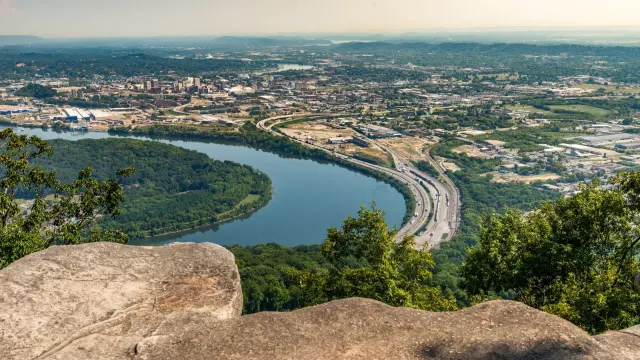
For travellers, this is a good excuse to look twice at a corner of Portugal most itineraries skip. Constância sits where the Tejo and Zêzere rivers meet, an hour or so northeast of Lisbon, and it has a genuine space connection — it's home to the Portuguese Space Agency's activities and a small science-park ecosystem. If you're road-tripping between Lisbon and the historic towns of Tomar or Santarém, timing a visit around launch days means you might catch a rocket climb over the pine forests. Even outside event week, the riverside town, its viewpoints and the nearby castles and convents of the Tejo valley make a rewarding detour.