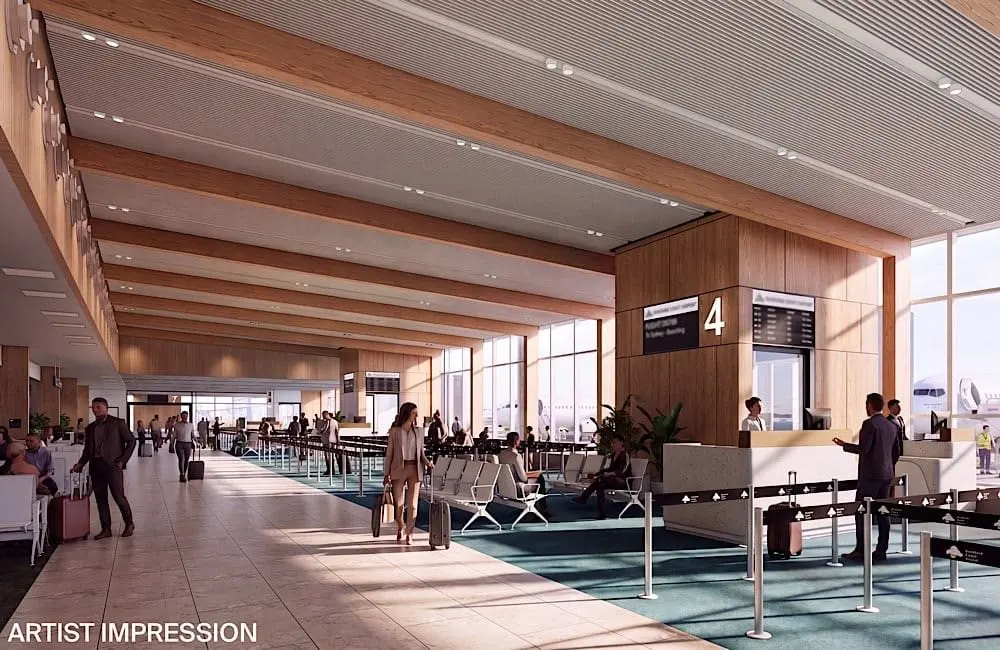
About 30 tonnes of glulam — glue-laminated engineered timber — is now being craned into place at Sunshine Coast Airport in Queensland, forming the raking roof frames of what will become Australia's first mass timber engineered terminal. The $170 million redevelopment is due to finish in 2027.
Most airport terminals this size lean on steel and concrete, so committing that much timber to the roof is unusual. The architects at Populous: Fentress Studios, working with builder McNab and timber specialists Theca Timber, say the exposed structure should create an instant sense of calm when passengers walk in — a deliberate contrast to the usual airport stress. The airport puts the carbon saving at roughly 40 tonnes of CO2 equivalent versus conventional materials.
The design also nods to its setting: the Sunshine Coast is the gateway to three of Australia's five UNESCO Biosphere Reserves, and the warm timber aesthetic is meant to echo the surrounding subtropical rainforest.
There's practical growth behind the good looks. Passenger numbers are expected to hit 1.8 million in FY26 and 2.4 million by 2030, so the rebuilt terminal will be nearly double its current size, with a departures lounge three times larger. Gates rise from five to seven, plus 18 self-service kiosks and 10 automatic bag drops.
One wrinkle to watch: Jetstar will suspend its Sunshine Coast–Auckland route from October 2026, citing unfavourable market conditions — so the extra gate capacity signals ambition, even as one trans-Tasman link pauses.
For holidaymakers heading to Noosa, the hinterland or the coast's beaches, this mostly means a calmer, roomier airport by 2027, and potentially more domestic routes as the expanded terminal chases that 2.4 million passenger target.