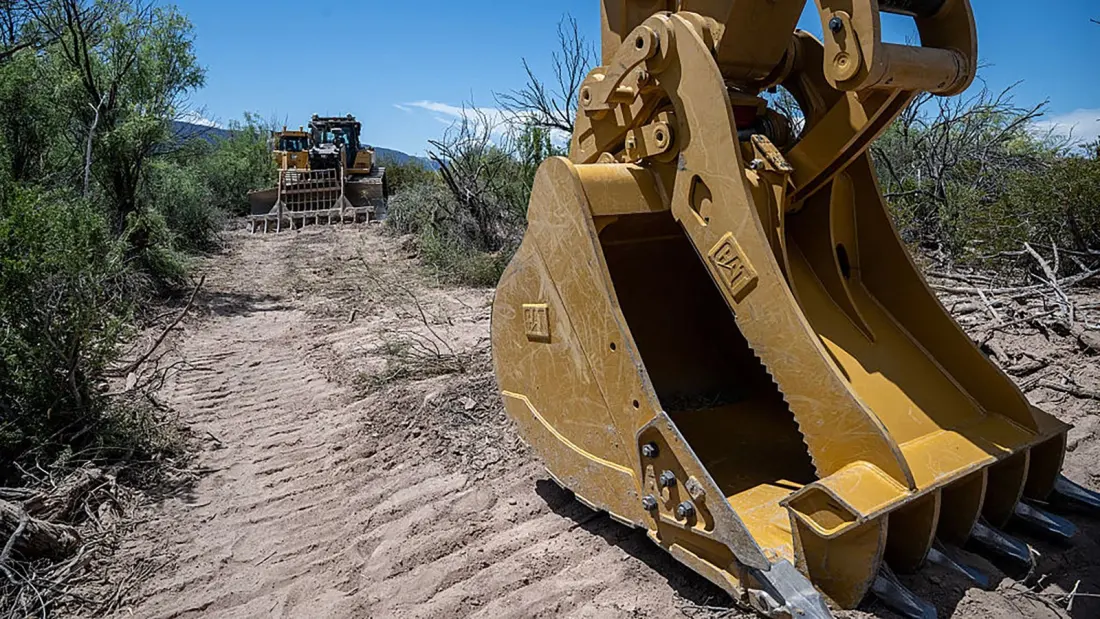
Bulldozers are heading back into one of America's most remote national parks. On November 9, the U.S. Supreme Court ruled 8-1 that construction crews can resume work on border barriers, fencing and surveillance infrastructure through Big Bend National Park, the sprawling desert reserve along the Rio Grande in far west Texas. Justice Ketanji Brown Jackson was the lone dissenter in the unsigned opinion, which found that Congress has a "clear preference for expeditious border construction" and that the government's immigration enforcement goals outweigh "aesthetic, recreational, and environmental harm."
The decision ends a months-long fight. Crews first arrived in the Big Bend region in August and began clearing desert for bollards and fencing, but work paused after state politicians pushed back and, on October 2, a federal judge ordered a halt because the project risked harming plaintiffs who had sued to stop it. That lawsuit, filed in April by a coalition including the Center for Biological Diversity, argued that illegal crossings in the Big Bend sector are negligible and that construction would scar the landscape, damage wildlife and undermine local tourism and farming businesses that depend on the river valley.
Opposition has crossed party lines. On the day of the ruling, Texas Republican Senator John Cornyn published an op-ed titled "The Case Against the Big Bend Border Wall," objecting to the cost of erecting a 30-foot wall atop a 1,000-foot riverbank cliff. The Sierra Club called the project a threat to "irreplaceable wildlife habitat, sacred cultural sites, and one of America's most treasured landscapes." Customs and Border Protection and the Department of Homeland Security, meanwhile, maintain the barriers are needed to curb unauthorised crossings from Mexico.
Why should holiday travellers care? Big Bend is one of the least visited but most rewarding parks in the U.S. system — a place of canyon hikes, hot springs, dark night skies and the only mountains in Texas. Sections of the border barrier, plus access roads and surveillance towers, would sit directly inside park boundaries and along the Rio Grande, the river that anchors canoe trips through Santa Elena Canyon and the park's entire borderland character. Visitors planning trips for next spring or autumn should expect active construction zones, possible trail and river access closures, and a very different view from some overlooks. Check the National Park Service's Big Bend page for current closures before booking, and consider Ross Maxwell Scenic Drive, the Chisos Mountains and the remote Persimmon Gap area if you want to steer clear of worksites. It's still worth going — arguably more so now — but go informed.