
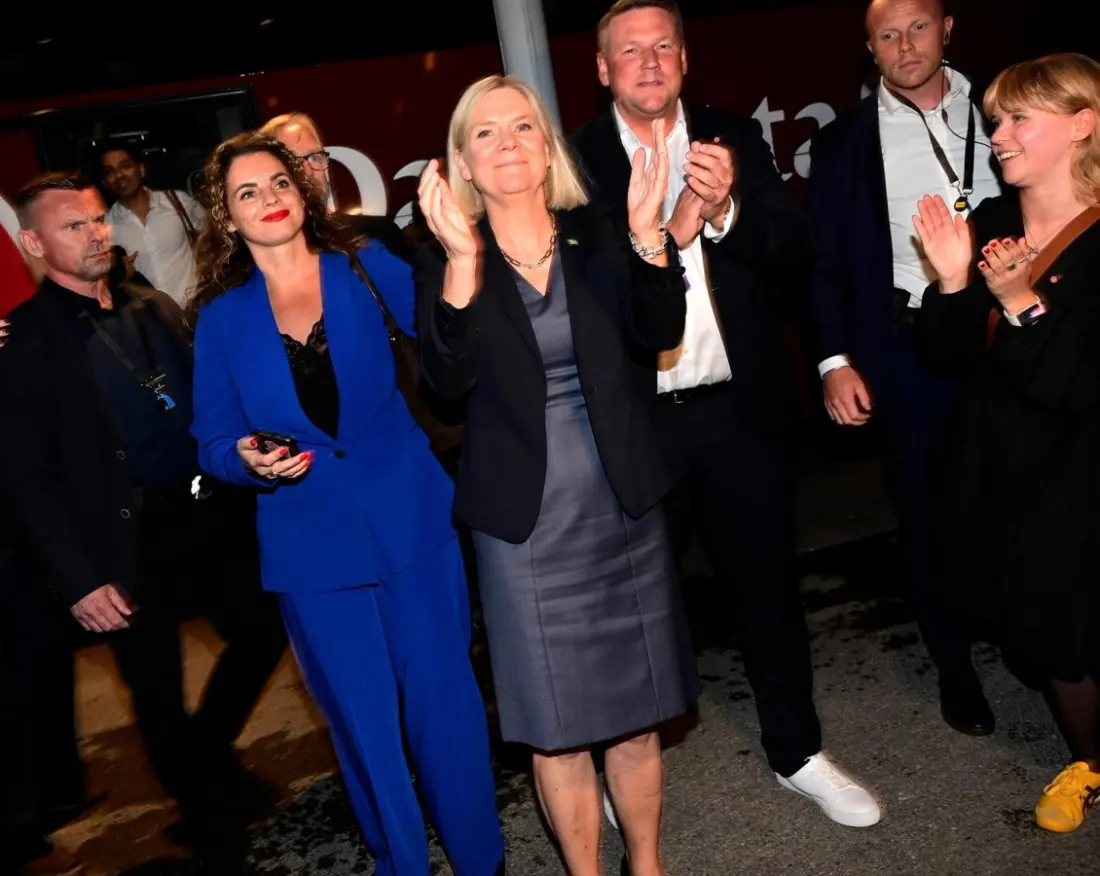
Sweden is heading into a period of political limbo. With almost 95% of districts counted after Sunday's vote, the left-leaning opposition bloc was narrowly ahead, on course for 176 seats in the 349-seat Riksdag against 173 for the parties backing Prime Minister Ulf Kristersson's centre-right government. But with the margin that thin, the final picture depends on Wednesday's count of late-arriving postal and overseas ballots — and forming a coalition could drag on well beyond that.
Former prime minister Magdalena Andersson's Social Democrats were set to remain the largest single party on roughly 28% of the vote, and she wants the top job back after losing it in 2022. Her problem is arithmetic and personality clashes: the Center Party refuses to sit with either the anti-immigration Sweden Democrats or the left-wing Left Party, which complicates almost every viable combination. Kristersson, for his part, warned that without some compromise across the 'red lines', Sweden could end up with no government at all.
The biggest story of the night was the Sweden Democrats slipping to just under 18%, down about three points from 2022 and behind Kristersson's Moderates into third place — a disappointment given that Kristersson had dangled the prospect of cabinet posts for them. The party, founded in the 1980s by figures with extremist roots and led by Jimmie Åkesson since 2005, has been gradually normalised into mainstream politics, and experts point out that populist right parties often bleed votes once they share power. One researcher, Södertörn University's Ann-Cathrine Jungar, expects slow coalition talks: Swedish government formation used to be quick, but has grown complicated over the past decade.
For travellers, the practical takeaway is reassuring: there's broad cross-party agreement on the big foreign and security questions — NATO membership, which Sweden completed in the meantime, and support for Ukraine — so whoever governs, the country of about 10.6 million people stays an easy, stable place to visit. The one durable shift is migration policy, where all blocs now back tighter rules; that affects immigration and asylum policy far more than tourist visas. Expect no sudden changes to Schengen access, transport or everyday travel during the coalition talks.
If you're planning a Swedish trip in this window, there's no reason to hold off. Political wrangling in Stockholm may take weeks, but it won't close a museum or delay a train. City breaks to Stockholm, Gothenburg and Malmö run on normal rails, and the tight election is more of a conversation over fika than a reason to change your itinerary.