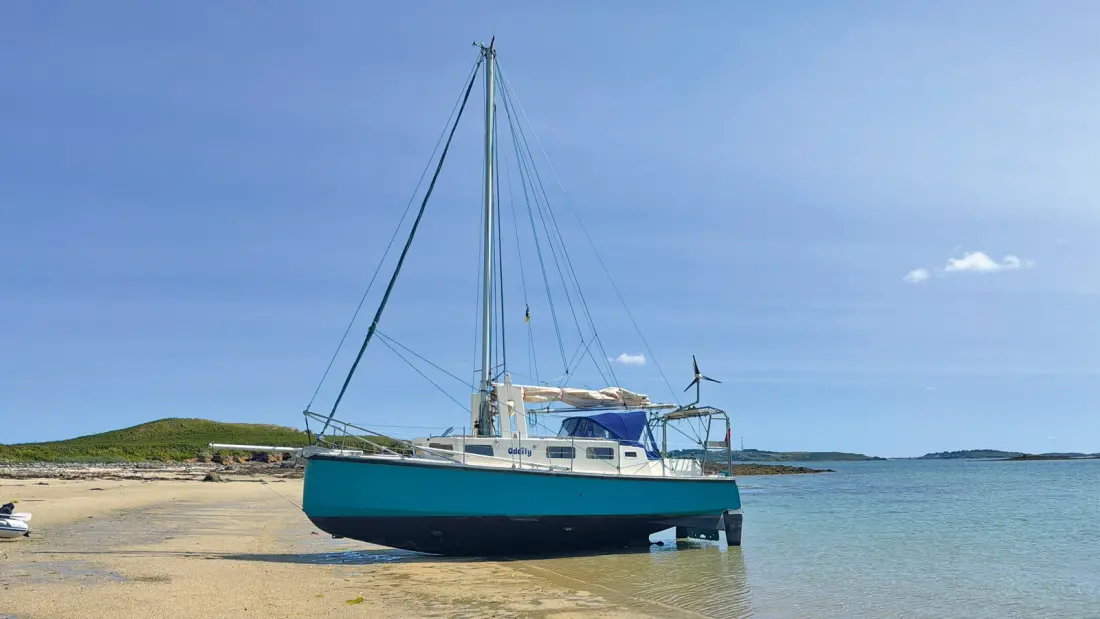
Sailor Pete Goss has written a hands-on guide to cruising the Isles of Scilly, and his central idea is refreshingly counter-intuitive: sometimes the best thing you can do with a yacht is park it on the beach. His 32-foot lifting-keel boat Oddity is built to sit upright on the sand, and he argues the archipelago rewards shallow-draught vessels with far more options than their deep-keeled cousins.
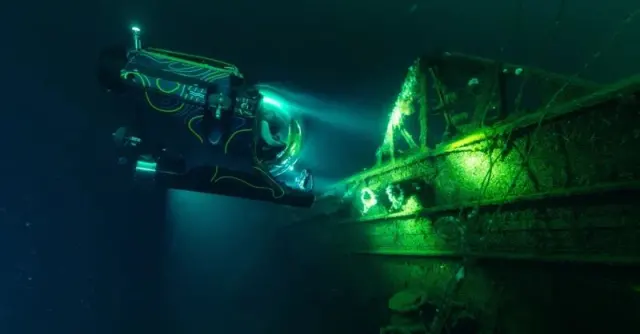
The Scillies carry a reputation for wrecking ships, and there are plenty of hulks on the seabed to prove it. Goss pushes back, though: with modern forecasts, charts and AIS, the islands are manageable, and the sandy bottom makes shoals and rocks easy to spot — he compares reading the water to sailing in the Bahamas, where polarised sunglasses earn their keep.
His route in is a classic Cornish passage: out of the Tamar, fuel at Mayflower Marina in Plymouth, around Rame Head and the Lizard, often in thick sea fog that demands sharp watch-keeping. A first-time anchor recommendation: the cove between St Agnes and Gugh in northerly winds — deep-water access, good walks ashore and the Turks Head pub nearby.
The drying-out advice is where the piece earns its keep. Plan around the tide so the boat re-floats soon after grounding, ideally on a neap tide in case you're stuck. Dry out into a headwind so the hull lines up with the beach slope, and always drop a kedge anchor for control. Swell is the real danger — he describes a refloat pounded by waves from a distant storm on an otherwise glassy day — so check swell forecasts, not just wind. There's an upside too: during Storm Evert in July 2021, when moorings dragged across the south-west, the crews who beached their boats sat out the gale in total safety.
His method: scout the bay for a full tide cycle first, anchor off and dinghy in at low water to check the ground. Mark your spot with sticks as a transit, approach with the dinghy already launched, and have brushes and screwdrivers ready — the exposed hull is a chance to scrub off, clear barnacles from skin fittings and swap the prop anode. A Breton trick worth stealing: fill buckets with seawater before the tide leaves, one for sandy feet, one for flushing the heads.
Of the islands, Goss favours St Martin's — bigger and further from Hugh Town than its neighbours, quieter, and home to characters like the former environment officer who now runs the Polreath Tea Room, and the honeymooner who bought the Seven Stones Inn thirty years ago and never left. There's a vineyard he didn't reach; that's on the next trip.
For sailors with a bilge-keeler or lifting keel, this is practical inspiration rather than a dream piece. But even non-sailors get a picture of the Scillies at their best: empty anchorages, island walks, pubs and tea rooms reached by tender, and water clear enough to read the sand beneath you.