Copenhagen gets the headlines — and the crowds and the prices — but a new roundup of Denmark's most beautiful towns makes a strong case for pushing further out. From Viking ship museums to witch-trial history and islands where houses have stood for 750 years, here's what's waiting beyond the capital.
Fairytale fans should start in Odense, birthplace of Hans Christian Andersen. The Hans Christian Andersen House exhibits his original drawings and writing notes alongside dress-up fun for kids, while food stalls at Storms Pakhus and North Atlantic art at Nordatlantisk Hus round out the visit.
Denmark's second city, Aarhus, packs a walkable centre with serious culture. The rooftop of the ARoS art museum has a rainbow-tinted panoramic walkway by Olafur Eliasson, and down at street level the cobbled Møllestien lane and the buzzy Latin Quarter are made for slow wandering.
History runs deep in Roskilde, a former capital and Viking trading hub. Its Viking Ship Museum is built around five original Norse vessels, and the city also hosts the not-for-profit Roskilde Festival, which has booked acts like Charli XCX and Olivia Rodrigo, plus the Ragnarock museum of pop and youth culture.
For summer, Skagen is the Danish seaside pick: it sits where the North Sea meets the Baltic, a quirk that produces a light quality that has lured artists for centuries. The Skagen Painters' work hangs in the town's museum, framed by white-sand beaches and butter-yellow houses.
Further south, Ribe claims the title of Denmark's oldest town and leans into its witch-trial past at the HEX! Museum of Witch. Evening walks with the Nightwatchman — an old law-enforcement tradition that predates the police — bring the medieval streets to life.
Easy add-ons from Copenhagen include Dragør, just 12km away, with its yellow-house old town and a nearby 'Dutch Town' settled by farmers in the 1500s. For a proper slow-down, ferries from Svendborg reach the island of Ærø, where Ærøskøbing's rose-clad houses and shallow beach huts at Vesterstrand invite a swim. Across on Langeland, the market town of Rudkøbing offers artisan shops, harbour views and a statue of physicist Hans Christian Ørsted — plus bragging rights as Nikolaj Coster-Waldau's hometown.
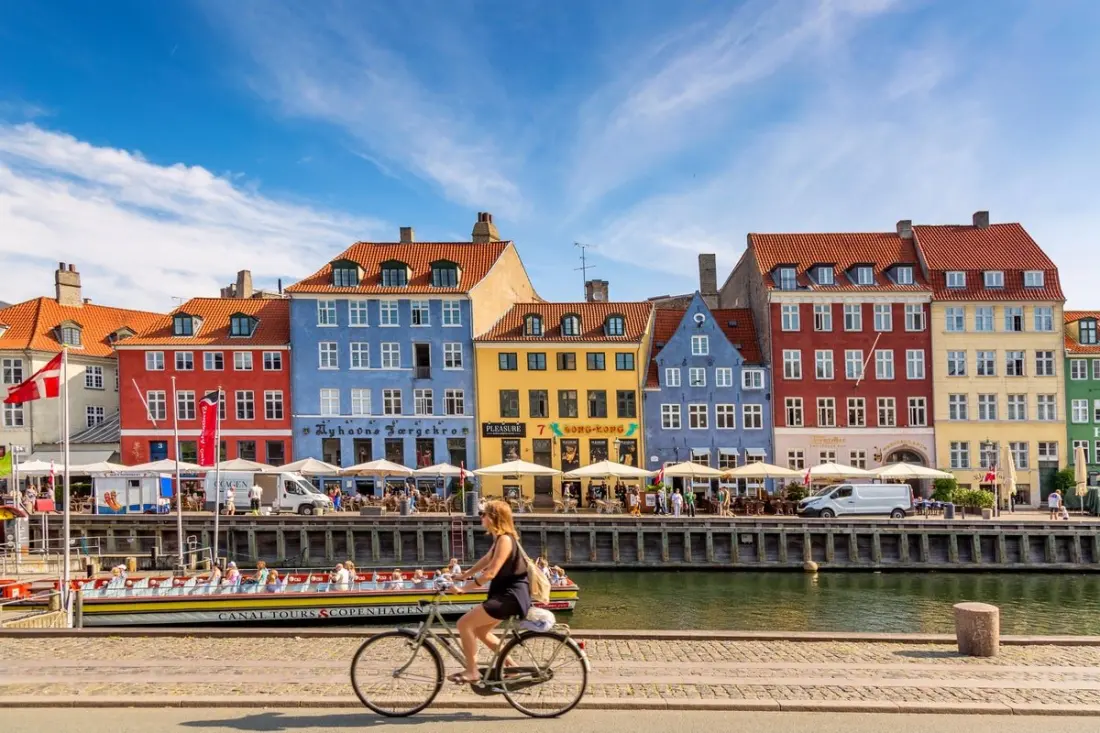
Even Aalborg and Copenhagen itself make the list: the northern city has turned an old power station into the Nordkraft cultural centre (complete with Denmark's highest climbing wall), while the capital rewards cyclists with Nyhavn, Rosenborg Castle's crown jewels, harbour swimming at Kastrup Sea Bath and the Reffen food market.
Why it matters: Denmark is compact and brilliantly connected by train, so you can string three or four of these towns into one week without a car. You'll trade Copenhagen's prices for calmer streets and, in summer, some of the best light in Scandinavia.