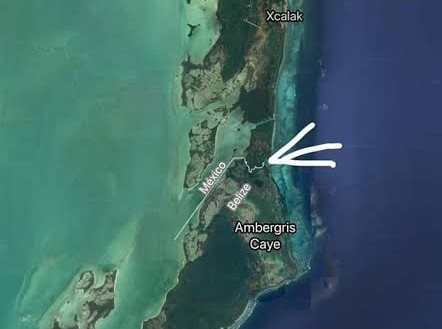
A road link between Ambergris Caye and Mexico's Riviera Maya has been floating around Belizean politics since 2021, and it refuses to go away. Prime Minister John Briceño reaffirmed in late October that his government still backs the idea of a bridge connecting the island to Quintana Roo — but the project is dividing opinion on the island it would change most.
The proposed route would cross Bacalar Chico National Park and Marine Reserve at Ambergris Caye's northern tip, part of the Belize Barrier Reef Reserve System, a UNESCO World Heritage Site. That's the crux of the opposition. At a November 2 meeting of the Belize Tourism Industry Association in San Pedro, members voiced strong resistance, warning the crossing could have catastrophic consequences for a reserve that shelters jaguars, pumas, ocelots, deer, wild pigs and foxes. They also fear the bridge could undercut the very tourism economy — businesses and thousands of jobs — that makes San Pedro tick.
Briceño's pitch is economic. He frames the link as extending the Riviera Maya's reach, saying travellers could one day move seamlessly between Cancun and San Pedro, with the project creating opportunities on the Belizean side. He acknowledges the environmental sensitivities but argues solutions can be found, and stresses that decisions rest with both governments, not Belize alone. Area Representative Andre Perez, who attended the BTIA meeting, echoed reservations about the bridge and said any major project — including a proposed new airport north of San Pedro — would need proper consultation first.
Five years after the idea was first confirmed, nothing is built and no timeline exists. The government says it will consult islanders before any work starts, so for now this remains a proposal rather than a plan of record. Still, it matters for anyone eyeing the region: a land link would reshape how people move between Mexico's Caribbean coast and Belize's most popular island, which currently relies on boats and small planes. If it ever happens, a Cancun-to-San Pedro loop could become one of Central America's most appealing multi-country trips — assuming the environmental questions get answered first. Watch this space, but don't plan around it.