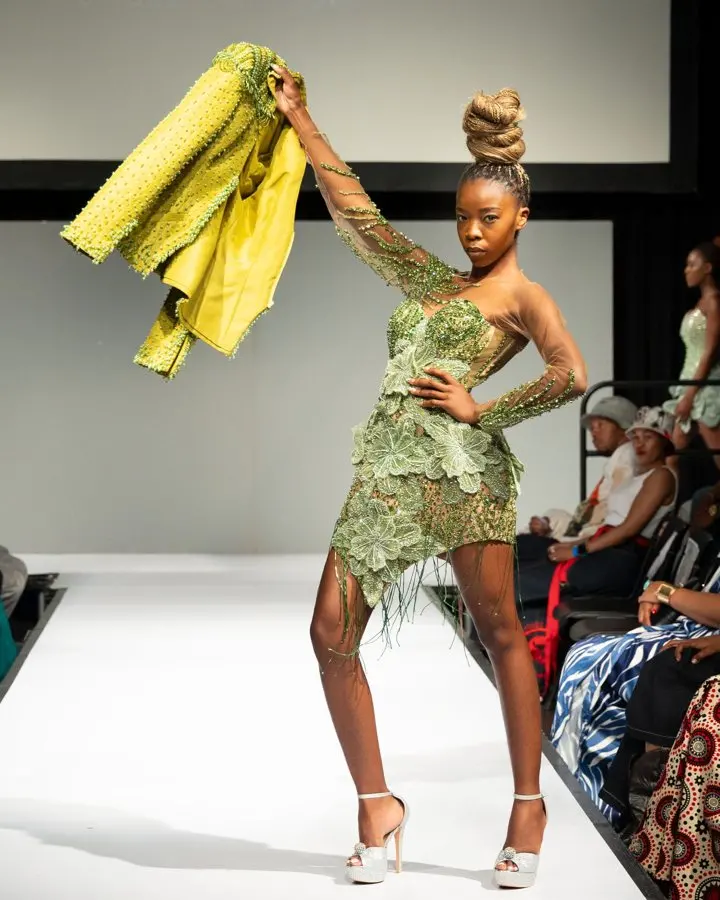
From 5 to 7 November, Soweto Theatre in Jabulani hosted the Spring/Summer 2026 edition of Soweto Fashion Week — a platform now in its fifteenth year that has become one of South Africa's most important launchpads for emerging designers and models. The three-day showcase mixed student work, streetwear, couture and a wine partnership, all built around stories of heritage and belonging.
The emerging designers showcase opened with MORWAMOTHO by RFL Studios, a menswear line by founder Refiloe Dipudi blending denim, suiting, natural cottons and printed bucket hats. For Dipudi, who grew up in Soweto, the collection — the Setswana name means "son of man" — is about showing Black masculinity in full: softness and vulnerability alongside strength. He staged the debut in Soweto deliberately, hoping young people there see something curated for them, and he wants the brand to compete on global luxury stages while staying reachable to the community that inspired it.
Couture came from Precious Mahlangu of Precious Lulu Couture, whose "One Essence" collection drew on her clan's totem animals — the leopard and black panther — as a study in difference and unity. Mahlangu first showed at Soweto Fashion Week back in 2015 and has since gone international; she now mentors emerging designers from KwaZulu-Natal through her KwaZulu Fashion Hut programme and is building an online emporium to sell their work alongside her own.
The runway also made space for inclusion. Lisa Msiza, a Deaf model walking her first show, taught fellow models South African Sign Language basics and was moved when designer FBD signed her name back. Meanwhile, a partnership with Black Wines Matter brought small wine businesses from its academy into the venue, tying winemaking and fashion together as parallel stories of young Black entrepreneurship.
For travellers, this is the side of Johannesburg that rarely makes the standard itinerary. Soweto has long been a centre of South African culture, creativity and nightlife, and events like this show a township usually framed through history being celebrated for what it's making now. Time a visit around the next edition (typically November) and you get fashion, theatre and a crowd that cheers the runway like a match — model Lerato Diseki, a medical scientist who walked the show, said the audience's energy was unlike any quiet fashion week she'd seen. Between shows, the neighbourhood offers its own draws: Vilakazi Street, local eateries and guided tours that go beyond the obvious stops.
If you care about where African fashion is heading, this is the ground floor — a platform that books fresh faces rather than the usual ones, and sends graduates on to international stockists and stages.