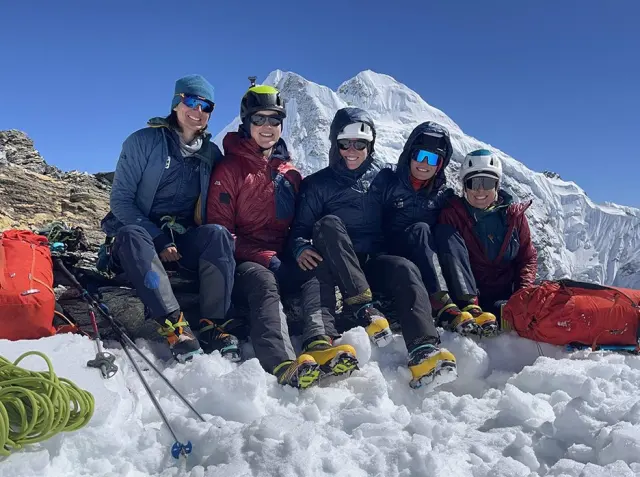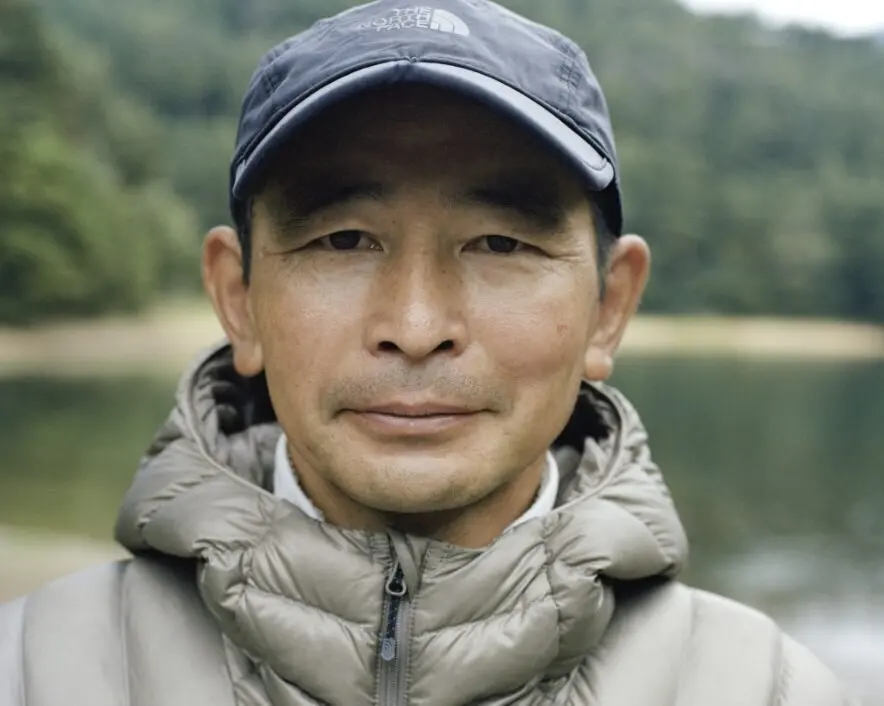
Japanese alpinist Hiroyoshi Manome is currently in the Everest region trying to open a new route up the north face of Kangchung Shar, a little-known 6,000m-plus peak above the Gokyo Valley in Nepal's Khumbu. He's due back in Japan on December 6, so word of how the climb went should surface shortly after.
Kangchung Shar is measured anywhere between 6,030m and 6,103m depending on the map you consult, and its 1,000m mixed face has been climbed exactly once. The American Alpine Journal has a vivid way of describing the mountain and its neighbour Kangchung Nup: two Matterhorns side by side, but two kilometres higher. Manome had the east ridge pencilled in as a backup, but the north face was always the goal — a technical objective he described as suiting his style, made more adventurous by how little information exists about the route.
The single ascent of that face came in 2021, when Czech climbers Zdenek Hak and Jaroslaw Bansky succeeded on their third attempt, then descended by traversing to the south side. Nobody has repeated it since. The mountain itself was first climbed back in 1984, when Slovenian alpinist Franci Knez went solo up the northwest ridge from Kangchung La. It then sat closed to foreign expeditions for years, only reopening in 2014. A separate Japanese team climbed neighbouring Kangchung Nup in spring 2022.
Manome is not a name casually attached to a risky objective. He has been climbing for 30 years and has built his career on technical, alpine-style ascents of 6,000m Himalayan peaks. He won the Piolet d'Or — the sport's most prestigious award — for the first ascent of the 2,200m south pillar of Kyashar (6,770m) in Nepal with Tatsuya Aoki and Yasuhiro Hanatani. More recently, in November 2024, he notched another first: the northeast ridge of Chhopa Bamare (6,109m), with Akitugu Konishi and Kotaro Kunimune.
For trekkers, the story is a reminder of what's hiding in plain sight around Gokyo. Most visitors to the valley come for the turquoise lakes and the views from Gokyo Ri, rarely realising that the walls and ridges above them carry first-ascent histories and remain unrepeated. Even if you never rope up, following these small expeditions is a good way to understand just how wild that corner of the Khumbu still is — and which peaks you're photographing from the trail.
If Manome's team is successful, it will be another line on a mountain that barely sees traffic, and another chapter for a peak that spent decades off-limits to foreign climbers. Expect the full account once they're home in December.