
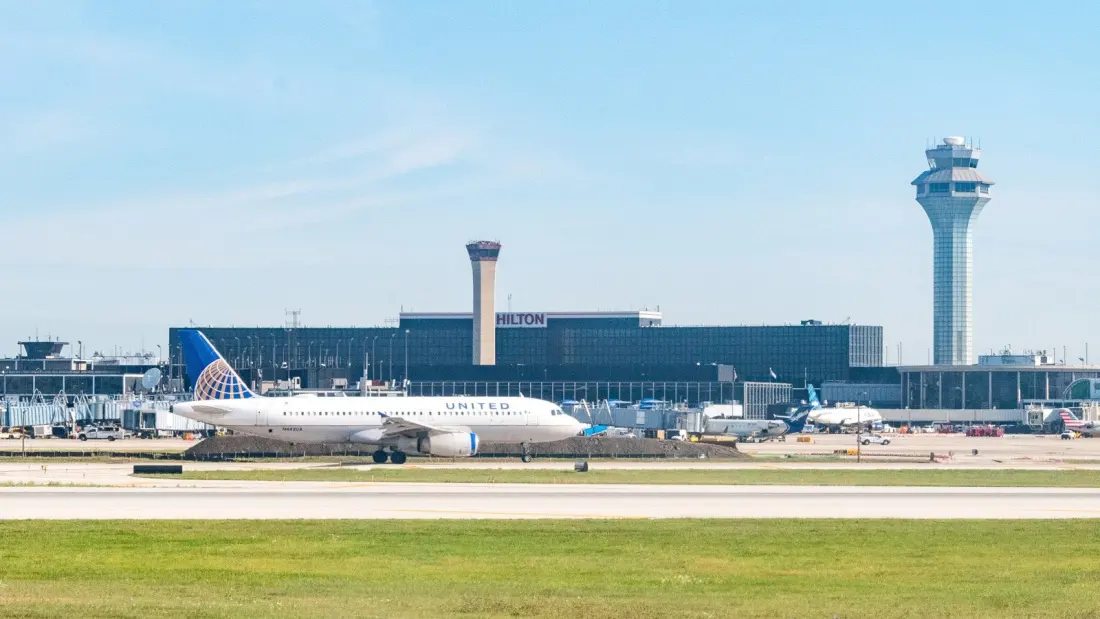
In aviation, a 'hot spot' has nothing to do with popularity. The FAA uses the term for specific locations on an airport's taxiways and runways with a history — or potential — of collisions and runway incursions, meaning aircraft, vehicles, or people on a runway without clearance. In March 2026, the agency's updated list flagged more than 150 of these risk zones across US airports, and many sit at the country's biggest and busiest hubs.
Per a Newsweek analysis of FAA runway incursion data published in June 2026, the airports with the highest recent incident counts include Chicago O'Hare (ORD), Los Angeles International (LAX), Charlotte Douglas (CLT), Boston Logan (BOS), and Hartsfield-Jackson Atlanta (ATL) — the last of which is also the world's busiest airport. San Francisco International (SFO) appeared with four distinct challenging spots for pilots, and Chicago Midway (MDW), New York JFK, and Newark Liberty (EWR) were on the list too. Airports in New York, Phoenix, and other major tourist cities are represented as well.
It's worth keeping some perspective here. Big hubs naturally log more incidents simply because they handle far more aircraft movements — Atlanta alone processes hundreds of thousands of travellers a day. The FAA publishes hot spot maps precisely so pilots and ground vehicle drivers can plan ahead, and the agency says knowing these trouble areas in advance helps crews avoid last-minute confusion on the tarmac.
Still, the risks are not theoretical. Tens of thousands of incursion events have been recorded at US airports since 2001, ranging from close calls to crashes with serious injuries and deaths. Shortly after the 2026 list was released, an Air Canada flight carrying more than 70 people struck a fire truck on a runway at New York's LaGuardia on March 22, killing both pilots and injuring others; a flight attendant strapped into her jump seat was thrown from the aircraft and, remarkably, survived. More recently, on July 27, 2026, two passenger planes came close to colliding at Atlanta.
For travellers, the takeaway isn't to avoid these airports — for many routes, the major hubs are unavoidable anyway. It's a reminder that the busiest airports carry the most surface traffic and the most complexity, and that the FAA is actively tracking where problems concentrate. Runway collisions remain statistically rare given the volume of US flights, but awareness of how safety oversight works is useful context for anyone who flies frequently, especially through mega-hubs like Atlanta, O'Hare, and LAX.