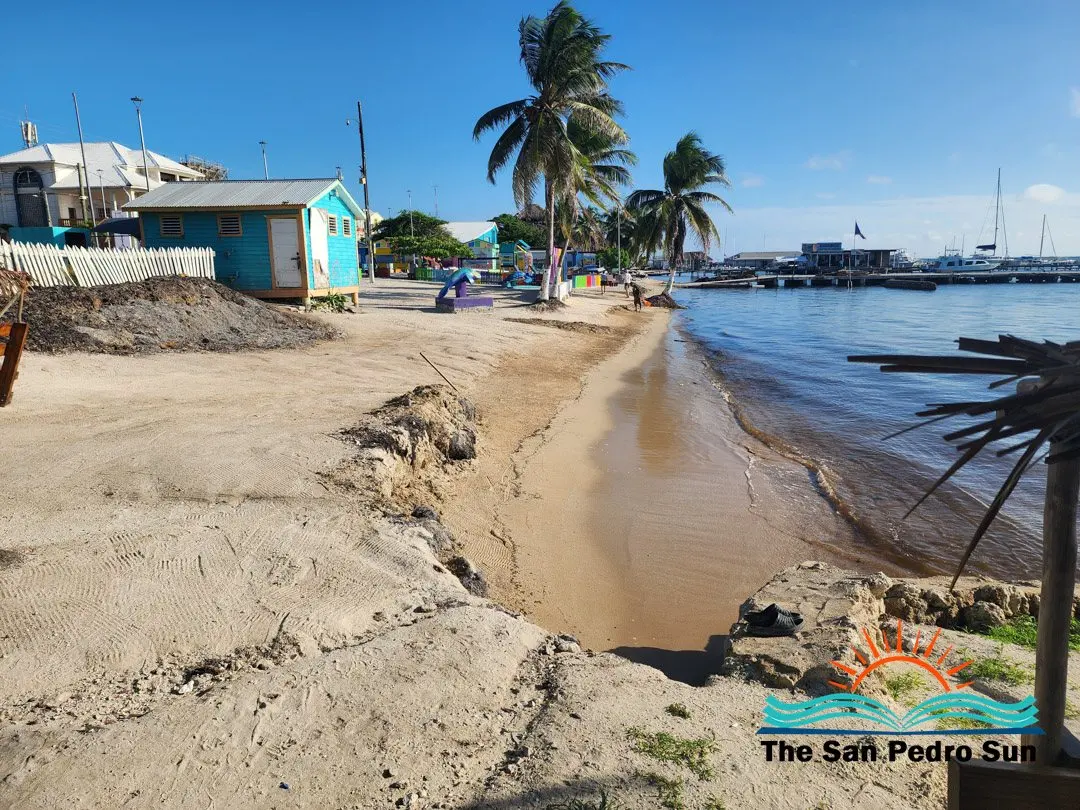
After nearly nine months of near-continuous sargassum removal, the beaches of San Pedro on Ambergris Caye are showing signs of recovery. The San Pedro Town Council says recent favourable weather has helped wash away the seaweed that has smothered the island's shoreline, and sand is returning naturally in some spots.
It has been an expensive grind. Crews have worked every single day for 38 weeks — the second straight year the town has needed that level of response — hauling away as much as 150 tons of sargassum in a single week, according to operations manager Alex Ek. Last year's cleanup bill came to roughly $1.2 million, and this year's costs are running at a similar pace once you count staff, machinery, fuel and transport.
The burden hasn't fallen on the council alone. Beachfront hotels and property owners have been spending up to $30,000 a month to keep their stretches of sand usable. With some neighbours opting out, the council has warned that this model isn't sustainable — a few businesses are even considering giving up their own cleanup efforts. It's calling for wider participation and more support for those doing the heavy lifting.
Help may be on the way. Prime Minister John Briceño, speaking after the IMF and World Bank Annual Meetings in Bangkok, said Belize is working with the World Bank on low-interest, long-repayment financing of about $20 million to tackle sargassum properly. He framed it as a regional problem needing a coordinated response, and flagged sargassum alongside flooding and shifting weather as evidence of climate change hitting Belize hard.
The council, meanwhile, has delayed its Beach Restoration Program until conditions settle. Once it resumes, the focus will shift to rebuilding eroded beaches and making them more resistant to future seaweed arrivals. The town is also feeding into national planning, assessing proposed removal technologies and teaming up with the Belize Tourism Board on equipment.
For anyone with Ambergris Caye on their travel list, the takeaway is cautiously optimistic. Right now the beaches are clearing, so the timing is good — but the council itself notes that one large influx could undo weeks of progress. Checking recent sargassum reports before booking a beach-heavy Belize trip, especially between late spring and early autumn when arrivals typically peak, is a smart move. December through April generally offers the best odds of clean sand alongside the dry season. The good news: sargassum is a beach-level nuisance, not a danger, and it hasn't stopped the island's diving, snorkelling or reef trips from operating.