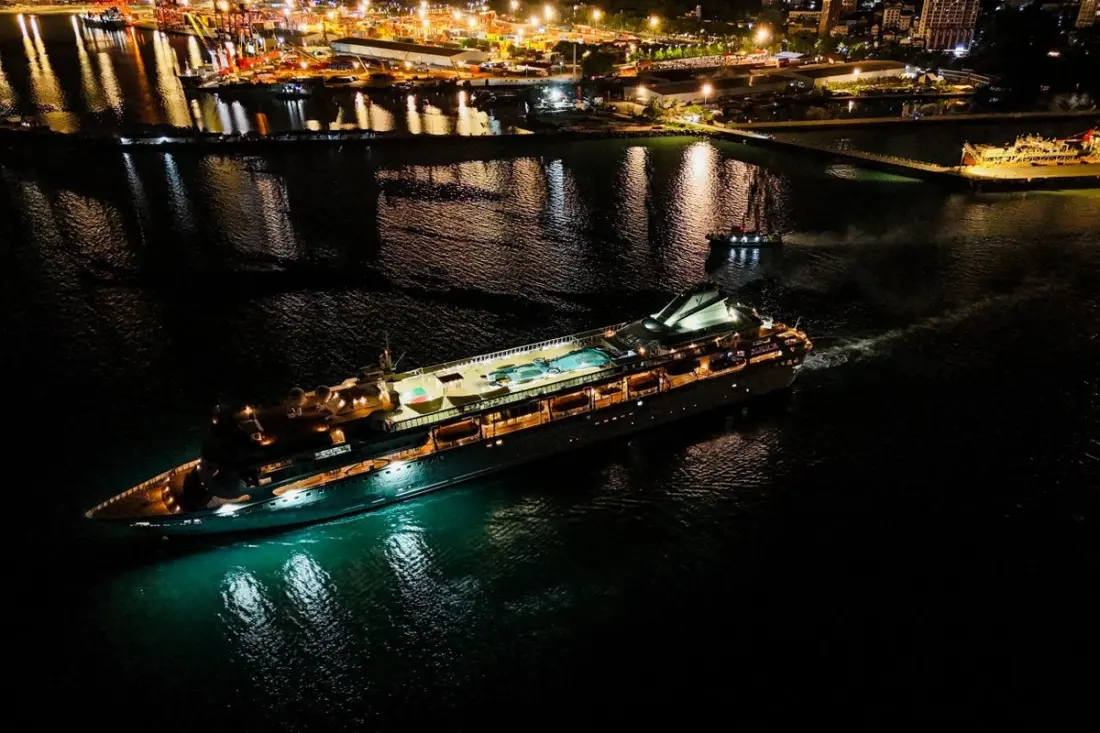
It was billed as the first cruise you never had to leave: a 542ft ship called Villa Vie Odyssey, bought by a US company in 2023 and refitted so passengers could buy cabins outright — ownership guaranteed for up to 15 years — or pay as they go, and sail the world indefinitely. The plan promised 425-plus ports across 147 destinations over three and a half years. Instead, the Odyssey is now detained in Singapore, and its floating community has been scattered.
The trouble started before the ship even left Belfast. Refitted at the historic Harland and Wolff yard — the same dockyard that built the Titanic — the Odyssey was meant to depart on 15 May 2024. A cascade of problems pushed that back four months: overrun refurbishments, faulty steelwork in a grey water tank, new rudder stocks needed for certification, then gearbox issues. Dozens of ports were skipped entirely. By September 2024, passengers said they were being asked to cover their own hotel and living costs, with onboard credit of up to $200 a day later offered as compensation. Some, like Colorado couple Randy Cassingham and Kit, had already sold their house, cars and nearly all their belongings to live aboard permanently. The ship finally sailed from Belfast on 30 October 2024.
Things then ran relatively smoothly for around two years — until late October, when the company suspended operations at Sihanoukville, Cambodia, blaming high fuel costs linked to the Iran-US conflict. Passengers were given just eight hours' notice to disembark on 26 October. Many had built their lives in their cabins, and several said they were asked to chip in for fuel just to move the ship. One resident, Lanette Canen, described the heartbreak of packing up the home and community she'd spent two years building.
Days later, on 8 November, the empty Odyssey — carrying only around 50 crew — was legally "arrested" at anchor off Singapore's east coast. A ship arrest means a court holds a vessel until claims like unpaid fuel or port fees are settled; it cannot sail until the owner pays up or the ship is judicially sold. That's where the story currently stands.
Why does this matter to travellers? Beyond the human drama of people who sold their homes for a life at sea, the Odyssey is a cautionary tale for the fast-growing residential cruise niche. Aboard-life contracts, big upfront payments and small independent operators carry real risk: if the company stalls, your home — literally — can be impounded. Anyone tempted by a 'live aboard' cruise offer should scrutinise the operator's finances, refund protections and what happens if the voyage is suspended. For everyone else, it's a strange, sad story of an ambitious idea that looked unstoppable right up until it wasn't.