Josh Wander, the 45-year-old co-founder of Miami investment firm 777 Partners, pleaded guilty to wire fraud and securities fraud, agreeing to forfeit at least $500 million. His plea deal suggests a sentencing range of 27 to 40 years, with the judge set to decide on March 1, 2027.
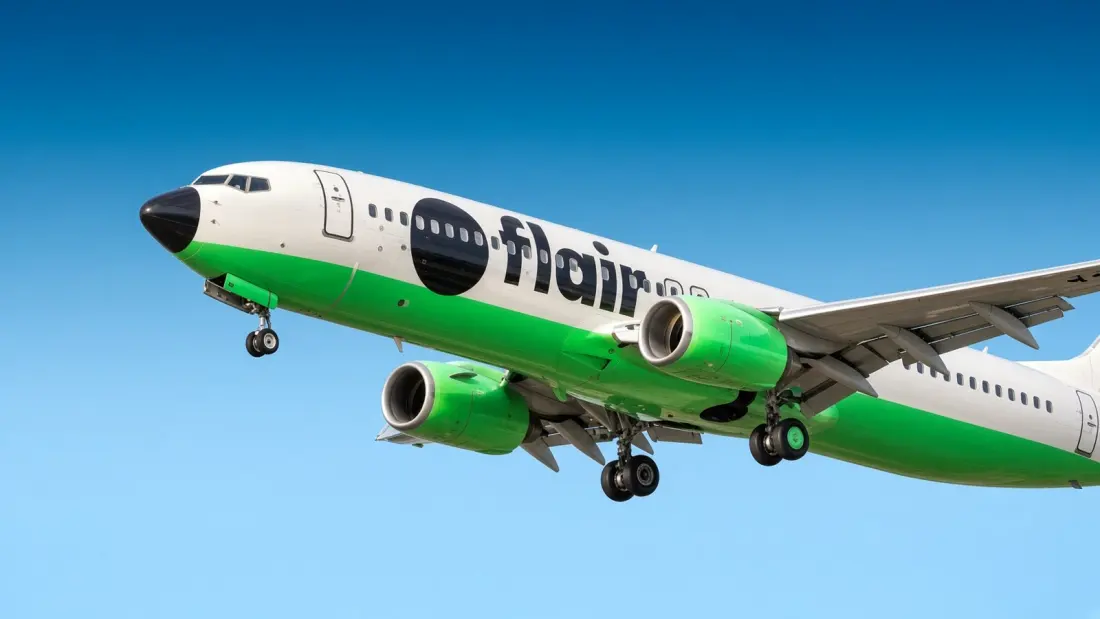
Why should holiday travellers care? Because 777 Partners was the money behind two budget airlines people actually booked: Australia's Bonza and Canada's Flair. The firm's grand plan was to build a worldwide collection of discount carriers — ordering Boeing 737 MAX jets in bulk, then supplying planes and financing to its own airlines. Boeing announced a deal for 24 MAX 8s in March 2021, and by the July 2022 Farnborough Airshow the order book had grown to as many as 134 aircraft.
Prosecutors say the money propping up this empire was borrowed on false pretences. The group's original business, SuttonPark Capital, bought the rights to future payments from legal settlements — essentially giving people cash now in exchange for their settlement income — then borrowed against those assets and packaged them into securities. According to the indictment, when that wasn't enough to fund Wander's buying spree, employees pledged assets the firm didn't own, pledged the same assets to multiple lenders, and fabricated bank records. In one particularly amateurish example, a screenshot showing roughly $8 million in cash was doctored using Microsoft Paint; the real accounts held under $500,000. When a lender challenged the double-pledged assets in 2023, Wander blamed an old computer system.
The rot went beyond airlines — 777 also bought stakes in football clubs across Europe, Brazil and Australia, funded in part by insurer-linked money from A-CAP that regulators later fought over. The SEC alleges a $237 million preferred-equity offering promised a 10% annual dividend while a $300 million credit facility overdraft was hidden, and that about $33 million of proceeds went to Wander and co-founder Steven Pasko. 777 filed for Chapter 11 in August, disclosing $2.7 billion in financing obligations.
The traveller-facing damage came in April 2024, when Bonza's leased aircraft were repossessed and the airline grounded overnight. Administrators later found recurring losses, inadequate funding from 777, poor ticket-distribution choices and expensive wet leases — and noted that some of Bonza's claimed capital had never actually been paid in. Passengers holding Bonza tickets had little warning and fewer options.
The takeaway for travellers: an airline's route map and low fares tell you nothing about whether its financing is sound. New budget carriers backed by heavily leveraged investors can disappear with their leased planes at short notice, so booking with a credit card, knowing your refund rights, and having a backup carrier in mind are worth the small effort. Flair continues flying in Canada, but this case shows how quickly an airline's fortunes can turn when the money behind it isn't real.