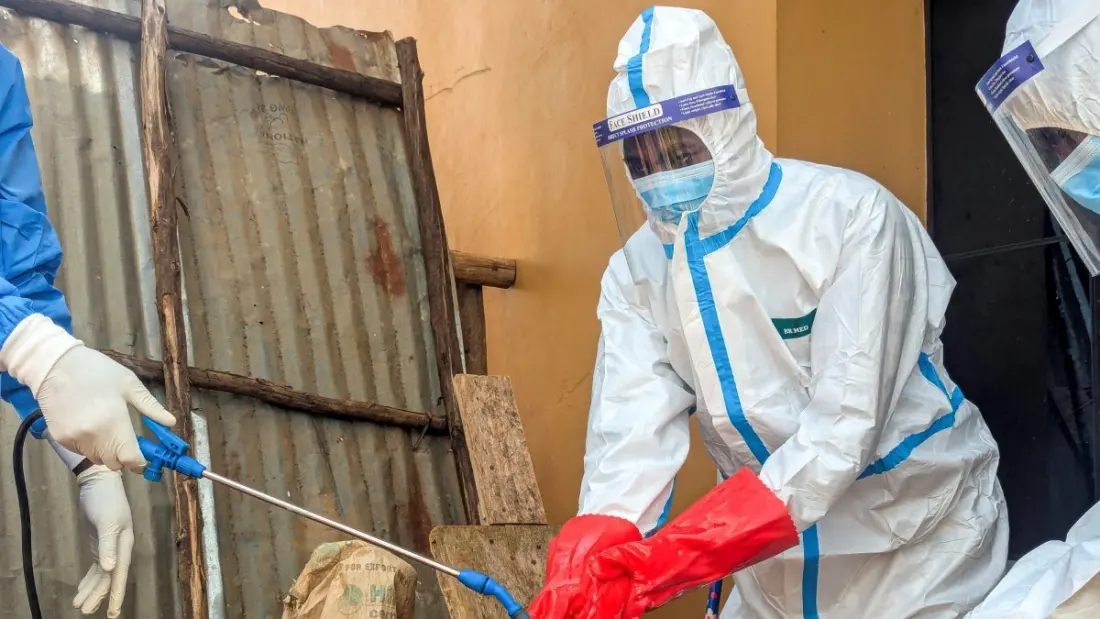
An Ebola outbreak in the Democratic Republic of the Congo is now the largest ever recorded in the country, and health officials admit they are losing sight of where the virus is spreading. Africa CDC says only about 30,000 people have been listed as contacts of confirmed cases — against the 400,000-plus you would expect for an outbreak with nearly 7,900 confirmed cases.
Dr. Jean Kaseya, who heads Africa CDC, told Reuters that for every confirmed Ebola case, authorities would normally trace roughly 60 contacts. That math points to about 474,000 people. Instead, the traced list stands at a fraction of that, and more than 80% of new cases are turning up in people who were never on a contact list. "When the outbreak is at community level, we cannot talk about control," Kaseya said, speaking at the U.N. General Assembly in New York.
The outbreak, first detected in May, has now reached 63 health zones across seven provinces. The WHO confirmed two new affected areas this week: Bulu in Sud-Ubangi province and Dungu in Haut-Uele, near the South Sudan border. It is edging toward the scale of the 2014-2016 West African epidemic, still the biggest Ebola outbreak on record.
There are faint signs of progress. Officials say transmission appears to be slowing in parts of Ituri, the epicentre, and Prime Minister Judith Suminwa Tuluka has called the response's early results tangible — while still describing the outbreak as a major test for the country. Kaseya declined to put a date on containment, saying he'd need to see cases coming from contact lists, no community deaths, and no new infections among health workers before forecasting anything. Funding is flowing, though: nearly $2.9 billion was pledged at a U.S.-convened meeting in New York, including $886 million from the United States.
Why does this matter if you're not a health worker? Because the DRC does draw a specific kind of traveller — people heading for Virunga and Kahuzi-Biega national parks, gorilla trekking, or expeditions on the Congo River. Many of the affected zones are in the country's northeast, far from the southern safari corridors, but a poorly traced outbreak means the true geographic spread is uncertain. Anyone with trips booked to the region should monitor their government's travel advisories closely, check whether their itinerary crosses affected provinces, and expect possible health screening measures, quarantines or border checks at airports and land crossings. Ebola vaccines exist for responders and at-risk contacts, and standard travel insurance may treat an active outbreak zone differently, so read the fine print before departure.
For now, this remains a serious local public health crisis rather than a blanket reason to avoid the entire country — but the surveillance gap is exactly the kind of detail that can change quickly.