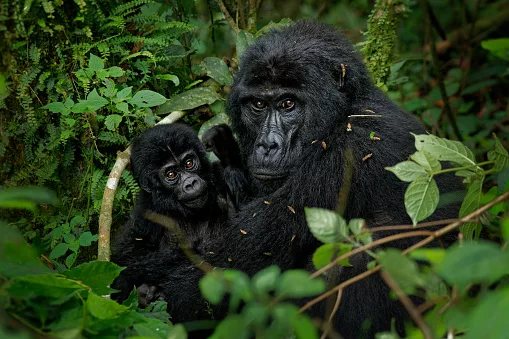
A gorilla once rescued as an orphan from wildlife traffickers has given birth in the wild — and for conservationists in the eastern Democratic Republic of Congo, it's the proof they were hoping for.
Lulingu is a Grauer's gorilla, the largest of all gorilla subspecies and one of the most threatened great apes on Earth. She arrived at the Gorilla Rehabilitation and Conservation Education Centre (GRACE) in 2016 as an 18-month-old orphan, rescued from an illegal trafficking network by the Congolese Wildlife Authority and the NGO Gorilla Doctors. After years of rehabilitation at GRACE's 16-hectare sanctuary — learning to forage, socialise and behave like a wild gorilla — she was released in October 2024 near Mount Tshiaberimu in Virunga National Park, part of the largest reintroduction of eastern gorillas ever attempted in Africa.
In May 2026 she had her first baby. GRACE country director Jackson Kabuyaya Mbeke said mother and infant are doing well, calling the birth a sign that Lulingu has fully adapted to life in the wild. Local communities are being invited to suggest names for the baby, with a public vote and naming ceremony planned.
Why the excitement? Grauer's gorillas — also called eastern lowland gorillas — live only in the forests of eastern DRC, and they're classified as critically endangered. A 2016 survey put the population at fewer than 3,800 animals, a steep drop from roughly 16,900 in 1994. Habitat loss, hunting and decades of armed conflict have all taken a toll, and ongoing insecurity means no reliable updated count exists. A reintroduced female breeding successfully in the wild is therefore a genuine milestone, and GRACE is now weighing whether to release more rescued gorillas in a preparatory phase.
The backdrop is far from easy. Virunga is Africa's oldest national park, sitting in a region long affected by armed groups, which complicates patrols and monitoring. Poaching and illegal resource extraction remain constant pressures. That rangers and caretakers have managed a successful rewilding project under these conditions makes the story all the more remarkable.
For travellers, Virunga is a name that inspires both fascination and caution. Tourism there has been suspended at various times due to security concerns, so anyone dreaming of seeing these forests should follow official park updates closely. In the meantime, Lulingu's baby is worth celebrating from afar: it shows that carefully managed rehabilitation can genuinely work, and that some of the world's rarest animals might still get a second chance in the places they belong.