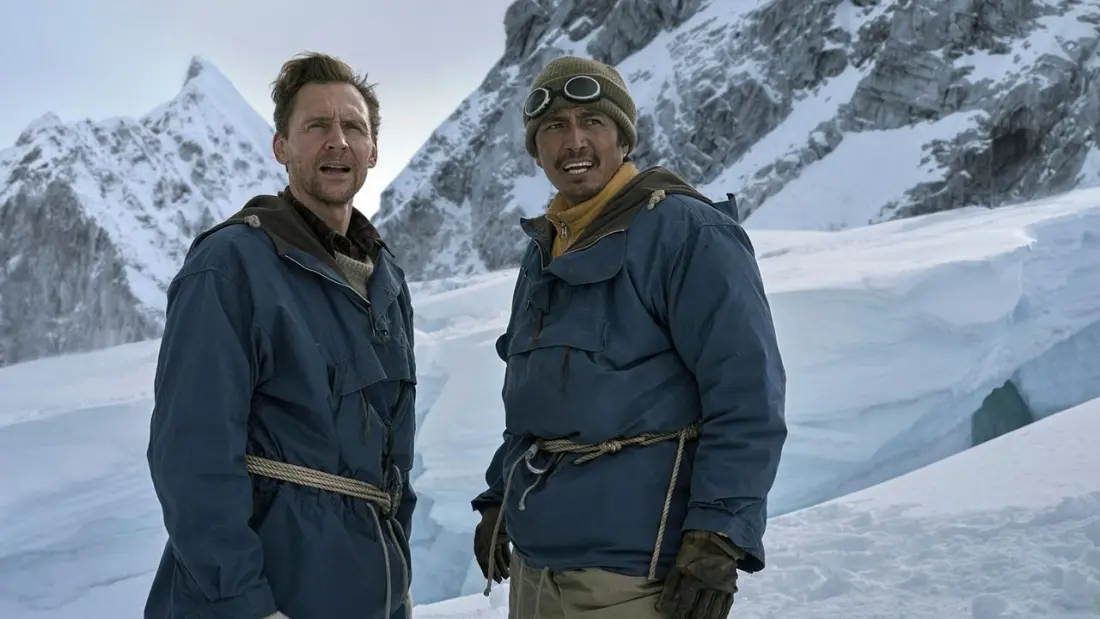
Jennifer Peedom's new film Tenzing retells the first ascent of Everest from the Sherpa point of view, with Tibetan actor Genden Phuntsok as Tenzing Norgay and Tom Hiddleston as Edmund Hillary. But the making of it is a travel story in its own right — the cast and crew spent years criss-crossing Nepal and New Zealand, and the places they used are a genuinely useful map for anyone dreaming of the Himalayas.
In Nepal, the team spent three months in pre-production, then six weeks filming. Early-life scenes set on the Tibetan plateau were shot in Mustang, near the border — its villages stood in for Sherpa communities after earthquakes made the Khumbu region unworkable. Patan Durbar Square in Kathmandu, a UNESCO World Heritage Site and an active place of worship, hosted two major scenes squeezed into a two-hour window between rituals. Real monasteries were used too, with the schedule bending around religious holidays. Accuracy mattered: Peedom got sign-off from Tenzing's family and worked with local cultural and language consultants, capping more than two decades of relationship-building in the region that began with her 2015 documentary Sherpa.
The New Zealand half is the surprising bit. The Southern Alps turned out to be a near-perfect stand-in for the Himalayas — same ice formations and crevasse fields, just about 4,000 metres lower, so a film crew could actually breathe. The famous crevasse scene (a real event from the 1953 expedition) was shot in a crevasse on the Darwin Glacier, with the summit sequence filmed on Aoraki/Mount Cook on a clear day. Filming required consultation with the Māori group Te Rūnanga o Arowhenua and the Department of Conservation, and weather dictated everything — 10 metres of fresh snow forced last-minute location changes.
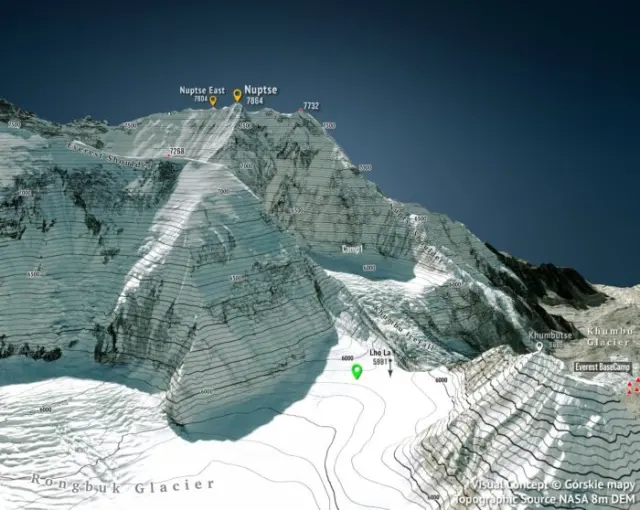
Best of all for trekkers: before cameras rolled, Phuntsok and Hiddleston walked the classic six-day teahouse trek from Lukla's Tenzing-Hillary Airport towards Everest Base Camp, climbing no more than 500 metres a day to acclimatise. Hiddleston describes spotting Everest in the skyline after four days, alongside a Sherpa guide who has summited 21 times. Their preparation — ice-climbing, rope work, self-arrest techniques, sleeping in down jackets — is a pretty honest preview of what any serious high-altitude trip demands.
Why care? Because Tenzing doubles as an itinerary. If the film lands the way the makers hope, expect fresh interest in Mustang, Kathmandu's Durbar Square and the Lukla-to-Base-Camp trail. And the underlying message is one travellers to the region should take seriously: in Sherpa culture you approach the mountain with respect and ask permission, rather than conquer it. As Phuntsok puts it in the film's framing — we are the blood, the mountains are the bones.
For anyone planning a Himalayan trip, the practical takeaways are timeless: build in acclimatisation time, expect weather to rule your schedule, and treat the trail's teahouses and monasteries as living places, not film sets. That's exactly how the crew did it.