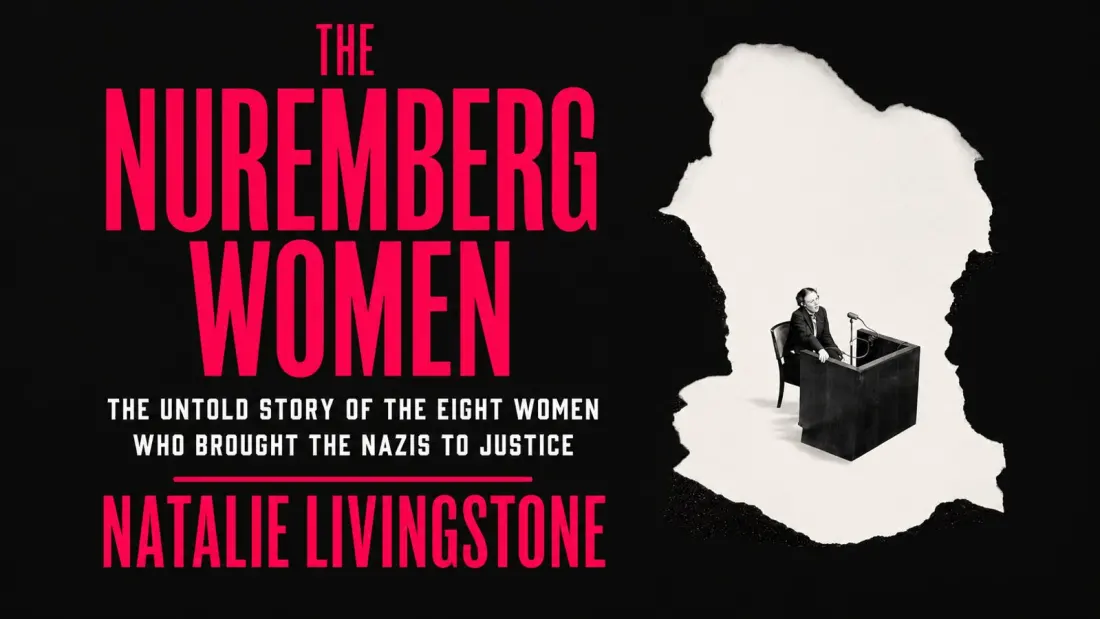
Nuremberg is famous for one trial. What most of us never learned is how many women were in the room. The Nuremberg Women, the new book from bestselling historian Natalie Livingstone, shifts the spotlight away from the Nazi leaders in the dock and onto eight women whose lives ran straight through the post-war proceedings.
The cast is strikingly varied: an American attorney, three journalists, an artist, an aristocratic refugee, a survivor of Auschwitz, and a young Russian interpreter. Each saw a different side of the trials — the courtroom arguments, the ruined city outside, the slow work of documenting crimes the world was only beginning to understand. Taken together, their accounts build a picture of a defining moment in twentieth-century history that standard accounts of the trial largely miss.
The book arrives with obvious holiday timing. Livingstone, already known for her bestselling history titles, has written something that works both as a serious read and as a gift for the history obsessive in your life. It's in shops and online now through major booksellers.
There's also a travel hook here. Anyone who has walked Nuremberg's old town or stood outside the Palace of Justice, where Courtroom 600 still draws visitors, knows how present that history remains in the city. Reading the trial through women's eyes — a reporter filing dispatches, an interpreter translating testimony, a survivor watching justice attempt to catch up — adds a layer to any visit. The city pairs the trial sites with its medieval centre, the Christmas markets that run through late December, and the Documentation Center at the former Nazi rally grounds, making it one of Germany's most rewarding history destinations.
For readers, the appeal is simple: a fresh angle on a story everyone thinks they know. For travellers heading to Nuremberg or Bavaria, it's the kind of book worth reading before you go — the courtroom and the city will look different afterwards.