Most people who roll into Manzhouli come for the surreal stuff — the giant Russian matryoshka doll complex, the neon Russian signage, the curious border-town blend of Inner Mongolia and Siberia. But there's a quieter, darker stop in this Chinese border city that few visitors know about: the old Tsarist Russian Prison, known locally as the Stone Building Prison.
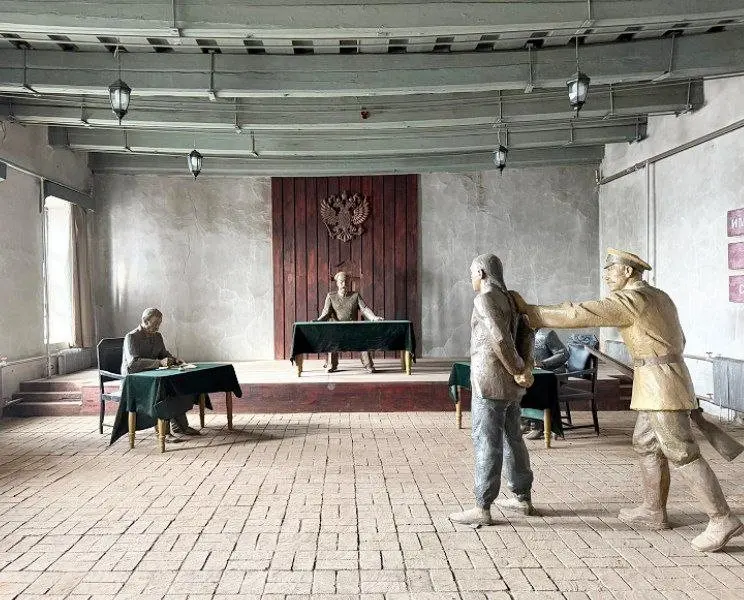
It dates back to 1903, when Manzhouli was growing into a key railway town on the Chinese Eastern Railway. Imperial Russia had serious commercial and political interests in the region, and needed somewhere to hold anyone who got in the way. The stone prison they built was a fully functioning institution, equipped with cells, interrogation rooms, a courtroom and even an underground water dungeon.
What makes it compelling is the context. China and Russia are close partners today, and border towns like Manzhouli happily market their Russian connections. This building tells an older, less comfortable story about how Russians treated Chinese people during the Tsarist era — a reminder that the cosy cross-border friendship narrative has a complicated history behind it. It also predates the Soviet period entirely, adding another layer to the region's past.
Visiting is a low-key affair. This is no tourist magnet — the writer describes a caretaker who barely stirred to let them in. Once inside, though, the museum is surprisingly thorough. The exhibition walks you through the original cells, interrogation rooms, courtroom, warden's office and the water dungeon, with reconstructed scenes, photographs and displays explaining how the prison actually ran. Given how few visitors it gets, it's a remarkably complete little museum. Grim subject matter, obviously, but well presented.
Practical details are simple: entry is free, opening hours are 09:00–12:00 and 14:30–17:30, and it's closed on Mondays. It's listed as the Tsarist Russian Prison Exhibition Hall on Tianqiao Road in Manzhouli's South District, in the Hulunbuir region of Inner Mongolia. Phone numbers are available if you want to confirm it's open before making the trip.
This one is for travellers who like their sightseeing with substance — border-town history buffs, dark tourism enthusiasts, and anyone pairing it with Manzhouli's more eccentric attractions. Combined with the city's Russian doll architecture and railway heritage, it rounds out a picture of a town shaped by two empires. It won't top anyone's bucket list, and it doesn't try to. But if you're already out at China's northeastern edge, it's a free, thoughtful hour that most visitors walk straight past.