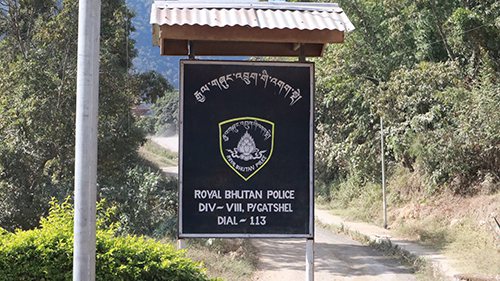
Pemagatshel, a quiet district in eastern Bhutan, has seen reported crime drop sharply this year. Royal Bhutan Police figures show just nine criminal cases registered as of 13 November, against 17 over the same stretch last year — a fall of roughly 47 percent.
The cases that were recorded were mostly minor. Three involved domestic violence and three related to substance abuse, all involving marijuana. The remaining three were a battery and assault case, a fraudulent cheque case and one larceny. Traffic incidents added seven more cases, mostly minor motor vehicle accidents.
Police credit the drop to a hands-on style of community policing. The district's small station covers a wide area — eight gewogs (county-level units) and 47 chiwogs (village clusters) — so officers have taken a mobile approach, going door-to-door through the Mobile Community Policing programme. Launched last year, the scheme finished covering every gewog this year, letting officers talk to residents individually without pulling them away from work or family life for long stretches.
The station has also tailored its outreach. Business owners trading near schools have been warned about selling alcohol and tobacco to students and minors, and when new types of crime — scams in particular — start circulating, police alert the more remote gewogs through local governments so warnings reach villagers quickly.
For a traveller, this is the kind of local detail that rarely makes international headlines but paints a picture of the destination. Pemagatshel sits off Bhutan's main tourist circuit in the country's east, a region of forested ridges, orange orchards and traditional village life that sees far fewer visitors than Thimphu, Paro or Punakha. A falling, low crime rate and an active community-police relationship is reassuring context for anyone weighing a trip beyond the classic western highlights — whether on the slower overland route east or as part of Bhutan's push to spread tourism beyond its best-known valleys.
It's also a gentle reminder of how Bhutan generally works for visitors: small, locally grounded institutions, low crime, and an emphasis on community wellbeing, consistent with the country's Gross National Happiness framework. Even in remote dzongkhags like Pemagatshel, safety is managed less through heavy enforcement and more through conversations at people's front doors.
Who is this for? Mainly independent travellers and trekkers considering eastern Bhutan, and anyone researching whether the less-visited districts are a realistic option. The short answer from this year's police data: Pemagatshel is not just safe on paper — it's getting safer, with the fewest recorded cases in recent memory and a policing model built around face-to-face community contact.