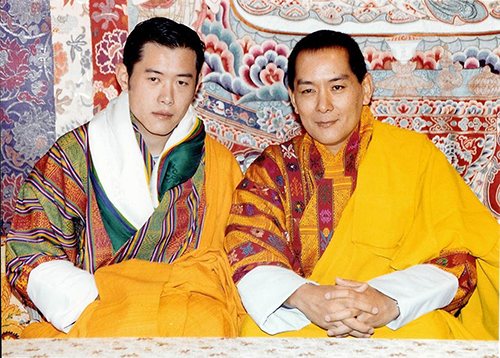
Bhutan marked the 71st birth anniversary of its Fourth King, Jigme Singye Wangchuck, on 11 November — a fitting moment to consider how much of what travellers experience in the country today traces directly back to his 34-year reign, from 1972 to 2006.
Most visitors arrive knowing one Bhutanese idea: Gross National Happiness. The Fourth King coined it as a rebuke to GDP-only thinking, insisting that education, health, culture, environment and governance matter as much as economic output. That philosophy grew into the four pillars and nine domains that still guide how the country develops — and why tourism here feels deliberately measured rather than mass-market.
His environmental legacy is even more visible from a window seat on the flight into Paro. The King committed Bhutan to keeping at least 60 percent of its land under forest cover, a promise later written into the Constitution. The result is one of the world's only carbon-negative countries, with a protected-area network covering vast stretches of the Himalayas. Hikers on the trails around Thimphu or the treks towards the eastern valleys are walking through the practical outcome of that policy.
Culture preservation was the other half of the equation. The King pushed modernisation — new roads, schools, hospitals and hydropower projects like Chhukha and Tala that still anchor the economy — while insisting that Dzongkha language, traditional architecture, festivals and spiritual life were non-negotiable. Travellers who time a visit around a tsechu festival or stay in traditionally styled lodgings are experiencing that balance first-hand.
His most surprising move was political. He voluntarily devolved power: local councils from 1981 and 1991, executive authority handed to elected ministers in 1998, a Constitution drafted from 2001, and the throne passed to his son in December 2006 ahead of Bhutan's first parliamentary elections in 2008. He also personally led the December 2003 operation to remove armed camps from southern Bhutan, a rare instance of a reigning monarch commanding troops in the field.
For a traveller, this history isn't background noise — it explains the country's character. The orderly streets of Thimphu, the restriction of high-impact development, the pride people take in discussing their democracy, the sheer greenness of the hills: all of it connects to decisions made under one king who prioritised the long term over the convenient.
Who is this for? Anyone considering Bhutan should understand it isn't a typical beach-and-bars destination. It rewards curious visitors — trekkers, festival-goers, people interested in Buddhism, conservation or a country that chose happiness as a policy metric. The November birth anniversary period, marked by celebrations and favourable weather, is itself a smart window for a first visit.