Bhutan's most ambitious tourism project is starting to take real shape, and wellness retreats are the first concrete products visitors can actually book. The Om Ah Hum Well-Being Project has just wrapped a five-day Mindful Awareness Retreat in Gelephu (7-11 November) and is following it with a three-day leadership retreat, 'Leading from the Heart', running 17-19 November at Gold Fish Resort in Gelephu Mindfulness City (GMC).
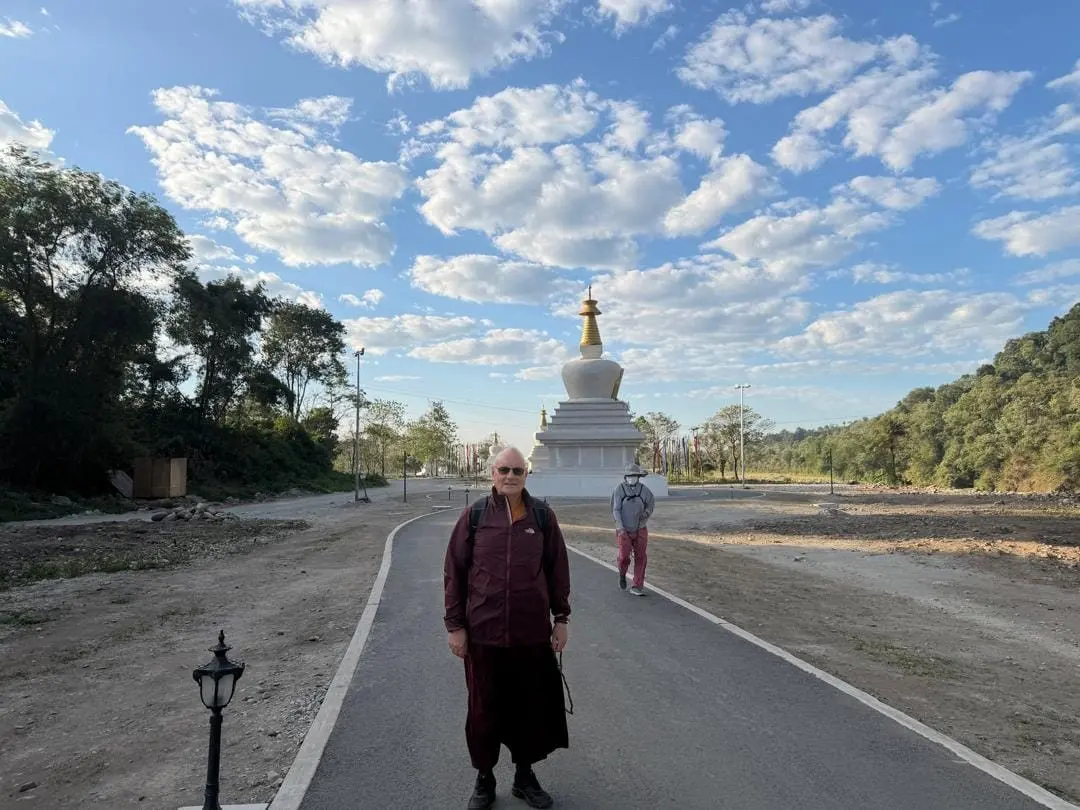
That first retreat carries some weight: it was the first mindfulness retreat approved by the Gelephu Mindfulness City Authority since the 108 Jangchub Chortens were raised on 1 November. Fifteen people took part — 13 Bhutanese, one international and one regional guest — guided by Buddhist teacher Lama Yeshe Rabgye. The format mixed Buddhist teaching and guided meditation with a full day of silence, journaling, sound healing, vegetarian meals and a mindful pilgrimage walk to the 108 chortens. Local wellness centre Ema Ho co-hosted, supplying the venue and on-the-ground coordination.
The November leadership retreat, facilitated by executive coach and author Delphine Ang — who has coached C-suite leaders across Asia, the Middle East and Africa — is built around three themes: Reset, Restore and Recalibrate. Expect reflection sessions, nature immersion and conversations aimed at aligning leadership with personal values rather than corporate metrics.
Both events sit under the Om Ah Hum Well-Being Sparks series, backed by the inaugural GMC Tourism Spark Fund. The pipeline is broader than meditation: programmes in development cover Sorig (traditional Bhutanese medicine) wellbeing, yoga and rejuvenation, and sound and music healing. The bigger goal is a permanent facility, the Om Ah Hum Well-Being Haven — a low-density sanctuary combining contemplative practice, Bhutanese healing traditions and hospitality — targeted for the second half of 2028, pending site approvals and financing.
Why should a traveller care? Gelephu Mindfulness City is Bhutan's flagship attempt to create a dedicated zone for mindful, low-impact tourism, and these retreats are the first real taste of what it will offer. Booking now means small groups, direct access to Bhutanese teachers and healers, and a chance to see the 108 chortens — a striking new landmark — before the crowds arrive. It also puts money into local practitioners, artisans and hospitality businesses, which is exactly the model GMC says it wants.
If a silent retreat isn't your thing but the leadership format intrigues you, the November dates are the test case; the organisers have been upfront that these early programmes help them refine quality before scaling up. Either way, Gelephu is the place to watch — and possibly to visit — over the next couple of years.