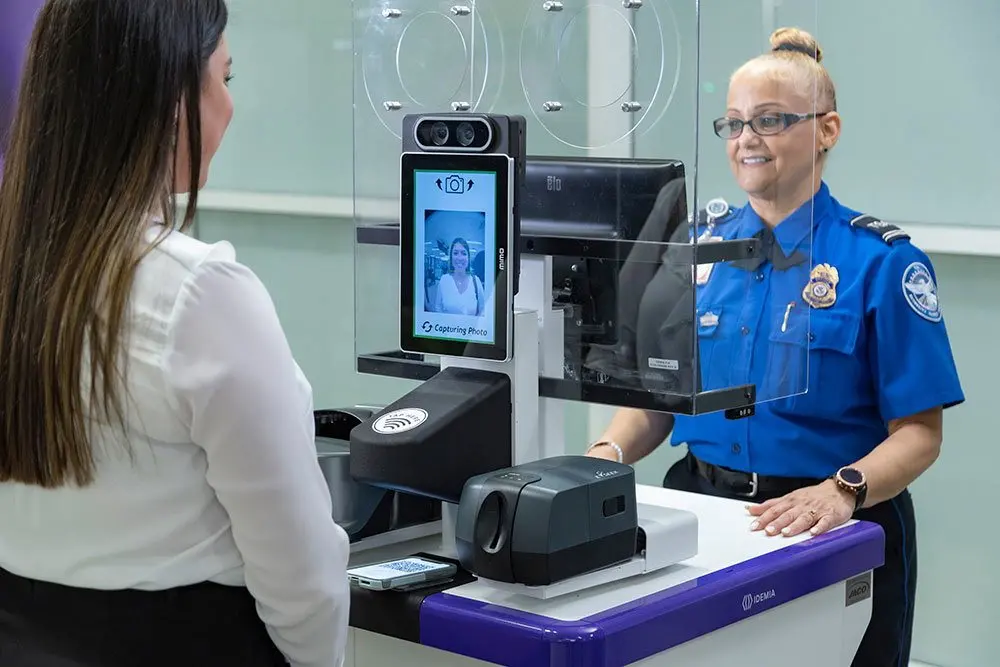
If you're flying through a US airport soon, the officer checking your ID might be standing up. The Transportation Security Administration has begun removing chairs from checkpoint ID-check stations, describing the change as a way to keep officers alert and to show a "commitment to hospitality." The chairs started disappearing late last week, and frontline staff were reportedly caught off guard, with no advance notice to the union that represents them.
The TSA's position is that officers on their feet are more focused and better placed to create a welcoming, professional environment for travellers. A spokesperson framed it as reinforcing both security and service standards at the same time.
The American Federation of Government Employees sees it very differently. The union says the chairs were basic ergonomic support for people who spend most of an eight-hour shift standing and walking on hard concrete floors, and that removing them amounts to a safety and decency issue rather than a privilege. It says it wasn't consulted, is urging local leaders to contact their congressional representatives, and frames the move as part of a broader pattern of ignoring workforce concerns.
The optics are awkward. In a hotel lobby or an upscale restaurant, staff standing to greet you is normal hospitality practice. But a security checkpoint isn't that environment — officers rotate through roles, and the ID-check post is already fast-paced, with a new passenger to process every few seconds. Unlike, say, a guard posted at an exit lane for hours, alertness through constant interaction isn't an obvious problem here. Critics of the change point out that officers elsewhere in the checkpoint remain on their feet all day, so a stretch of seated work was one of the few physical breaks in a shift.
For travellers, the practical impact is minimal — your ID check works the same either way. But there's a bigger picture worth noting. Frontline screening staff are the people you interact with first at every US airport, and their working conditions shape how smoothly and cheerfully that interaction goes. Tired, uncomfortable officers don't make for faster lines or friendlier checkpoint experiences, which is exactly what the union is arguing. It's also a reminder of the ongoing tension between TSA leadership and its workforce, a relationship that has repeatedly played out in public over staffing, pay and now basic furniture. If you're passing through a busy US checkpoint this summer, don't be surprised if the person checking your boarding pass is on their feet — and don't take it personally if they seem a bit worn out by the end of their shift. The debate over whether that's hospitality or just hardship is likely to run for a while yet.
One Mile at a Time