One Hawaiian creation story begins with sacrifice. A man named ʻUlu, living on Hawaiʻi Island, prayed to the gods as his son lay dying and his village went hungry. Certain he would not survive the night, he asked to be buried near the stream. By morning, a fruit tree had grown in his place — a tree so productive it saved his son and ended the famine. His widow named it after him: ʻulu, or breadfruit.
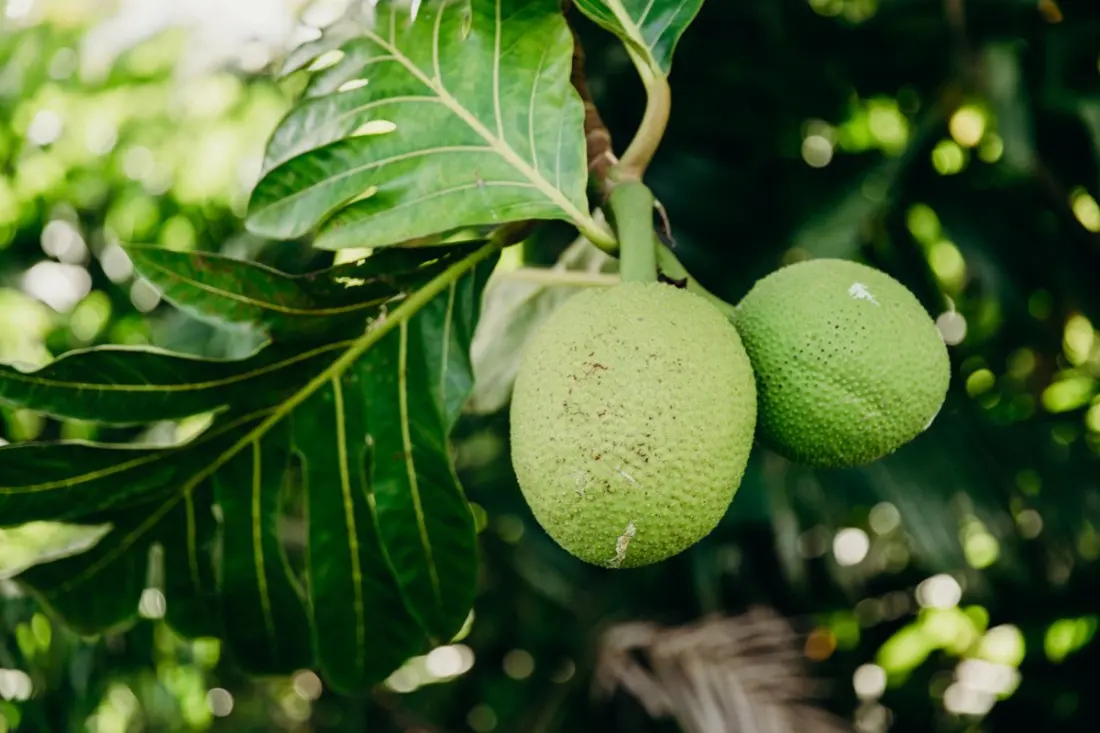
It's one of several origin legends for a crop that reached the Islands centuries before Western contact, carried across the Pacific by Polynesian voyagers. Every part of the tree had a use: wood for houses and clothing, fruit and leaves for food and medicine. A mature ʻulu can live past 100 years and yield anywhere from 250 to 1,000 pounds of fruit annually. The fruit itself ranges in size from a fist to a bowling ball, with a rough, lime-coloured skin.
How you eat it depends on ripeness. Firm, it behaves like a potato — starchy, slightly more vegetal. Soft, it turns custardy and sweet, suited to bread dough and desserts. The traditional method is slow-cooking a whole fruit in an imu, the underground oven used for luau staples.
Chefs across the state have embraced it. On Hawaiʻi Island, Magics Beach Grill serves a Hurricane ʻUlu appetiser. The Beach House on Kauaʻi offers ʻulu ravioli, and Maui's Mama's Fish House tops its smoked ahi Caesar salad with ʻulu croutons. On Oʻahu, Mud Hen Water plates buttered ʻulu, ʻUlu & Kalo Bakery bakes a banana-ʻulu bread, and Fête has served ʻulu aloo, an Indian-spiced take on the potato classic.
The deeper appeal goes beyond restaurant menus. Many local families keep an ʻulu tree in the yard, steaming the fruit or simmering it in coconut milk. Native Hawaiians traditionally plant one when a child is born — a single tree meant to provide for a lifetime.
For travellers, ʻulu is an easy entry point into Hawaiian food culture beyond the resort buffet. Order it wherever you see it, and you're tasting a crop that voyagers deliberately brought across an ocean, along with the story of the man who gave it his name.