Nothing prepares you for the first sight of Uluṟu from the air — a red monolith rising sheer out of flat desert. What does prepare you is how painless the logistics turn out to be. Despite sitting deep in the Northern Territory's Red Centre, this is one of Australia's more straightforward bucket-list trips.
Getting there is the easy part. Qantas and Jetstar fly direct into Ayers Rock Airport (Connellan) from several major Australian cities, and the runway is just a 10-minute drive from Ayers Rock Resort. Guests get free airport transfers with no booking required — just collect your bags and hop on the AAT Kings coach outside the terminal. No car hire needed unless you want one; Hertz, Thrifty and Avis all operate at the airport and resort if you'd rather self-drive.
Timing matters more than effort here. The sweet spot runs May to September, when days sit around 20-30°C — walking weather — though nights can dip near freezing, so pack layers. October through December gets hot and dramatic, and the January-March wet season occasionally delivers the rarest show of all: waterfalls running down Uluṟu itself. In warm months, plan walks for early morning and surrender your afternoons to the pool.
Once on the ground, the base walk is the signature experience — a 10.6km loop around the rock that takes roughly 3.5 hours — but shorter trails, sunrise and sunset viewing spots, and the ranger-led Mala Walk cost nothing extra. Nearby Kata Tjuṯa's domed formations and the Muṯitjulu Waterhole at Uluṟu's base round out a park that rewards a slow pace. Entry requires a park pass: $38 for adults for three days, free for kids under 18, available online in advance or at the gate. The hop-on hop-off bus covers key trails and viewing areas if you're not driving.
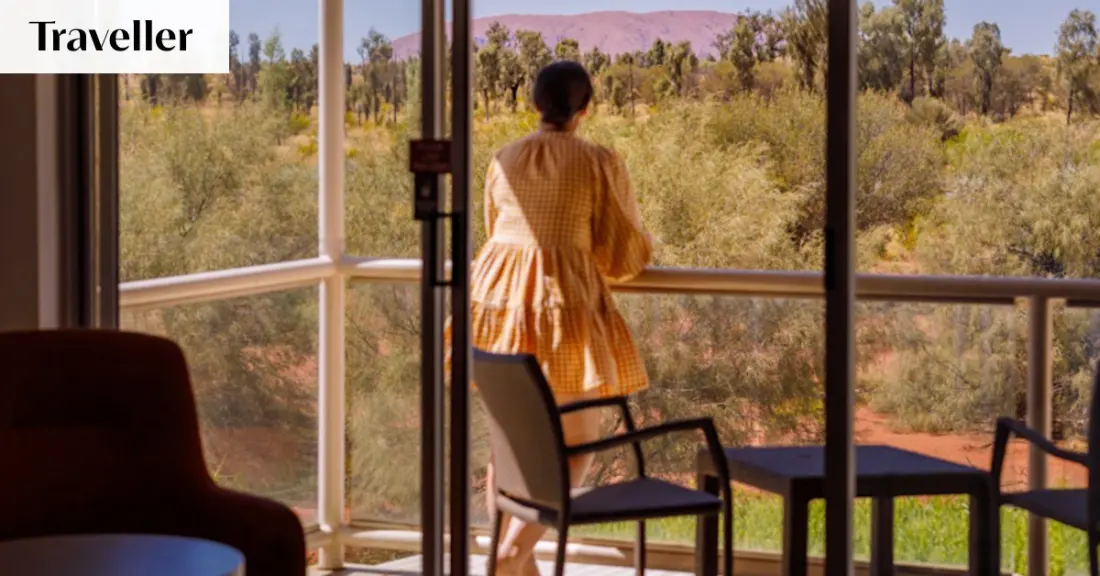
Accommodation spans every budget at Ayers Rock Resort, all sharing pools, tennis courts, a supermarket and free guest activities. Top end is Sails in the Desert, with Uluṟu views from select rooms at Desert Gardens Hotel; Emu Walk Apartments suit longer stays with full kitchens; the Lost Camel and Outback Hotels are mid-range options; and Outback Lodge plus a campground cover backpackers and campers.
Two evenings worth booking ahead: Sounds of Silence, an outdoor dinner of bush tucker-inspired buffet, storytelling and stargazing under the desert sky, and Tali Wiru, a four-course dinner with Australian wines on a private dune facing the rock. For daytime downtime, the Gallery of Central Australia next to Desert Gardens shows work from more than 23 Central Desert community art centres, with a free daily 10.30am tour and pieces for sale.
Aṉangu culture threads through everything here — guided walks, bush-food sessions, art demonstrations — and visiting directly supports Indigenous employment and tourism businesses in the region. That's the quiet selling point of this trip: it's remote, but not remote from meaning. For travellers who assumed Uluṟu needed an expedition-style plan, the reality is a direct flight, a coach transfer, a $38 park pass and a choice of six ways to sleep under the outback sky.