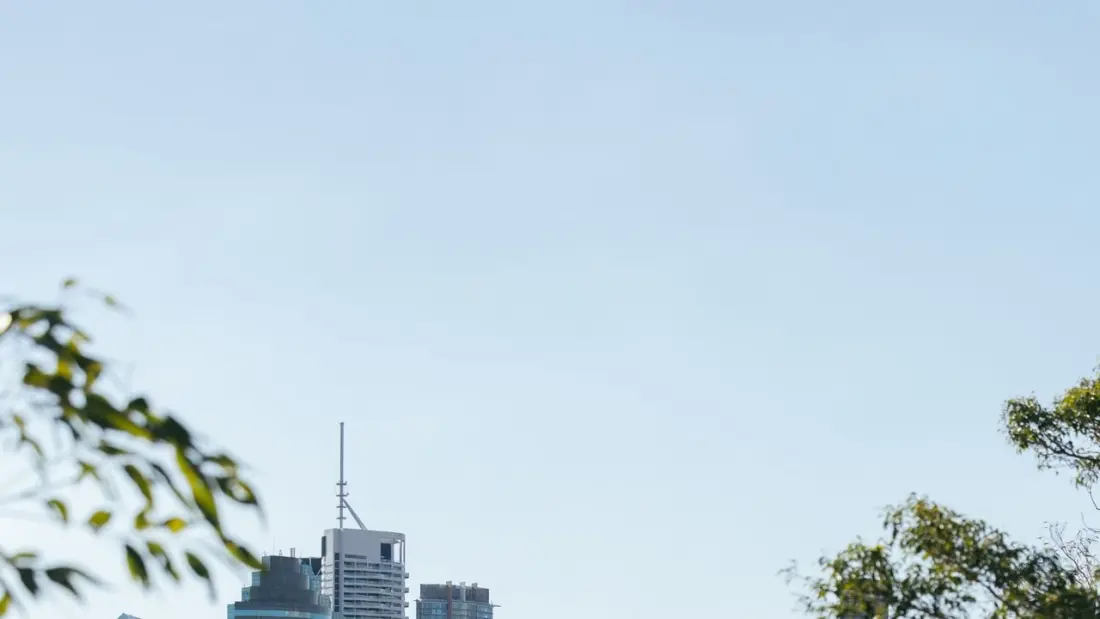
For years Australians wrote off Brisbane as a "big country town" — pleasant enough, but a distant third behind Sydney's beaches and Melbourne's cool. That verdict is out of date. A wave of new dining, design and culture, plus the 2032 Olympics on the horizon, has turned the River City into one of the country's most interesting places to actually visit.
Start at James Street, the precinct that put Brisbane on international travellers' maps. It's a fig-tree-lined cluster of Champagne bars, high-end restaurants and designer shops stocking almost exclusively Australian labels — P. Johnson, St. Agni, Heidi Middleton's sustainable Artclub. The anchor is The Calile, an urban resort hotel whose pool, bars and restaurants spill onto the precinct sidewalks. Much of this is the work of Catherine Malouf and her family, and the vibe is exactly what the city now trades on: global polish with hometown warmth.
The food scene is doing serious numbers. Anyday hospitality group — behind Agnes, named Australia's Restaurant of the Year in 2023 — has opened nine venues including Golden Avenue. Down on the river, Howard Smith Wharves has turned an abandoned industrial site into breweries, parks and restaurants, including Stanley, from Louis Tikaram of LA's EP & LP. Supernormal, the first sister to the Melbourne original, opened in 2024 — a signal that Brisbane is now a food city in its own right.
The city itself has become easier to enjoy. Four new pedestrian bridges link the banks, coffee bars bookend the Kangaroo Point Bridge, and the CityCat ferry remains the nicest way to get around, stopping at the South Bank cultural district (home to the excellent Gallery of Modern Art), the counterculture West End, and Brisbane Powerhouse — a 1920s power station reborn as a vast contemporary art centre under new artistic director Louise Bezzina. Overwater Riverwalk paths thread it together, shaded by flame trees that didn't exist a decade ago.
Why it matters now: the IOC awarded Brisbane the 2032 Summer Games in 2021, and the city has been racing to deserve it ever since. Queensland also weathered COVID with looser restrictions than the southern states, pulling visitors — and returning locals — who'd previously decamped to Melbourne, Sydney or abroad. Designers like Easton Pearson co-founder Lydia Pearson are coming home too; her archive sits in the Museum of Brisbane, and her new upcycling label, ShiloLydia, works from a classic timber Queenslander house in Red Hill. Even the city's most famous export is a local: Bluey, the globally beloved cartoon set in a sunny Queenslander.
Brisbane won't ever out-Sydney Sydney, and it doesn't need to. It's comfortable, friendly, sun-drenched and newly confident — a great standalone trip or a smarter base for the Gold Coast, Sunshine Coast and the reef than most people realise.
Original reporting: Condé Nast Traveler.