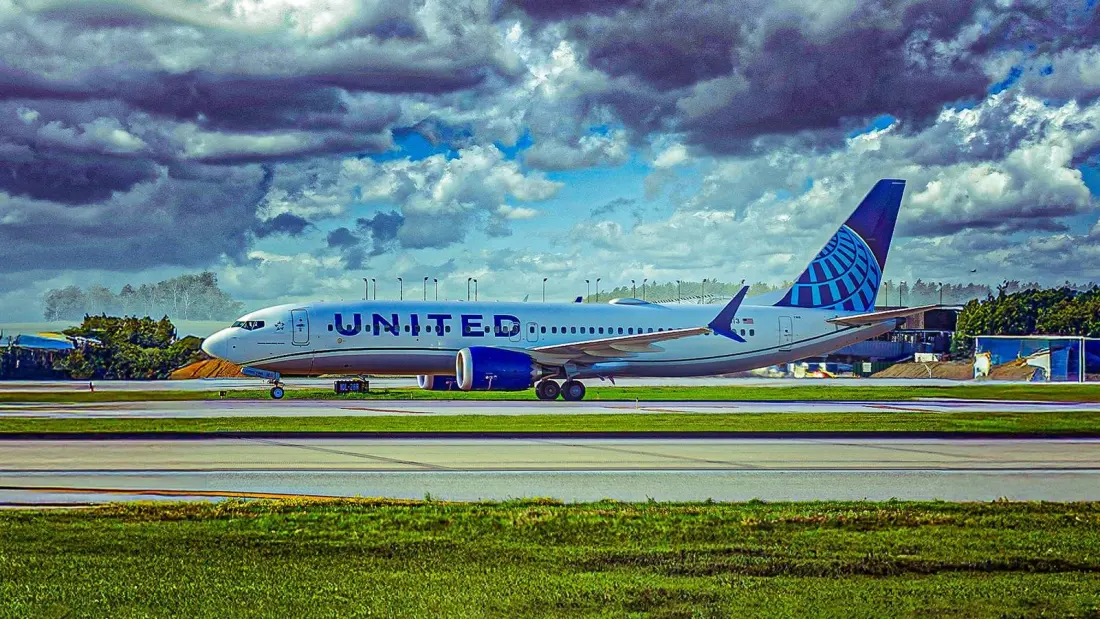
Nobody wants the middle seat, and United Airlines is happy to charge for the privilege of escaping it. Non-frequent flyers on the US carrier can currently pay up to $70 to pick a window or aisle spot, and CEO Scott Kirby has publicly defended the policy.
Speaking to the New York Times, Kirby argued that the fees simply reflect what different travellers value. "Some customers want to sit in a window seat or a better seat, and that costs money to deliver," he said, rejecting the idea that charging frequent flyers less (or nothing) for seat selection creates a two-tier system. The NYT reporter interviewing him, for what it's worth, booked a middle seat to Chicago to dodge the fee. Kirby also pointed out that United's recent cabin investments, such as free, fast Starlink WiFi and seatback screens, reach every passenger regardless of where they sit.
His broader argument is that flying has become genuinely expensive to operate. He acknowledged fares have risen this year but framed it as normalisation after artificially low pandemic-era prices, and noted that four of the eight publicly traded US airlines are expected to lose money this year. "We have to charge enough that it covers the cost of flying, and it's expensive to fly airplanes," he said. Interestingly, despite running one of the world's biggest airlines, Kirby says he rarely flies private, preferring to sample his own product and even occasionally checking out competitors' cabins to learn what they're doing.
United is also trialling a different answer to the middle-seat problem. Its incoming Airbus A321XLRs will feature a row in Economy Plus where the middle seat is swapped for a extra table — a layout familiar on European short-haul business cabins but unusual in the US. There's a commercial angle too: the modification drops the aircraft's capacity to 150 seats, which means only three flight attendants are legally required instead of four. Passengers get elbow room and a workspace on what will be a long-haul-capable narrowbody; United saves crew costs. Whether the trade-off affects overall onboard service remains to be seen.
Why does this matter for travellers? If you fly United without elite status, assume seat selection will cost extra and factor it into your fare comparison — sometimes a competing airline or a bundled fare works out cheaper once seat fees are counted. The A321XLR table row could be a genuinely appealing option for solo travellers on longer routes, and free Starlink WiFi is a real perk worth knowing about when choosing between US carriers.